X

Climate Resilience List | Summary | Detailed

American Forests

2024 & 2025 - $25,000 Tree Equity Score Toolkit
2022 - $25,000 Cool Corridors
2021 - $20,000 Tree Equity
2019 - $20,000 Tree Equity Toolkit
By piloting a new “Tree Equity Score” tool in the Bay Area, Seed Fund has laid the foundation for what has potential to become a revolution in greening cities nationwide.

American Forests

In Phoenix, a neighborhood with a Tree Equity Score of 92 (left) experienced surface temperatures nearly 5 degrees Fahrenheit cooler than a south Phoenix neighborhood with a score of 63 (right), according to American Forests’ heat disparity dataset, which uses Landsat surface temperatures to measure heat severity differences. Credit: Rick D'Elia / American Forests.

In Phoenix, a neighborhood with a Tree Equity Score of 92 (left) experienced surface temperatures nearly 5 degrees Fahrenheit cooler than a south Phoenix neighborhood with a score of 63 (right), according to American Forests’ heat disparity dataset, which uses Landsat surface temperatures to measure heat severity differences. Credit: Rick D'Elia / American Forests.

In April 2022, American Forests, City of Phoenix staff and community volunteers planted more than 250 trees in Phoenix's Cesar Chavez Park to create the city's first "cool corridor" in efforts to generate shaded, and safer, commuting paths. Credit: Michael Jennings / American Forests.

The Tree Equity Score tool provides data and insights on the impact of tree cover alongside demographic data, land use, poverty and other socioeconomic indicators to guide planning and investments to grow tree cover in the neighborhoods that need it most. Credit: Tom Koenig / American Forests

Tree Equity Score was created to help address damaging environmental inequities by prioritizing human-centered investment in areas with the greatest need.

Planting 500 million new trees would bring every neighborhood in every city to a Tree Equity Score of 100. Credit: Liz Putnam / American Forests

American Forests
2024 & 2025 - $25,000 Tree Equity Score Toolkit
2022 - $25,000 Cool Corridors
2021 - $20,000 Tree Equity
2019 - $20,000 Tree Equity Toolkit

Founded in 1875, American Forests is the oldest national nonprofit conservation organization in the United States and a leader in the movement to protect and restore forest ecosystems. For more than 150 years, the organization has advanced science-driven approaches to forestry, shaping many of the practices used in conservation today. Its mission is to create healthy and resilient forests, from cities to large natural landscapes, that deliver essential benefits for climate, people, water, and wildlife.

American Forests’ work centers on ensuring that forests remain powerful natural climate solutions, and it provides scientific tools, resources, and long-term planning needed to keep forests thriving. These resources enable partners nationwide to implement restoration and management practices that remain effective as climate conditions evolve.

A core pillar of American Forests’ work is climate-smart reforestation. Through its Resilient Forests program, the organization partners with federal and state agencies, Tribal Nations, local communities, and private landowners to restore forests in some of the country’s most ecologically vulnerable regions. American Forests develops and applies climate-informed reforestation strategies using tools such as its Reforestation Hub, which identifies low-cost, high-feasibility opportunities for restoring forest cover across the U.S. This work includes expanding native seed and nursery capacity, supporting climate-ready forestry jobs, and helping communities plan large-scale restoration across millions of acres.

Equally central to the organization’s mission is its Tree Equity program. Tree cover in the U.S. is distributed unequally: in many cities, low-income neighborhoods and communities of color have significantly fewer trees than wealthier areas. These disparities contribute to hotter temperatures, higher energy bills, poorer air quality, and increased health risks. To close these gaps, American Forests works with city leaders, community-based organizations, and residents to build urban forests that support health, resilience, and opportunity.

At the foundation of this work is the Tree Equity Score, a nationally recognized tool developed by American Forests to quantify and map the need for trees at the neighborhood level. The free, publicly available tool analyzes factors such as current tree canopy, surface temperature, income, race, age demographics, and health vulnerabilities to identify where trees will have the greatest benefit. Cities across the country use the Tree Equity Score to guide investment, set canopy goals, prioritize neighborhoods for greening, and engage residents in decision-making.

Policy leadership is another essential pillar of American Forests work. The organization collaborates with lawmakers, federal agencies, and national coalitions to expand funding for reforestation and urban forestry, modernize forest management, and integrate climate resilience and environmental justice into public policy. These efforts have helped secure historic federal investments, like the REPLANT Act, and have strengthened the systems needed to scale climate-smart forestry nationwide.

As climate challenges accelerate, American Forests continues to scale its work to meet national need: restoring forest landscapes across millions of acres, advancing Tree Equity in cities nationwide, and preparing the workforce needed to steward forests for generations to come. With its long history, scientific expertise, and commitment to community-centered solutions, American Forests is driving lasting change and ensuring that forests and the people who depend on them can thrive far into the future.
www.americanforests.org

Bay.org

2016 - $10,000 Golden State Waters Action Summit
2015 - $10,000 EcoCenter at Heron’s Head Park
bay.org’s mission is to change the relationship that people have with the Bay by protecting, restoring and inspiring conservation through its five unique divisions.

Bay.org


Bay.org
2016 - $10,000 Golden State Waters Action Summit
2015 - $10,000 EcoCenter at Heron’s Head Park

Golden State Waters Action Summit
Golden State Waters: San Francisco Bay and the World Ocean
is the first Action Summit dedicated specifically to the protection of the waters where the San Francisco Bay (the largest estuary on the Pacific coast) meets the Ocean.  The Summit convened top-level policy makers, government agencies, scientists, non-governmental organizations, and the private sector to participate in the development of actions to address important questions regarding the health of ecosystems in these waters and created an Action Agenda to address current and future issues.  Key topics addressed were Climate Change Adaptation, Marine Debris, Marine Protected Areas, and Ocean Exploration and Technology.  The Bay Institute is working with its partners to implement the Action Agenda.

EcoCenter at Heron's Head Park
bay.org’s mission is to change the relationship that people have with the Bay by protecting, restoring and inspiring conservation through its five unique divisions. One division is the EcoCenter at Heron’s Head Park, which is a certified LEED-Platinum building and living classroom that demonstrates how we can better use the Earth’s resources to sustain healthy people, economies and ecosystems in our local communities and beyond. Located in Bayview-Hunter’s Point, the EcoCenter provides elementary school through college programming, tours, seminars, workshops, and other events that are offered free of charge.

bayecotarium.org

Billion Oyster Project

2022 - $10,000 General Support
2021 - $10,000 General Support

Billion Oyster Project

Billion Oyster Project
2022 - $10,000 General Support
2021 - $10,000 General Support

Bronx River Alliance

2026 - $25,000 General Operating Support
2025 - $25,000 Cross Bronx Community Imagining
2024 - $25,000 Five Bridges Project
The Bronx River Alliance serves predominantly Hispanic and Black low-income communities along NYC’s only freshwater river.

Bronx River Alliance

Bronx River Alliance
2026 - $25,000 General Operating Support
2025 - $25,000 Cross Bronx Community Imagining
2024 - $25,000 Five Bridges Project

The Bronx River Alliance serves predominantly Hispanic and Black low-income communities along NYC’s only freshwater river. It engages, educates, and empowers local residents—especially those in under-resourced South Bronx neighborhoods— to restore the Bronx River corridor as a healthy ecological, recreational, educational, and community resource. In partnership with 100+ community organizations, 25+ schools, and public agencies, the Alliance delivers equitable, community-driven conservation and outdoor programs including paddling, habitat restoration, eznvironmental education, and cultural events. Each year, the Alliance connects 5,400 Bronx residents to nature, wellness, and stewardship, advancing environmental justice and equitable access to green space.

Widely regarded as a model for community-based waterfront development throughout the city and the nation, the Alliance pursues its goals through six interconnected program areas of Education, Ecology, Greenway, Recreation, Foodway, and Outreach.

The Greenway Program develops open spaces, restores existing parks, and integrates them into a series of continuous parks and trails along the river—the Bronx River Greenway. The Greenway program is also expanding its climate justice advocacy efforts, working with other local actors to promote climate resilience and improved infrastructure. For example, the Bronx River Alliance, working closely with a coalition of Bronx, city- and statewide allies is leading a campaign to halt a proposed highway expansion project along the Cross Bronx Expressway (CBE), and invest in the community’s vision instead.  The project, which goes by the moniker “5 Bridges”, is an unnecessary expansion that New York State has tied to a bridge repair project.  

The Education Program opens doors for youth from underrepresented communities who face disproportionate environmental health and safety hazards to authentically engage in science, environmental policy, education, and advocacy.

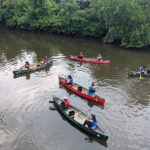
The Recreation Program helps the community discover an intimate experience with the river corridor. Operating hand-in-hand with other Bronx River Alliance programs, Recreation programs help visitors relax and connect with the river, and also integrate lessons, projects, and programs. Recreation staff take around 1,500 adults and children canoeing on the Bronx River each year, where they learn a fun, new skill while seeing the Bronx from a whole new perspective.

The Ecology Program protects, restores and manages the Bronx River through field work and policy leadership. Our Bronx River Conservation Crew has a full-time presence on the river, implementing and maintaining river and upland restoration projects.

The Foodway Program works to maintain and improve the Bronx River Foodway, an edible food forest located directly within Concrete Plant Park.

The Outreach Program works to connect the communities of the Bronx with the Bronx River through a wide range of public events designed to increase community knowledge and ownership of the river.

www.bronxriver.org

Brooklyn Botanic Garden

2024 - $10,000 General Operating Support
Brooklyn Botanic Garden’s (BBG) mission is to connect people to the wonder and power of plants, sparking delight and curiosity about science, culture, and our environment to help create a greener, more sustainable city and world.

Brooklyn Botanic Garden

Brooklyn Botanic Garden
2024 - $10,000 General Operating Support

Brooklyn Botanic Garden’s (BBG) mission is to connect people to the wonder and power of plants, sparking delight and curiosity about science, culture, and our environment to help create a greener, more sustainable city and world.

BBG was founded in 1910 by civic leaders who sought to create one of the world’s first urban botanic gardens. Located in the heart of Brooklyn, where more than 2.6 million people live, the Garden welcomes more than 850,000 visitors annually, nearly 30% of whom access BBG free of charge through Community Tickets, winter free admission, free entry for children under 12, education and community group visits, and partnerships such as the public library Culture Pass program.

The Garden’s early vision, deeply influenced by the social welfare reforms of the time, sought a major shift from the gated academic botanic gardens of that era to prioritize greater access for all to education and open space, while providing an inspiring and innovative site for world class plant collections and gardens. This early vision continues to guide BBG today. The public value of nature, education, and beauty shape not only the Garden’s physical landscape but also its enduring role as a civic and cultural institution. BBG’s lasting commitment to community engagement and hands-on learning, along with its position as a leader among public gardens, has contributed to the evolution of botanic gardens across the United States and beyond as places where a broad public is welcome and their stories celebrated.

BBG is a 52-acre living classroom, a beautiful green space, a platform for community engagement, and a vibrant cultural anchor in Brooklyn. Recognized for leadership in horticulture, education, and sustainability, BBG cares for a diverse collection of plants and serves a diverse public. The Garden’s programming includes education programs that annually reach tens of thousands of individuals through in school and on-site science education, initiatives that cultivate deep engagement in urban greening throughout Brooklyn, and public programs that encourage visitors to appreciate nature, connect to plants, and imagine a greener future.

BBG is a recognized local and national leader in the field with distinguished contributions in:

  • Horticulture: BBG's living collections count 10,000 plant species and cultivated varieties, including 850 globally or locally rare or endangered species. Comprising 32 garden areas and collections and five climate-controlled indoor conservatories, BBG's world-class collections showcase plants from around the globe and those that are native or regional.
  • Education: BBG reaches tens of thousands of children, families, teachers, and lifelong learners annually through drop-in and registered programs, in-school science education, teacher training, youth environmental leadership programs, professional certification and training, adult classes, a library, urban greening initiatives, and more. More than 150,000 people participate in BBG's education programs, and more than 50,000 are impacted by community greening efforts catalyzed by the Garden's outreach.
  • Conservation & Sustainable Practices: BBG’s densely planted 52 acres offer many benefits for the ecosystem and people living in New York. The Garden maintains 70% tree canopy, which is essential to removing pollution from the atmosphere, cooling, and storing carbon, and cares for hundreds of threatened and possibly threatened plants. BBG has also long been a leader in modeling sustainable practices, including organic gardening methods and integrated pest management, the award-winning Steinberg Visitor Center (LEED Gold accredited), the innovative Water Conservation Project (reducing BBG's outdoor freshwater consumption by nearly 96 percent), and borough-wide, community-based composting initiatives.

BBG’s integrated approach centers plants as an essential foundation in nature-based education, community environmental action, interdisciplinary arts and cultural events, and sustainable practices—advancing the Garden’s vision of a future where plants, people, and our planet flourish together.

www.bbg.org

California Academy of Sciences

2018 - $10,000 Biodiversity Toolkit for Cities
2016 - $10,000 Citizen Science Program
2015 - $10,000 Citizen Science Program
2007 - $5,000 Capital Campaign, Green Roof
The California Academy of Sciences is a multifaceted scientific institution committed to leading-edge research, to educational outreach, and to finding new and innovative ways to engage and inspire the public.

California Academy of Sciences


California Academy of Sciences
2018 - $10,000 Biodiversity Toolkit for Cities
2
015 & 2016 - $10,000 Citizen Science Program
2007 - $5,000 Capital Campaign, Green Roof

The California Academy of Sciences is a multifaceted scientific institution committed to leading-edge research, to educational outreach, and to finding new and innovative ways to engage and inspire the public.  The Academy's mission - to explore, explain and protect the natural world - extends to all corners of the institution; from a research expedition in the highlands of Papua New Guinea, to a teacher training program in a California classroom, to an interactive game on the museum exhibit floor.

One of the highlights of the Academy of Science’s Museum is the living roof.  The masterstroke of rooftop’s design lies in making the park's environment such a visible part of the building itself. The rooftop's seven undulating green hillocks pay homage to the iconic topography of San Francisco and blurs the boundary between building and parkland.

Citizen Science Program
Following the San Francisco Urban Biodiversity Summits in 2013 and 2014, the California Academy of Sciences has been leading charge in convening biodiversity leaders in the Bay Area and  through their Citizen Science Program. In order to address the lack of knowledge on the biodiversity of California, the Academy aims to crowd-source data through observations of plants and animals by citizen scientists, encouraging people of all backgrounds to work together to build the data set of biodiversity required to make local and global conservation decisions.

calacademy.org

Canopy

2019 - $15,000 Tree Inventory Project in East Palo Alto
For over two decades, Canopy has been the leading voice for trees in San Francisco Midpeninsula communities, using trees as change agents to mitigate climate change, advance environmental justice, and transform neighborhoods.

Canopy


Canopy
2019 - $15,000 Tree Inventory Project in East Palo Alto

For over two decades, Canopy has been the leading voice for trees in San Francisco Midpeninsula communities, using trees as change agents to mitigate climate change, advance environmental justice, and transform neighborhoods. Each year Canopy engages thousands of local families, volunteers, and students in planting trees and stewardship at parks, school campuses, and neighborhoods. Canopy carefully selects the “right tree for the right place” to ensure long-lived trees that deliver maximum community benefit. The trees provide shade for streets and buildings, reduce urban heat island effect, store and sequester carbon long-term, beautify neighborhoods, and support local ecosystem functions and a diverse web of native wildlife.

Canopy also equips hundreds of K-12th grade students with hands-on environmental science lessons and urban forestry internships, sparking their curiosity about nature and empowering youth to make a difference in their community. The growing scale and complexity of the environmental issues we face, from climate change to pollution to loss of biological diversity, demands an environmentally literate public that is inspired to act as stewards of the earth and apply practical environmental know-how to support an improved quality of life. That is why Canopy starts with youth environmental education as an entry point to develop the next generation of environmental stewards who will contribute to the growth of urban tree canopy and our future of climate resiliency.

Creating a healthy urban forest takes much more than planting trees. Without smart policies and long-term investment, urban trees and green spaces are vulnerable to drought, development, poor planning, and inadequate care. Canopy has successfully made the case for investing in community trees, with far-reaching impact in local communities and beyond.

Founded in 1996, Canopy was created to support the City of Palo Alto’s urban forestry programs and educate residents about the value of trees and their care. In 2006, Canopy began partnering with the community of East Palo Alto to address environmental equity and public health issues in their city, particularly those associated with unequal canopy cover and lack of access to urban nature.

In 2017, Canopy further expanded to meet growing demand for programs in Belle Haven, Mountain View, North Fair Oaks, and Redwood City. Today, Canopy is a regional and sector-leading organization with active programs in five Midpeninsula cities and counting.

Canopy’s mission to grow urban tree canopy in Midpeninsula communities is accomplished through three interconnected core programs:

Trees: Canopy takes direct action to grow tree canopy cover and enhance green spaces by engaging volunteers and partners to plant hundreds of trees and steward thousands of trees every year in their communities.

Education: Through K-12 programs, High School Internships, and Adult Education programs, Canopy leads communities to the knowledge, attitude, skills, and actions that support the urban forest.

Advocacy: Through advocacy at various jurisdiction levels, Canopy steps up to help partners adopt tree-friendly policies and practices, and ensure adequate funding for tree programs in the Midpeninsula.

By growing local urban forests, Canopy creates urban environments that restore community health and invigorate natural ecosystems. And by empowering youth and residents, Canopy plants the seeds of community connection and long-lasting change.

Canopy’s The Great Oak Count Project Report
The Great Oak Count is a citizen science survey of native oaks in Palo Alto using state-of-the-art online digital mapping technology. Twenty years ago, Canopy engaged volunteers in the “Oakwell Survey” of 9,000 native oaks on public and private property in Palo Alto, the only known comprehensive oak dataset. The city was losing its iconic mature oaks at an alarming rate and the City Council had just adopted its first tree protection ordinance. In 2017, Canopy launched The Great Oak Count to engage volunteers in a new survey of the native oaks to create an updated geolocated inventory and map.

Native oaks play a unique role in improving critical urban functions, and as the state of our environment becomes more precarious these trees will enhance the capacity of cities to adapt to a changing climate.

The Great Oak Count is the first program that implements San Francisco Estuary Institute’s Landscape Resilience and Re-Oaking principles. The Great Oak Count fills a key gap in urban forestry research by providing information about tree population dynamics on private lands, which comprise the majority of urban forest canopy. The Great Oak Count data is unique, and can help researchers understand regional urban oak population changes, assess the effectiveness of tree protection ordinances, and make informed resource management decisions.

Funding from the Seed Fund helped Canopy assemble a nimble team of Palo Alto volunteers to survey and map the native oaks throughout the city. Canopy’s project lead is an oak expert and has guided the volunteer team to survey over 2,000 native oaks in nine neighborhoods. The project lead is responsible for recruiting and conducting training sessions with volunteers, organizing volunteer teams to survey, and tracking progress with the Tree Plotter mapping tool. Funding from the Seed Fund also helped Canopy to create materials to promote the survey project, and purchase tablets and data plans to bring the training into the field.

canopy.org

Carbon Neutral Cities Alliance

2022 - $25,000 Embodied Energy
The Carbon Neutral Cities Alliance (CNCA) is a global network of cities working strategically and urgently toward a carbon neutral future within the next 10 to 20 years-the most ambitious and comprehensive GHG emission reduction targets undertaken by any cities across the globe.

Carbon Neutral Cities Alliance

Carbon Neutral Cities Alliance
2022 - $25,000 Embodied Energy

The Carbon Neutral Cities Alliance (CNCA) is a global network of cities working strategically and urgently toward a carbon neutral future within the next 10 to 20 years-the most ambitious and comprehensive GHG emission reduction targets undertaken by any cities across the globe. Created in 2015, CNCA supports leading cities worldwide that are working aggressively toward a zero-carbon future to advance their own transformational efforts, collaborate with each other and key partners to overcome barriers, foster innovative approaches, and share lessons with other cities ready to pursue similar goals.

CNCA’s mission is to mobilize transformative climate action in cities in order to achieve prosperity, social equity, resilience and better quality of life for all on a thriving planet.

CNCA’s Approach

CNCA mobilizes transformative, game-changing climate action through the following seven strategic focus areas:

  1. Funding transformative climate action to mobilize the development, adoption and implementation of game-changing climate policies in cities.
  2. Exerting collective influence on and advocate for policies from other decision-makers to reduce emissions not directly controlled by cities. 
  3. Advancing methodologies, standards and governance tools for carbon neutrality planning, implementation, impact measurement and continuous improvement. 
  4. Fostering peer learning among climate vanguard cities, so they can learn from each other and go further and faster together. 
  5. Cultivating transformational leadership so city sustainability directors can excel in their roles as change-makers. 
  6. Helping cities communicate more effectively to advance their carbon neutrality work.
  7. Prioritizing a just carbon neutral future by integrating climate justice into ambitious climate action.

Climate Justice

CNCA is committed to advancing a just carbon neutral future through approaches that recognize and redress the disproportionate burdens and the disproportionate benefits of the fossil fuel economy by prioritizing climate action that advances the well-being of low-income people, Indigenous Peoples, communities of color, immigrants and refugees and other historically marginalized communities. CNCA’s approach to climate justice is outlined in the Climate Justice Statement and related work includes learning and grant opportunities to support local climate justice through collaborative projects with these priority communities.

Dramatically Reducing Embodied Carbon in Europe

Reducing embodied carbon in the built environment is one of CNCA’s strategic program areas. Published in 2020, one key outcome of this work to date is the City Policy Framework for Dramatically Reducing Embodied Carbon, which documents in detail a set of 52 policies that cities can enact to reduce embodied carbon. Policy interventions are identified across five areas of city influence:  Zoning & Land Use, Building Regulations, Procurement, Waste & Circularity, and Financial Policies. Each policy has been evaluated by experts for potential carbon reduction impact, cost efficiency, ease of implementation and enforceability. The framework was developed in partnership with One Click LCA, and Architecture 2030.

In 2021, CNCA launched an exciting new project Dramatically Reducing Embodied Carbon in Europe, a three-year project in partnership with Built by Nature and the Laudes Foundation which aims to foster widespread adoption of ambitious local, national and regional policies that will reduce embodied carbon and increase the uptake of bio-based materials in the built environment in Europe.

By delivering technical support, engaging communities and industry stakeholders and facilitating peer learning, CNCA is creating the conditions for eleven European cities to lead in the development and implementation of innovative policies that will transform the built environment. As we close out year two of the project important results are clearly visible.

Technical assessments conducted with partner One-Click LCA in the first half of the project allowed city teams to identify the most promising policy levers at their disposal to reduce embodied carbon and promote the use of bio-based materials. All eleven cities are now at work developing and implementing tailored policy interventions that will lead to implementation in the final year of the project.

Some of the most ambitious policies range from carbon scoring land sales and setting carbon benchmarks for buildings to density bonuses and innovative methods to track the carbon savings from the reuse of construction materials in new builds and renovations.

Building the narrative around the many co-benefits of low-carbon buildings and bio-based materials is essential for cities to both advocate internally and engage stakeholders. Capacity building sessions are helping cities break down silos by working across departments in policy development and implementation. CNCA is also helping cities elevate success stories through communication materials and policy guidelines, demonstrating the potential and making embodied carbon and bio-based materials more accessible to communities.

Success at the city level is helping drive change at the national levels and in the European Union. The project has seeded the growth of national coalitions in Finland, the UK, France and Spain. These coalitions are actively advocating for national policy that better enables cities to reach their embodied carbon targets and to eliminate regulatory red tape that hampers the uptake of bio-based materials.

Year two has also seen CNCA, together with partner Eurocities, extensively advocate for change at the European level, where a unified approach to accounting for whole-life emissions has yet to be introduced in EU legislation.

In 2022 the focus has been on helping shape the revision of the Energy Performance and Buildings Directive (EPBD) and the Construction Products Regulation (CPR). Recommendations integrating the concepts of whole life carbon, embodied carbon, and bio-based materials were transmitted through bilateral exchanges with MEPs, rapporteurs and shadow rapporteurs of the EPBD and CPR policy files. In 2023 focus will shift to the upcoming Revision of the Waste Framework Directive.

Interest in the project is steadily increasing as CNCA continues to share learnings from the project widely. In 2022 CNCA presented progress at the Klosters Forum (TKF22), the Berlin Sustainable Built Environment Forum, the Barcelona Smart City Expo and at events with Energy Cities and the World Green Building Council.

2023 is set to be an exciting year with cities ramping up implementation, success stories proliferating and awareness of the role of bio-based materials increasing across Europe. A new phase of work, supported by the Seed Fund, will explore opportunities to reduce greenhouse gas emissions from the design, construction and operation of buildings, public space and infrastructure while also reducing the adverse impacts of such processes on frontline communities. CNCA will engage built-environment experts across the field to explore how North American cities can best advance this vision through the infrastructure they build and the codes and regulations that influence private construction, developing.

carbonneutralcities.org

Center for Art + Environment at the Nevada Museum of Art

2014 - $8,000 Art + Environment Conference
The Center for Art + Environment (CA+E) at the Nevada Museum of Art supports the practice, study, and awareness of creative interactions between people and their environments.

Center for Art + Environment at the Nevada Museum of Art

Center for Art + Environment at the Nevada Museum of Art
2014 - $8,000 Art + Environment Conference 

The Center for Art + Environment (CA+E) at the Nevada Museum of Art supports the practice, study, and awareness of creative interactions between people and their environments. The CA+E collects and exhibits archives and artworks from national and international artists and designers who are re-defining what it means to interact with the world around us.

The flagship program of the Center for Art + Environment, the triennial Art + Environment Conference, will convene more than 250 international artists, scientists, scholars, designers, and writers for a dialogue that fosters new knowledge in the visual arts and environmental practice at the Nevada Museum of Art in Reno, Nevada. The 2014 conference will focus on themes of posthumanism, geoasthetics and fieldworks, with the goal of inspiring new artworks and scholarship that promote a culture of sustainability manifested through art, architecture, and design.

centerforartenvironment.org

Dolores Park Playground

2011 - $3,000 General Operating Support
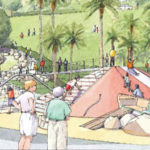
A renovated Playground in San Francisco Mission district's Dolores Park.

Dolores Park Playground


Dolores Park Playground
2011 - $3,000 General Operating Support

In 2011 the renovated Hellen Diller Dolores Park Playground opened to the public. Crucial to the redesign and fundraising efforts was the Friends of Dolores Park Playground, a group of almost a dozen organizers and more than 1,500 supporters who are committed to a safe and clean playground at Dolores Park.

The Friends of Dolores Park Playground sponsors social events at the playground for the enjoyment of parents and children and to bring greater vitality to Dolores Park and the wider community. The long-term mission of the Friends of Dolores Park is to remain stewards of the playground for years to come.

sfrecpark.org

Earth Island Institute

2017 - $10,000 Nature in the City
2015 - $10,000 Brower Youth Awards
The Earth Island Institute founded the Brower Youth Awards and New Leaders Initiative in 2000, to honor and mentor young environmental leaders and to use their stories to encourage other young people to pursue environmental and social justice projects.

Earth Island Institute


Earth Island Institute
2017 - $10,000 Nature in the City
2015 - $10,000 Brower Youth Awards

The Earth Island Institute founded the Brower Youth Awards (BYA) and New Leaders Initiative (NLI) in 2000, to honor and mentor young environmental leaders and use their stories to encourage other young people to pursue environmental and social justice projects. Each year six young leaders from North America, ages 13 to 22, are selected for a Brower Youth Award. Each BYA winner is honored in an award ceremony in San Francisco, a $3,000 honorarium, leadership and public speaking coaching, a wilderness excursion, and mentorship and career guidance in the years following their award. The NLI also produces short films about each BYA recipient that have been shown nationally on public television, at film festivals, and in schools. As of 2014, NLI has also provided an additional $1,500 in honoraria for BYA awardees to use for professional development opportunities.

earthisland.org

Earth Law Center

2019 - $10,000 General Operating Support
2017 - $10,000 Biodiversity Rights Ordinance
Earth Law Center (ELC) works to pass a new generation of Earth-centered laws in the United States and worldwide, including by seeking legal rights for Nature.

Earth Law Center


Earth Law Center
2019 - $10,000 General Operating Support
2017 - $10,000 Biodiversity Rights Ordinance

Mission: Earth Law Center (ELC) works to pass a new generation of Earth-centered laws in the United States and worldwide, including by seeking legal rights for Nature. California and the San Francisco Bay Area has long been a focal point of our work.

Introduction to Earth Law: Traditional environmental law has failed. Despite the passage of thousands of environmental laws and policies in the U.S. and globally, Nature's health continues to decline. We must awaken from the misguided belief that exploiting and destroying Nature leads to prosperity. Earth law, or ecocentric law, is an effort to remake the legal system in ways that promote a better balance between human needs and the needs of those ecosystems that we inhabit. 

Goal: ELC's long-term goal is to build a system of law that aligns human activities with biological constraints on a livable, thriving planet. In the U.S., our strategy to this end is to empower local movements and help them pursue regulatory and legal changes that are more protective of Nature. 

Strategy: ELC works throughout the USA and globally using the following strategies:: 

1. Write model laws that are “ecocentric”-i.e., ecosystem well-being is the primary concern;
2. Work to put ecocentric laws into practice in order to restore ecosystems to health; and

3. Train the next generation of legal professionals to help save the planet; and

Grassroots Campaigns: Much of ELC's work operates at the local level. ELC provides pro bono legal support to communities wishing to apply new, cutting-edge legal frameworks that are more protective of Nature.  With legal movements growing to give legal rights to Nature and recognize the human right to a healthy environment, amongst others, communities and governments need help drafting strong new laws. Not only does ELC draft these laws, but we also teach other lawyers to do similar work.

History: After being founded in Florida in 2009, ELC spent its formative years operating out of the San Francisco Bay Area, where it hired its first Executive Director and co-founded the Bay Area Rights of Nature Alliance. Since then, ELC has engaged in law and policy campaigns throughout the Bay Area and California, protecting rivers under the Clean Water Act, advancing new “Earth-centered” laws and policies, and building a movement of legal professionals who work to transform the legal system to better protect Nature. Over the years, ELC has also established a national and global presence with team members in Washington State, New York, and Mexico City, amongst other places. 

Seed Fund Projects: ELC is a proud recipient of two grants from Seed Fund advancing our work. The first project involved advancing the Rights of Nature in San Francisco with an emphasis on Nature’s inherent right to thriving biodiversity. The second project involved new policies that promote native, low water usage, drought-resistant tree species in San Francisco. For both projects, ELC wrote in-depth policy reports, met with a broad range of stakeholders and governmental officials, and submitted formal proposals for new laws/policies that are under consideration in 2021. Through this work, we hope to create a blueprint for a future in which humans and Nature thrive together in harmony in the San Francisco Bay Area. We also hope that new laws will not only protect Nature, but also restore it to health. 

Other Recent Wins: In addition to our work with Seed Fund, here are some of ELC's wins from the last year or so:

  1. ELC won a major Clean Water Act lawsuit against the State of California, helping to ensure that river pollution is fully addressed by state agencies.
  2. ELC assisted the Nez Perce tribe to write a declaration establishing the rights of the Snake River (Idaho), including its right to flow, based on Native American rights.
  3. ELC successfully secured the promotion of the Rights of Nature within the Convention on Biological Diversity, which was unprecedented for an environmental treaty. 
  4. ELC submitted 8 amicus briefs on the Rights of Nature and human environmental rights in Latin America over the last year. Some have resulted in victories, including a ruling in Oaxaca, Mexico, to restore the health of two rivers, the Atoyac and Salado. 
  5. ELC assisted the State of Colima in Mexico to pass a groundbreaking state constitutional amendment recognizing the Rights of Nature. 
  6. ELC released a law school coursebook entitled “Earth Law: Emerging Ecocentric Law” with Wolters Kluwer as the publisher (September 2020). Numerous law schools and university programs will teach from the book beginning Spring 2021.
  7. ELC drafted a Declaration on the Rights of the Southern Resident Orcas that received 15 organizational endorsements and support from several Washington State legislators.
  8. ELC secured a proclamation by the El Salvadoran Legislative Assembly recognizing that “forests are living entities” with human duties to care for, preserve, and respect forests.
  9. ELC is co-hosting a summit with the federal government of Nigeria to explore a new national law on the rights of rivers, which would be unprecedented in Africa.
  10. ELC earned 35+ media mentions in the last year, including in the Guardian, the Chicago Tribune, NBC News, and numerous environmental magazines.

Learn More: Visit www.earthlawcenter.org. You can also sign up for our newsletter or follow us on Facebook, LinkedIn, and Twitter.

YouTube Videos About Our Work:

General https://www.youtube.com/watch?v=lubNvaTigAU
Ocean Rights https://www.youtube.com/watch?v=LH31biWQgt0 
River Rights https://www.youtube.com/watch?v=I2p7EfOKaFA

earthlawcenter.org

Education Outside (formerly San Francisco Green Schoolyard Alliance)

2014 - $8,000 Corps for Education Outside Program
2011 - $5,000 Conference Support
2009 - $12,000 Matching Grant for Gardening Educators
2008 - $5,000 Conference Support
2007 - $10,000 General Operating Support
The San Francisco Green Schoolyard Alliance is a coalition of Bay Area civic organizations whose work supports schoolyard transformations from asphalt yards into ecologically rich green spaces for learning and play.

Education Outside (formerly San Francisco Green Schoolyard Alliance)


Education Outside (formerly San Francisco Green Schoolyard Alliance)
2014 - $8,000 Corps for Education Outside Program
2009 - $12,000 Matching Grant for Gardening Educators
2008 & 2011 - $5,000 Conference Support
2007 - $10,000 General Operating Support

Corps for Education Outside program
Corps for Education Outside program is an innovative new program which is transforming San Francisco’s public schools into centers of hands-on environmental science learning and biodiversity.  Corps members transform school gardens into lush, living laboratories, teaching engaging, hands-on lessons that encompass not only science but also sustainability, healthy living, gardening, and cooking. The curriculum used focuses primarily on science as well as English language arts and math.

San Francisco Green Schoolyard Alliance
The San Francisco Green Schoolyard Alliance (SFGSA) is a coalition of Bay Area civic organizations whose work supports schoolyard transformations from ordinary asphalt yards into ecologically rich green spaces for learning and play. SFGSA works to ensure that these emerging vibrant landscapes reflect a school’s local ecology and meet the school’s curricular goals. SFGSA members offer a wide variety of resources that can help school communities create and sustain green schoolyards. They advocate for school yard greening at district, city, and state levels; provide professional development for teachers and parents; secure horticultural supplies and other resources for schools; and maintain a website and hotline for advice and troubleshooting needs.


Education Outside (formerly San Francisco Green Schoolyard Alliance)
2014 - $8,000 Corps for Education Outside Program
2011 - $5,000 Conference Support
2009 - $12,000 Matching Grant for Gardening Educators
2008 - $5,000 Conference Support
2007 - $10,000 General Operating Support

Corps for Education Outside program
Corps for Education Outside program is an innovative new program which is transforming San Francisco’s public schools into centers of hands-on environmental science learning and biodiversity.  Corps members transform school gardens into lush, living laboratories, teaching engaging, hands-on lessons that encompass not only science but also sustainability, healthy living, gardening, and cooking. The curriculum used focuses primarily on science as well as English language arts and math.

San Francisco Green Schoolyard Alliance
The San Francisco Green Schoolyard Alliance (SFGSA) is a coalition of Bay Area civic organizations whose work supports schoolyard transformations from ordinary asphalt yards into ecologically rich green spaces for learning and play. SFGSA works to ensure that these emerging vibrant landscapes reflect a school’s local ecology and meet the school’s curricular goals. SFGSA members offer a wide variety of resources that can help school communities create and sustain green schoolyards. They advocate for school yard greening at district, city, and state levels; provide professional development for teachers and parents; secure horticultural supplies and other resources for schools; and maintain a website and hotline for advice and troubleshooting needs.

Environmental Action Committee of West Marin

2019 - $10,000 Coastal Resiliency
2018 - $20,000 Regional Strategy
2016 - $9,000 General Operating Support
The Environmental Action Committee of West Marin is a tenacious, highly effective grassroots advocacy organization founded in 1971 that is dedicated to the protection and appreciation of West Marin’s wild lands, wildlife, wilderness, watersheds, and rural character.

Environmental Action Committee of West Marin


Environmental Action Committee of West Marin
2019 - $10,000 Coastal Resiliency
2018 - $20,000 Regional Strategy
2016 - $9,000 General Operating Support

In response to impending threats of climate change and sea-level rise, several municipalities along the California coast are preparing comprehensive planning documents to provide public guidance on the consequences of rising seas.  Strong public standards and guidelines are needed to address how changing environmental conditions, like flooding, runoff, erosion, salinity changes, temperature changes, and ocean acidification will affect habitats in tidal zones, coastal dunes, estuaries, and riparian corridors.  In addition, planning documents need to provide comprehensive and realistic solutions for property owners and municipalities that are located within flood plains and include options to utilize new technology and green infrastructure that are balanced in the best available science.

The Environmental Action Committee (EAC) is uniquely positioned to review Marin County’s proposed guidelines in their amended Local Coastal Plan's environmental hazards chapter.  The EAC will provide comments and public information to the community based on a comprehensive review of the County’s proposals.

eacmarin.org

Estuary & Ocean Science Center

2016 - $15,000 General Operating Support
2015 - $15,000 General Operating Support
The Estuary & Ocean Science Center is located on the Romberg Tiburon Campus of San Francisco State University in Marin County, with a mission to connect science, society, and the sea.

Estuary & Ocean Science Center

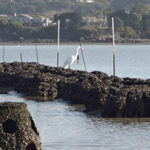
New, modular reef design for living shorelines placed in groups of four at Dunphy Park in Sausalito in summer 2022. After just a few months (photos from late fall 2022), the reefs were holding up well and attracting native oysters and seaweeds.

New, modular reef design for living shorelines placed in groups of four at Dunphy Park in Sausalito in summer 2022. After just a few months (photos from late fall 2022), the reefs were holding up well and attracting native oysters and seaweeds.

Estuary & Ocean Science Center
2015 & 2016 - $15,000 General Operating Support

The Estuary & Ocean Science (EOS) Center is located on the Romberg Tiburon Campus of San Francisco State University, with a mission to connect science, society, and the sea. The EOS Center is the only marine lab on San Francisco Bay, and leads scientific study of the Bay with a diverse population of undergraduate and graduate students. The center’s strong focus on advancing the understanding and practice of restoration has increasingly incorporated restoration as a mechanism to address and mitigate climate change impacts.

The EOS Center is creating native oyster habitats to restore large acreages of native Olympia oysters. These structures will also provide shoreline protection in an era of sea level rise. The Seed Fund supported one of the first projects dedicated to oyster rehabilitation in the Bay Area, to conduct early steps in producing innovative designs for lightweight and modular oyster reef systems that can be installed by researchers and volunteers without the need for expensive equipment. These creative oyster reef designs will benefit communities in need of shoreline protection regardless of location or economic status. The EOS Center leveraged support from the Seed Fund into additional funding from the State Coastal Conservancy and Marin Community Foundation (working with the Smithsonian Environmental Research Center and Studio for Urban Projects), and has placed a new reef design at three locations in San Francisco Bay to test their success before scaling them up to larger areas to aid in shoreline protection.

eoscenter.sfsu.edu

Exploratorium

2025 - $15,000 Sea Level Rise Public Education
2021 & 2022 - $15,000 Urban Fellows Program
2019 - $10,000 Coastal Resiliency Collaboration
2019 - $10,000 General Operating Support
2016 & 2017 - $10,000 Habitat: Bay As It Is Symposium
2015 - $10,000 Center for Art and Inquiry
2014 to 2018 - $10,000 Urban Fellowship
2013 - $10,000 Jane Wolf, Bay Lexicon
2013 - $1,000 Living Innovation Zone
2011 - $10,000 Capital Campaign
The Exploratorium is a San Francisco museum of science, art, and human perception that believes that curiosity and asking questions can lead to amazing moments of discovery and learning.

Exploratorium

The Exploratorium is a LEED-Platinum rated building and the institution is working toward energy neutrality through systems like the solar panels on Pier 15. © Exploratorium, www.exploratorium.edu

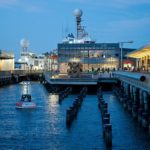
The Exploratorium’s Pier 15 and 17 is centrally situated on San Francisco’s Embarcadero Waterfront, with access to public transit, and a working dock for visiting ships of all types.© Exploratorium, www.exploratorium.edu

The Exploratorium welcomes over 800,000 visitors every year, from field trip students to adult After Dark audiences to curious individuals from every walk of life. © Exploratorium, www.exploratorium.edu

The Fisher Bay Observatory is home to many of the incredible environmental programs of the Exploratorium. Among its many incredible exhibits and programs, it houses the Wired Pier-an array of sensitive instruments around the Exploratorium campus that measure and record conditions in the environment-the weather, Bay water, pollution, and more © Exploratorium, www.exploratorium.edu

The entire Exploratorium is a hub of environmental programming-our working dock welcomes NOAA research ships and other vessels, our buoy gathers information year-round, and the Fisher Bay Observatory convenes the leading minds in urban resilience and sustainability. © Exploratorium, www.exploratorium.edu

The Exploratorium’s Gallery 4 is dedicated to Living Systems and is one of the only informal learning institutions in the country with a working wet lab on site. © Exploratorium, www.exploratorium.edu


Exploratorium
2025 - $15,000 Sea Level Rise Public Education 
2021 & 2022 - $15,000 Urban Fellows Program
2019 - $10,000 Coastal Resiliency Collaboration
2019 - $10,000 General Operating Support
2016 & 2017 - $10,000 Habitat: Bay As It Is Symposium
2015 - $10,000 Center for Art and Inquiry
2014 to 2018 - $10,000 Urban Fellowship
2013 - $10,000 Jane Wolf, Bay Lexicon
2013 - $1,000 Living Innovation Zone
2011 - $10,000 Capital Campaign

Since 1969, the Exploratorium’s museum in San Francisco has been home to a renowned collection of 650+ exhibits that draw together science, art, and human perception, and that have changed the way science is taught. Our award-winning programs inspire visitors, empower teachers through our cutting-edge teacher development program, and influence a global movement where 80% of science centers across the globe contain Exploratorium exhibits. The exhibits on the floor are designed to enable experimentation with physical phenomena while simultaneously strengthening thinking and inquiry skills. This is true not only for our audiences of over 850,000 people a year in San Francisco, but for an estimated 250 million people who experience our exhibits at science centers around the world. As founder Frank Oppenheimer saw it: “A lot of people have given up trying to comprehend things, and when they give up with the physical world they give up with the social and political world as well. If we stop trying to understand things, I think we’re all sunk.” The Exploratorium continues to build on his foundational belief that citizens who are curious and empowered to learn about the world are more likely to take action and tackle problems in their communities.

The Exploratorium’s location on Piers 15 and 17, and in particular our investment in the Fisher Bay Observatory, has provided an unprecedented opportunity to engage the public with a wealth of data about the area’s natural and built environments and dynamic access to the researchers collecting it. Since our relocation from the Palace of Fine Arts in 2013, we have been continually evolving exhibits, programs, and partnerships to engage diverse audiences in understanding the complex ecologies that emerge through the interaction between social, cultural, and natural forces and systems. The facility serves as a new model for a combined research and learning space-an open laboratory for researchers, policy makers, and the public. We are educators who have learned that as we face global climate crises, our strategy must be expansive including the contributions of scientists, educators, artists, designers, historians and cultural workers, as well as practitioners in the realms of policy and advocacy. 

Due to the Covid-19 pandemic, the Exploratorium closed its doors on March 12, 2020. Our museum has always been a playground of discovery and hands-on learning, but as we remain closed, our educators, exhibit developers, scientists and other staff have gotten creative in sparking curiosity online. From helping teachers make science come alive in virtual classrooms, to engaging families all over the globe in tinkering projects, to illuminating timely science through online events like Covid Conversations and After Dark, the Exploratorium’s online content highlights what the Exploratorium does best: creating learning experiences that are engaging, interactive, inspiring, and trustworthy.

The digital programming and resources reach audiences from young kids to adults, and present a full range of topics from nearly all Exploratorium departments, from biology, to the environment, to Cinema Arts. In all, our digital resources are being used more than ever: traffic to our website, which serves 2M people annually, is up by nearly 300%. The Exploratorium is proud to continue sparking curiosity wherever people are, whether the kitchen table laboratory, the virtual classroom, the outdoors, or-eventually-back at Pier 15

Urban Fellowship
The Exploratorium's new Urban Fellow program will address issues related to climate change and rising sea levels.  This program situates an artist or urban practitioner in a residency within the Bay Observatory to explore the human relationship to the urban environment.  Fellows could explore concrete forms: such as architecture and infrastructure: as well as human forms: such as approaches to planning or individual practices within the city.  This investigation is both important and timely as urban areas globally explore the issue of climate change and coastal resiliency.

Jane Wolf, Bay Lexicon
Bay Lexicon is an illustrated field guide to San Francisco’s shoreline. Using methods and tools from landscape scholarship, design, and science education, Bay Lexicon aims to encourage observation and enquiry about the natural world and its relation to culture.

Living Innovation Zone
The LIZ project is a place making project, which encourages people to engage with their environment and each other in new and surprising ways.  The Exploratorium relies on this kind of open-ended inquiry as a means of engaging people and encouraging them to learn about themselves and the world around them.

Capital Campaign
It is the Exploratorium’s goal to be the world’s first net zero energy, carbon neutral museum.  Their LEED Platinum certification sets the stage as they continue to work on their sustainability goals.  The new location on San Francisco’s waterfront showcases a premiere “green” building, operating with maximum energy efficiency and preservation of the atmosphere.

exploratorium.edu

Farallones Marine Sanctuary Association

2016 - $20,000 Climate Smart Conservation Project
2015 - $20,000 Climate Smart Conservation Project
The Farallones Marine Sanctuary Association supports and assists the Greater Farallones National Marine Sanctuary in outreach, education and stewardship.

Farallones Marine Sanctuary Association


Farallones Marine Sanctuary Association
2015 & 2016 - $20,000 Climate Smart Conservation Project

The Farallones Marine Sanctuary Association (FMSA) supports and assists the Greater Farallones National Marine Sanctuary in outreach, education and stewardship. The Farallon Islands are considered the Galapagos of California, making the islands an important resource for scientists to test the effects of climate change.

FMSA, through the Climate Smart Conservation Project, assessed 3,293 square miles from Point Ano Nuevo in the southernmost part of San Mateo County to Point Arena in Mendocino County for vulnerabilities and developed an implementation plan for the Gulf of the Farallones National Marine Sanctuary (GFNMS). The plan included approved adaptation actions, as well as recommended adaptation actions for additional coastal management agencies to effectively deal with plausible future climate scenarios. The GFNMS will also spearhead at least two pilot projects in partnership with the Bolinas Lagoon Restoration Project to create substantive adaptation efforts for coastal land management agencies to emulate.

farallones.org

Friends of Potrero Nursery School

2013 - $8,000 Urban Garden
2010 - $5,000 Capital Campaign
The Friends of Potrero Hill Nursery School is a much-loved preschool that has served San Francisco families for over 12 years.

Friends of Potrero Nursery School


Friends of Potrero Nursery School
2013 - $8,000 Urban Garden
2010 - $5,000 Capital Campaign

The Friends of Potrero Hill Nursery School (FOPHNS) is a much-loved preschool that has served San Francisco families for 12 years. In that time over 200 children have begun school in its caring and delightful atmosphere with an emphasis and a reverance for nature.  Creating environmentalists from the start, children are engaged in a seasonal cycle of activities in their small garden and throughout the neighborhood, drawing the children’s attention to the natural world around them.Capital Campaign
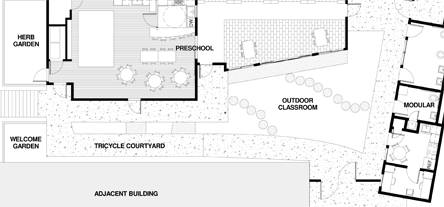
The capital campaign raised funds to build a permanent home for FOPHNS and a new Family Center on the grounds of the oldest public schoolhouse in San Francisco. The San Francisco Unified School District has leased to FOPHNS two outbuildings for a token amount, with the understanding that Friends will reuse them to better the community. This opportunity will not only provide long-term security for the school, but will also transform the I.M. Scott site and its two abandoned buildings into vibrant community assets: a Preschool and a Family Center. This project models a new form of green community center - a place where the nurturing of children is understood to be at the heart of creating a healthy society.

Urban Garden
To complement the completed main building, this second phase of the project creates a garden and play space that will surround a small family center.  The garden is a fascinating place for young children, full of the drama of birds and bugs  and worms as well as the processes of growth and decay. Caring for plants allows children to become closely acquainted with these and other living organisms. This sparks curiosity and empowers children to learn more about their natural surroundings.

fophns.com

Friends of the Urban Forest

2023 - $5,000 General Operating Support
2019 - $15,000 General Operating Support
2007 - $10,000 General Operating Support
Friends of the Urban Forest promotes a larger, healthier urban forest as part of San Francisco’s green infrastructure through community planting, tree care, education, and advocacy.

Friends of the Urban Forest


Friends of the Urban Forest

2023 - $5,000 General Operating Support
2017 & 2019 - $15,000 General Operating Support

Friends of the Urban Forest (FUF) promotes a larger, healthier urban forest as part of San Francisco’s green infrastructure through community planting, tree care, education, and advocacy. Each year, FUF helps communities plant nearly 1,000 trees. Neighbors organize the plantings, while FUF obtains permits, removes sidewalk concrete, supplies tools and materials and selects, purchases and delivers the trees. On planting day, FUF volunteers work side-by-side with residents. After the work is done, everyone celebrates over a community lunch.In 1995, FUF formally instituted Tree Care to improve tree health and to increase survival rates - certified arborists, assisted by volunteers and trainees, prune and re-stake existing street trees. Tree Care aims to provide essential maintenance services and to educate neighbors, through mailings and hands-on assistance, on how to care for their trees.  FUF is committed to increasing its resources for Tree Care, which is essential to maintain and enhance the community’s investment in San Francisco’s urban forest.

fuf.net

Futurefarmers/Amy Franceschini

2020 - $10,000 FogHouse Project
2017 - $15,000 Seed Journey
2010 - $5,000 Free Soil: Farming 2050 Publication
2007 - $10,000 Victory Garden Project
Founded in 1995 by Amy Franceschini, Futurefarmers, is an international group of art practitioners with common interest in creating work that challenges current social, political and economic systems.

Futurefarmers/Amy Franceschini


Futurefarmers/Amy Franceschini
2020 - $10,000 FogHouse Project
2017 - $15,000 Seed Journey
2010 - $5,000 Free Soil: Farming 2050 Publication
2007 - $10,000 Victory Garden Project

Amy Franceschini is a pollinator who creates formats for exchange and production that question and challenge the social, cultural and environmental systems that surround her. In 1995, Amy founded Futurefarmers, an international collective of artists. In 2004, Amy co-founded Free Soil, an international collective of artists, activists, researchers, and gardeners who work together to propose alternatives to the social, political and environmental organization of space.Victory Gardens
Victory Gardens 2007+ calls for a more active role for cities in shaping agricultural and food policy. It is a concept in development with the city of San Francisco that would provide a subsidized home gardening program for individuals and neighborhoods.  This program offers tools, training & materials for urban dwellers to participate in a city-wide transformation of underutilized backyards- turning them into productive growing spaces. The project draws from the historical model of the 1940's American Victory Garden program to provide a basis for developing urban agriculture as a viable form of sustainable food practice in the city.

Farming 2050
The first issue of the annual journal Free Soil, FARMING 2050, documents a one-day experiment where eleven artists, farmers, writers, policy makers, architects and philosophers were invited to imagine farming in 2050. What will it look like and how will we get there? What materialized was a range of apprehensions, evaluations and revelatory combinations of fact and fiction that offer a diverse look on the future of farming. This hyper-local portrait of critical, San Francisco voices reflects a sense of optimism intertwined with serious demands to re-evaluate the current logic that dominates our food system.

futurefarmers.com

Garden for the Environment

2009 - $10,000 Green House Capital Campaign
2008 - $10,000 General Operating Support
2007 - $10,000 General Operating Support
Garden for the Environment maintains a nationally acclaimed one-acre urban demonstration garden and offers environmental education programs.

Garden for the Environment


Garden for the Environment
2009 - $10,000 Green House Capital Campaign
2007 & 2008 - $10,000 General Operating Support

Garden for the Environment (GFE) maintains a nationally acclaimed one-acre urban demonstration garden and offers environmental education programs about organic gardening, urban compost systems and sustainable food systems. Since its founding in 1990, the garden has operated as a demonstration site for small-scale urban ecological food production, organic gardening and low water-use landscaping.

Today, GFE’s programs include four central educational elements; a three month intensive Gardening and Composting Educator Training program, monthly Compost Education workshops conducted at the garden and community gardens throughout San Francisco, the Resource Efficient Landscape Education series, and the School Education program offered in partnership with San Francisco Unified School District and San Francisco’s Department of the Environment.

gardenfortheenvironment.org

Gowanus Canal Conservancy

2024 - $15,000 Landscape Management
2022 - $15,000 Master Plan
2020 - $10,000 General Operating Support
Gowanus Canal Conservancy (GCC) advocates and cares for ecologically sustainable parks and public spaces in the Gowanus Lowlands while empowering a community of stewards.

Gowanus Canal Conservancy

Community Science Water Quality Testing (Pre-COVID, Photo_ Jeremy Amar)

Gowanus Blue Schools Design Challenge (Pre-COVID, Photo_ Jeremy Amar)

Gowanus Canal Shot (Photo_ Jonathan Grassi)

Gowanus Green Team Group Pose (During COVID - Photo_ Caroline Laroche)

Gowanus Neighborhood Tree Stewardship (Pre-COVID, Photo_ Jeremy Amar)


Gowanus Canal Conservancy
2024 - $15,000 Landscape Management
2022 - $15,000 Master Plan
2020 - $10,000 General Operating Support

Gowanus Canal Conservancy (GCC) advocates and cares for ecologically sustainable parks and public spaces in the Gowanus Lowlands while empowering a community of stewards. Since 2006, GCC has led volunteer projects focused on garden and street tree stewardship; educated and activated community stewards, volunteers, and students in urban water issues; equipped the community to build and advocate for a healthy waterway and environmentally resilient neighborhood; and worked with agencies, elected officials, and the community to advocate for, build, and maintain innovative green infrastructure in the Gowanus Watershed. 

As the Gowanus neighborhood is facing rapid change from the Gowanus Canal Superfund clean-up, City-proposed Gowanus Neighborhood Rezoning, and preparations for sea level rise, GCC has established itself as the guiding community voice for innovative green infrastructure design in Gowanus’ public realm to create a more sustainable and livable neighborhood.

The Gowanus Lowlands Master Plan is a community-based vision for a public realm formed from a network of parks, publicly-accessible waterfront esplanades, and tree-lined corridors centered on the Gowanus Canal. The Gowanus Lowlands builds upon multiple planning and clean-up processes to provide the community with accessible green space, cultural resources, and recreational amenities while serving multiple functions through increased flood resilience, mitigation of the impacts of the urban heat island effect, creation of habitat, stormwater management, and reduction in pressure on the sewer system. 

GCC empowers local stakeholders in stewardship of their local landscapes through ongoing, in-person stewardship events and opportunities. Through the Gowanus Tree Network, GCC recruits, trains, and supports local residents and business owners in the Gowanus Lowlands as they provide long term tree stewardship on their blocks. GCC distributes tools, compost, and plants and provides support for volunteers and residential gardeners living in nearby NYCHA public housing. Additional volunteers are engaged in GCC’s Volunteer Program in propagating and planting native plants, and in removing weeds and litter from street trees and bioswales throughout the neighborhood. These stewardship efforts help to reduce combined sewer overflow (CSO) and urban heat island impacts, while supporting livable and beautiful spaces for community members to enjoy. Temporary COVID adaptations have been developed to ensure the safety of all environmental stewards. 

The Lowlands Nursery grows healthy native, urban-adapted plants, with a focus on local ecotypes in order to facilitate the planting of native plants in the Gowanus Lowlands. These native plants are distributed throughout Gowanus, and can be found at the Salt Lot, in nearby tree pits and neighborhood gardens, and in the yards of community members, organizations, and schools. Volunteers help plant these native plants during in-person volunteer events. Plants can also be purchased at the Salt Lot during plant sale events or by appointment. Temporary modifications have been made, allowing customers to purchase plants, soil, and compost online, which they can then pick up at a predetermined time.

Gowanus Green Team employs youth, primarily recruited from local NYCHA public housing, in order to better understand local environmental issues and build skills and knowledge for environmental careers. Apprentices participate in classroom lessons, field work and training, and trips to parks and restoration areas in Gowanus and around NYC. Apprentices develop physical skills, including gardening, infrastructure maintenance, and plant identification; teamwork and communication skills; and knowledge about urban environmental issues facing our city. Last season, GCC’s apprenticeship program took place with stringent physical distancing and safety measures in place. Eight youth living in neighborhood NYCHA housing logged 884 hours over three months and developed stewardship skills and provided horticultural maintenance in the Lowlands Nursery, rain gardens, and street trees. The program included weekly virtual sessions focused on neighborhood ecology, green infrastructure, horticultural techniques, and job skills.

The Urban Ecology, Gowanus Blue Schools, and Community Science education programs provide supplementary educational content tailored to an audience of students, teachers, and families in the surrounding watershed and EJ areas. These programs educate, engage, and inspire those who are most directly impacted by the environmental issues in Gowanus. They are equipped with the tools they need to make positive change. The Urban Ecology Program engages K-5 students in the importance of environmental stewardship, green infrastructure as a solution to pollution, and native plant horticulture, as they propagate numerous native plant species on site. The Gowanus Blue Schools Program teaches students in grades 5-12 to imagine and develop green infrastructure design proposals to help reduce CSO impacts on their school campuses. The Community Science Program equips students in grades 5-12 with an understanding of water quality health and data collection, allowing students to assess a variety of water quality parameters through on-site testing. Each program has been temporarily modified into a remote learning model, featuring virtual field trips, to accommodate as many students as possible during this challenging time.

gowanuscanalconservancy.org

Greenbelt Alliance

2022 - $20,000 Resilience Hotspots
2007 - $10,000 General Operating Support
The Greenbelt Alliance works to help cities and counties adopt policies to prepare for future growth while stopping wasteful sprawl development.

Greenbelt Alliance

Greenbelt Guardian Outing at Reinhardt Park in Oakland (2022). Credit: Daniela Ades/Greenbelt Alliance

Alviso and Coyote Creek. Credit: Karl Nielsen.jpg

Prescribed Burn performed by CAL Fire at TomKat Ranch in Pescadero. Credit: Karl Nielsen/Greenbelt Alliance

Urban greening and housing. Credit: Karl Nielsen/Greenbelt Alliance

Ride The Line bike ride outing in Antioch and Brentwood (2016). Credit: Greenbelt Alliance

Farmer at TomKat Ranch, in Pescadero. Credit: KarlNielsen/Greenbelt Alliance

Kids playing In Sunnyvale. Credit: Karl Nielsen/Greenbelt Alliance

Greenbelt Guardian Outing at Reinhardt Park in Oakland (2022). Credit: Daniela Ades/Greenbelt Alliance


Greenbelt Alliance
2022 - $20,000 Resilience Hotspots
2007 - $10,000 General Operating Support

About Greenbelt Alliance

The Bay Area has a major problem: we aren’t ready for climate change. Greenbelt Alliance is rising to the challenge by educating people, advocating for bold change and collaborating across sectors to address the climate crisis. Over Greenbelt Alliance’s 65-year history, the organization has stewarded this region’s beautiful natural landscapes while promoting the growth needed for communities to thrive for generations to come. As a result of this work, almost 3.3 million acres of the Bay Area’s nine counties are protected open spaces.

Today, Greenbelt Alliance leverages its expertise in land-use policy advocacy and regional collaboration to realize a climate-resilient Bay Area. This looks like communities and people thriving in the places they live, work, and play. Staying safe during climate disasters. Connecting with open spaces in new and powerful ways. Suffering less and recovering quickly after the next wildfire, flood, or drought. All thanks to equitable solutions drawing on the powerful role of nature. The path toward this future is complex and more urgent than ever, which is why Greenbelt Alliance focuses on data-driven and innovative policy solutions while fostering much-needed regional collaboration to plan and invest in resilient communities.

Over the last seven years alone, Greenbelt Alliance has protected over 70,000 acres of open space lands from development. These lands provide critical resources for worsening climate impacts by serving as natural buffers during wildfires, providing groundwater during drought, and offering refuge during uncertain times. Greenbelt Alliance has also spurred the approval of over 19,000 new homes during the same seven-year span through the Climate SMART-Sustainable, Mixed, Affordable, Resilient, Transit-Oriented-Development Program. This SMART development creates communities in balance with nature, reducing greenhouse gas emissions, and increasing resilience to climate-related risks. 

Bay Area Resilience Hotspots Project

Across the Bay Area, there is a need for prioritizing nature-based climate resilience projects to protect communities that are most vulnerable to climate change-in ways that have multiple benefits to habitat, open space, biodiversity, recreation, and more. Through the Bay Area Resilience Hotspots project, Greenbelt Alliance is bringing together climate, sprawl development, and social vulnerability data and convening local stakeholders to collaboratively identify pathways to increase investment in on-the-ground resilience initiatives. Through a community-driven process, Greenbelt Alliance is advancing planning and policy solutions co-created with resident voices and bringing people together with local government to ensure underrepresented members of the community have the opportunity to shape the future of their city or county. The Bay Area Resilience Hotspots initiative leverages collaboration and data to enable cities and communities to build consensus on resilience priorities that not only prioritize conservation, but also social and economic factors that are key to crafting powerful climate solutions. Ultimately, this work will increase land protection and stewardship in ways that enhance biodiversity and build equitable resilience to climate change across the Bay Area.

Methodology and Outcomes

Through a robust spatial analysis process, Greenbelt Alliance has compiled regional data to identify opportunities for nature-based solutions that will allow us to respond to wildfire, flooding, and extreme heat events. This work was informed by creating methodologies that incorporate not only physical features of a place like climate and sprawl risk, but also socioeconomic factors that can make some populations more vulnerable to climate hazards. This process was guided by a diverse group of technical advisors who reviewed methodology and data and provided feedback on best practices. 

Using this mapping and data, Greenbelt Alliance is partnering with local leaders to understand the context on-the-ground and co-create priority actions. Climate adaptation and resilience must be locally appropriate and supported by community leaders. Central to the Bay Area Resilience Hotspots project is the development of strong local partners and stakeholders to drive this vital work forward-providing geographically-specific knowledge and expertise that is critical to adequately interpreting and contextualizing data and collaborating on multi-benefit solutions. Greenbelt Alliance is partnering with locally rooted organizations, community leaders, and key stakeholders to center past and ongoing resilience efforts, document priorities for adaptation, create shared narratives around data, and develop pathways towards resilience that meet joint goals and priorities. For each hotspot location, a Community Resilience Profile will present these shared objectives for a broader audience.

Community Resilience Profiles are easy-to-understand narratives that will be used to build support and focus resources on priority hotspots locations. Greenbelt Alliance is sharing the stories of these priority hotspots through a dedicated webpage and interactive map for anyone to use. Ultimately, the goal of this work is to advance on-the-ground resilience investments throughout the Bay Area. These resources can be used for advocates to promote climate resilient policies, enable local coalitions to develop project concepts and apply for funding, and build overall support for resilience action.

greenbelt.org

Greenhorns

2012 - $5,000 Seed Circus
Using radio, blogs, film, and live events, the Greenhorns build agrarian culture by connecting young farmers with information, land, and each other.

Greenhorns

Greenhorns
2012 - $5,000 Seed Circus

The Greenhorns is a grassroots non-profit organization made up of young farmers and many collaborators. Their mission is to recruit, promote and support the new generation of young farmers. Using radio, blogs, film, and live events, the Greenhorns build agrarian culture by connecting young farmers with information, land, and each other.

America wants more young farmers and more young farmers want a piece of America. We know it will take millions of these rough and ready protagonists of place to care for our ecosystems and serve our country healthy food in the years to come. The Greenhorns enable this critical meeting between minds, bodies, and land by helping young and aspiring farmers to navigate career paths, build skills, and connect with each other. Our multifaceted approach includes on-the-ground organizing of events and workshops, media production, and online coalition building.

The Seed Circus is a series of cultural events engages attendees in tactile, sensual, and cacophonous experiences containing elements of country fair, circus, adult education, and child-centered sport as entry points into advocating for an alive and vital farm economy.  Its purpose is to build capacity on farms for functionality and agrarian celebration.  More widely it is meant to trigger greater understanding of the young farmers movement.  It functions as a series of multi-stage performances, interactive work stations, public acts of improvisation, lectures, films, and interpretive agricultural exhibits.   Seed Circus' have taken place in New York and Oakland, CA.  Plans are in the works for a Seed Circus in Washington DC in September 2013. thegreenhorns.net

Greenlining Institute

2020 - $20,000 Environmental Equity Program
The Greenlining Institute works toward a future when communities of color can build wealth, live in healthy places filled with economic opportunity, and are ready to meet the challenges posed by climate change.

Greenlining Institute


Greenlining Institute
2020 - $20,000 Environmental Equity Program

The Greenlining Institute works toward a future when communities of color can build wealth, live in healthy places filled with economic opportunity, and are ready to meet the challenges posed by climate change. To achieve this vision, Greenlining is committed to building a just economy that is inclusive, cooperative, sustainable, participatory, fair, and healthy. Greenlining holds firm to the belief that diverse communities are a source of unrealized assets and strength, and that this diversity leads to greater effectiveness. Acting from this principle, Greenlining ensures that community voices are participating in major policy debates by building diverse coalitions of cross-sector leaders that work together to advance solutions to our nation's most pressing problems.

Over the next three years (2021-23) Greenlining will work to increase the well-being of communities and households of color through the following strategies:

  1. Shape a just and healthy economy and eliminate the root causes of the inequities faced by communities of color.
  2. Increase household wealth in communities of color.
  3. Build healthy and climate resilient communities of color.
  4. Build intersectional leadership and power across issues, sectors and places to advance an equity agenda.
  5. Cultivate an expanding generation of racial equity leaders.
  6. Strengthen Greenlining’s internal operations to align with our ambitions

Greenlining was founded in the mid-1970s by a group of grassroots leaders from the African American, Asian American, Latino, and disabled communities who came together around a new and visionary set of ideas: Instead of simply fighting institutionalized discrimination and redlining, Greenlining should work to proactively bring investments and opportunity into our communities. Instead of redlining, it would work to greenline -- bringing new investments and opportunities into low-income communities and communities of color.

Since The Greenlining Institute’s nonprofit incorporation in 1993, it has successfully negotiated with corporations and passed policies to direct over $600 billion in investments into communities of color. It has also pioneered cross-sector solutions and advanced a racial equity lens in leading industries that have traditionally been overlooked by civil rights leaders. Greenlining has worked closely with the California Legislature and local jurisdictions to make equity real through the passage and implementation of policies and practices that maximize benefits to disadvantaged communities as a foundation for systemic change. As an example, its team advanced California climate policies that led to $1 billion in investments directed to communities most impacted by pollution, climate change and lack of economic opportunity. Families now have solar power, affordable housing, and economic opportunities because of our advocacy.

The Greenlining Institute's climate equity initiative works to fight poverty and pollution, ensuring that communities hit first and worst by climate change receive environmental and clean energy investments that will reduce pollution, create good jobs for local residents, improve the resiliency of disadvantaged communities, and strengthen local economies without displacing communities of color.

A major component of this effort is to create robust, effective, enduring statewide transportation electrification policies and projects that lead to accelerated and timely large-scale emissions reductions while simultaneously maximizing long-term public health and economic benefits for priority communities of color. Greenlining aims to eliminate the structural inequities in California's transportation system by addressing the mobility needs of low-income communities of color through increased access to high-quality clean mobility options that reduce air pollution and enhance economic opportunity. To that end, Greenlining focuses on advancing the following key objectives:

  1. Advance strategies to ensure Mobility Equity becomes a mainstream concept in transportation and climate policy.
  2. Implement and shape electric vehicle and mobility equity programs by expanding funding for these programs, collaborating with implementing agencies and service providers, highlighting equity best practices and shortcomings, informing Bay Area stakeholders of available opportunities, and promoting success stories.

greenlining.org

Greywater Action

2010 - $2,000 General Operating Support
Greywater Action is a collaborative group of educators, designers, builders, and artists who educate and empower people to build sustainable water culture and infrastructure.

Greywater Action


Greywater Action
2010 - $2,000 General Operating Support

Greywater Action is a collaborative group of educators, designers, builders and artists who educate and empower people to build sustainable water culture and infrastructure. Their teaching tools include interactive models of composting toilets and greywater systems and design/installation workshops. Through hands on workshops and presentations, Greywater Action has educated hundreds of people about the process of greywater system design and construction, and built greywater systems at dozens of houses in cities in California and beyond.

greywateraction.org

Guerrero Park

2009 - $8,000 General Operating Support
San Jose Avenue, previously a one-way northbound street, was closed at its intersection with Guerrero Street to form a community gathering and green space.

Guerrero Park

Guerrero Park
2009 - $8,000 General Operating Support

San Jose Avenue, previously a one-way northbound street, was closed at its intersection with Guerrero Street and is now a two-way “cue street,” providing local access to residents along the block. The design of the resulting space was developed by Jane Martin of Shift Design Studio who provided her services free of charge to the City.

Raised planters, made of reclaimed logs from Golden Gate Park and featuring native and drought tolerant plants have been placed along the edge of the plaza facing Guerrero Street, creating a comfortable place for relaxation, contemplation and more active uses. Reclaimed segments of stainless steel ducting are filled with soil and plants in order to further demarcate the plaza space from the adjoining vehicular roadways. The soil used at this site is made in San Francisco by combining landscape clippings from parks and horse manure from the Police Department’s stables. Café tables and chairs are brought out in the morning and taken in at night. Future plans for the plaza include a children’s play structure.

photo credit: Lucy Goodhart

Headlands Center for the Arts

2015 - $15,000 Climate Change Summit
2012 - $10,000 Architecture/Environment Resident, Mathilde Cassani
2011 - $10,000 Architecture/Environment Resident, Liam Young
The Headlands Center for the Arts provides intensive residency experiences to an international community of artists working across artistic disciplines.

Headlands Center for the Arts


Headlands Center for the Arts
2015 - $15,000 Climate Change Summit
2012 - $10,000 Architecture/Environment Resident, Mathilde Cassani
2011 - $10,000 Architecture/Environment Resident, Liam Young

Headlands Center for the Arts (HCA) provides intensive residency experiences to an international community of artists working across artistic disciplines. The peer-to-peer learning model made possible by the communal nature of Headlands programs aims to create a dynamic, creative environment that inspires the generation of new ideas, collaboration and new works of art.

HCA supports and invests in individuals at the cutting edge of their fields, whose work will impact the cultural landscape at large. They provide these artists with the support and opportunity to take their work to the next level and to explore and experiment, while bringing artists and thinkers into a dynamic community of local, national, and international artists.

Climate Change Summit
Headlands Center for the Arts is committed to facilitating cross-disciplinary connections in order to seed new projects and collaborations and foster public discourse on a wide range of relevant cultural, social and environmental topics. Over the course of four days in August 2016, fifteen artists, writers, policy makers and scientists were invited to participate in a live/work residency at Headlands where they presented, discussed, and exchanged ideas about many issues pertaining to climate change.  This culminated in a public program summarizing the key ideas, findings and positions local, national and international participants developed during the four day intensive.

headlands.org

Hidden Nature SF

2019 - $10,000 SFB4
2014 - $10,000 SFB4
2013 - $15,000 SFB4
The Wildlife Conservation Society saves wildlife and wild places across the globe.

Hidden Nature SF


Hidden Nature SF
2014 & 2019- $10,000 SFB4
2013 - $15,000 SFB4

Hidden Nature SF  investigates and describes the extraordinary landscape ecology of San Francisco at the time that Gasper de Portolá’s expedition laid their eyes on the bay in 1769. Through a block-by-block understanding of past landscape conditions, one will see the "ecological fundamentals" still shaping the urban landscape.  It's goal is to suffuse the imaginations of San Franciscans with a vision of ecology so rich and compelling that it shifts perspectives for centuries to come and creates a template for sustainability suited to the particular geographic circumstances of San Francisco-using history to reveal, discover, and re-imagine.

On the project is Robin Grossinger, Senior Scientist at the San Francisco Estuary Institute (SFEI). He was named an Environmental Hero by Bay Nature Magazine and received the 2014 Carla Bard Bay Education Award from the Bay Institute. He has been featured nationally on NPR for his work on the historical ecology of the Sacramento-San Joaquin Delta and is the author of the Napa Valley Historical Ecology Atlas (University of California Press 2012).

Robin is joined by Eric Sanderson, Ph.D., a Senior Conservation Ecologist at WCS and the author of the bestselling book, Mannahatta: A Natural History of New York City (Abrams, 2009). He is internationally known for his work in wildlife and landscape conservation and imagining cities in the past, present, and future. His work has been featured in National Geographic Magazine, The New Yorker, the New York Times, and elsewhere.

Hidden Nature SF

Holding Ground Project

2017 - $8,000 Film project raising awareness of conserved land to adapt to climate change

Holding Ground Project

Holding Ground Project
2017 - $8,000 Film Project Raising Awareness of Conserved Land to Adapt to Climate Change

holdinggroundproject.org

Literacy for Environmental Justice

2021 - $15,000 General Operating Support
2019 - $10,000 Interpretative Signage
2019 - $10,000 General Operating Support
2018 - $10,000 Nursery Expansion
2017 - $10,000 Justice Installations and Educational Outreach Materials at Candlestick Point Recreation Area
2017 - $10,000 Nursery Expansion and Capacity Building
2015 & 2016 - $10,000 Candlestick Point State Recreation Area Rehabilitation
Established in 1998 by a coalition of youth, educators and community leaders, Literacy for Environmental Justice strives to promote community development in Southeast San Francisco through eco-literacy, environmental stewardship and workforce development opportunities to empower and support locals in securing a healthier future.

Literacy for Environmental Justice


Literacy for Environmental Justice
2021
- $15,000 General Operating Support
2019 - $10,000 Interpretative Signage
2019 - $10,000 General Operating Support 
2018 - $10,000 Nursery Expansion
2017 - $10,000 Justice Installations and Educational Outreach Materials at Candlestick Point Recreation Area
2017 - $10,000 Nursery Expansion and Capacity Building
2015 & 2016 - $10,000 Candlestick Point State Recreation Area Rehabilitation

Literacy for Environmental Justice (LEJ) is a non-profit youth development organization in Bayview Hunters Point that works to address environmental justice issues in San Francisco with two native plant nurseries, ecological restoration projects, youth outdoor education, and green job training.

Their neighborhood's mix of industrial and residential zoning and geographic location result in poor air quality & high particulate matter concentrations, exposure to radiation and hazardous waste, difficulty accessing open space, and flooding issues amplified by climate change and sea level rise.

LEJ’s priority is to empower young environmental leaders and to care for open spaces. They do this by 1) providing free environmental education programs for low-income youth that focus on hands-on environmental stewardship and recreation, such as kayaking, hiking and camping; 2) operating two native plant nurseries that grow thousands of native plants per year used for habitat restoration; and 3) running a multi-track, year-round internship program designed to get young, diverse leaders into ‘green’ careers. The 2018 San Francisco Biodiversity Initiative named LEJ a leader in diversity, equity, and inclusion in the environmental field.

Since the onset of COVID, LEJ has still held to its mission of serving local, San Francisco youth. The Eco-Apprentice program was deemed an essential service by the City, for work in ecosystem restoration. Our eight (8) Eco-Apprentices are local, low-income young adults (approximately 18-25 years old). In normal years, Eco-Apprentices run ecological restoration activities and youth programs. This year, they have focused entirely on restoration work, as youth programs were not safe to operate.

Eco-Apprentices normally facilitate over 2,000 youth and volunteers in stewardship and environmental education programs each year, which contributes greatly to our ability to grow native plants and perform park stewardship. This year, Eco-Apprentices have completed 100% of the native plant nursery and park stewardship work, achieving the same targets that were in place last year with the help of youth and volunteers. Eco-Apprentices are scheduled to begin facilitating Covid-safe youth community kayaking events beginning in March 2021. They are planning to host 1-2 kayaking events per month, as long as it is Covid-safe, until the pandemic subsides.

In two decades of work in the Bayview community, LEJ has restored over 100 acres of public, urban open space with over 250,000 newly planted native plants. Currently, there are about 450 San Francisco native species still intact, of which LEJ grows about 200 species. LEJ’s community-based restoration has led to the resurgence of several rare, threatened, & endangered species, including: the Clapper Rail, Burrowing Owl, Western Meadowlark, Western Pigmy Butterfly, Pacific Ring-Neck Snake, Chorus Frog, Long-Tailed Jack Rabbit, and more. As California and San Francisco have rolled out their biodiversity initiatives, LEJ is poised to lead even larger-scale restoration and green-infrastructure installation in these urban areas.

This winter 2021, LEJ is breaking ground to double the size of their native plant nursery and community garden. This will allow LEJ to hire and train more young environmental leaders and to amplify the ecological restoration work they do in Bayview Hunters Point and Southeast San Francisco.They've already raised over $1 million dollars and only need $150 thousand more to bring this project to completion by the summer of 2021. You can help them get there by donating here: https://lejyouth.networkforgood.com/

Check out LEJ’s website for volunteer opportunities and other ways to connect with the organization.

To learn more about LEJ's Eco-Apprentices, check out “Literacy for Environmental Justice: Cultivating Youth Leaders in Southeast San Francisco” from Kristin Tieche on Vimeo (8 min): https://vimeo.com/324521956

lejyouth.org

MARE

2016 - $10,000 Deepwater Ecological Assessment
MARE seeks to increase literacy in ocean sciences through formal and informal education initiatives.

MARE


MARE
2016 - $10,000 Deepwater Ecological Assessment

MARE (Marine Applied Research & Exploration) seeks to increase literacy in ocean sciences through formal and informal education initiatives. One such project is a deepwater ecological assessment of the north coast region of California.  This project deployed the remotely operated vehicle (ROV) Beagle to visually survey the deepwater seafloor while gathering oceanographic information during expeditions in 2014 and 2015.  The assessment establishes a two-year baseline of “who is living” where, along with their habitat associations, inside and outside the newly created Marine Protected Areas (MPAs) from Fort Bragg to the Oregon Border. MARE staff will count, identify and geo-reference the fish and invertebrates, and characterize the subsea habitat along the North Coast and identify focal or indicator species for monitoring ocean health into the future.  
maregroup.org

Marin Agricultural Land Trust

2017 - $2017 Carbon Farm Plan

Marin Agricultural Land Trust


Marin Agricultural Land Trust
2017 - $15,000 Carbon Farm Plan

malt.org

Marin Carbon Project

2019 - $20,000 Carbon Cycle Institute
2018 - $20,000 Point Reyes Carbon Farming
2017 - $20,000 Point Reyes National Seashore Carbon Farm Plan
As much as one-third of the surplus CO2 in the atmosphere driving climate change has resulted from land management practices, including agriculture.
Marin Carbon Project


Marin Carbon Project
2019 - $20,000 Carbon Cycle Institute
2018 - $20,000 Point Reyes Carbon Farming
2017 - $20,000 Point Reyes National Seashore Carbon Farm Plan

As much as one-third of the surplus CO2 in the atmosphere driving climate change has resulted from land management practices, including agriculture. Carbon farming, a whole-farm approach to reduce greenhouse gas (GHG) emissions and promote long-term carbon sequestration in agricultural ecosystems, holds the potential to significantly reduce GHG by increasing the rate of transfer of atmospheric carbon dioxide to plant material and the soil organic carbon pool, leading to enhanced soil health and increased farm productivity. 

Years of rigorous research undertaken by the Marin Carbon Project (MCP), under the leadership of UC Berkeley Professor Dr. Whendee Silver, has culminated in robust confirmation of the GHG-mitigating efficacy of organic matter amendment on rangeland soils. Dr. Silver’s research demonstrated that agricultural land management practices can measurably increase rates of carbon sequestration, resulting in enhanced soil quality and soil water holding capacity and increased soil carbon and forage production (Ryals and Silver 2013). 

With this research and field validation, MCP integrates carbon farm planning into the existing conservation planning program that help land managers meet their natural resource management goals while supporting productive lands, thriving streams, and on-farm wildlife habitat. The program is applicable to a diversity of land uses and enables MCP partners to identify and quantify practices to increase carbon sequestration and reduce GHG emissions on farm in a whole-farm planning context. These practices support climate change resiliency by reducing atmospheric CO2 levels, improving soil health, water holding capacity, and crop and forage production. By increasing soil water holding capacity, carbon farm practices promote water conservation, reduce overland flow and sediment and nutrient transport, reduce irrigation needs and reduce stream withdrawals, thereby enhancing water quality and instream habitat. Agroforestry practices, such as hedgerows, silvopastures and windbreaks, sequester CO2 while enhancing on-farm microclimate and wildlife and pollinator habitat.

MCP prescribes these climate-beneficial practices by completing Carbon Farm Plans for farmers. MCP partners have completed 19 CFPs across 8,000 acres for dairy and grazing operations in Marin County. The plans have been used to inform Drawdown Marin and the new (2020-2030) Marin County Climate Action Plan. Carbon farm plan data has been used to scale up and estimate agriculture’s potential to meet the goal of reducing GHG emissions and enhancing carbon sequestration on the working lands of the county. An average of eight practices are prescribed in each plan which, if implemented, would collectively sequester 11,585 MTCO2e annually. Over twenty years, this is 258,237 MTCO2e sequestered. The Marin County Climate Action Plan establishes an annual target of 55,752 MT CO2e reduced or sequestered on county working lands, with a target date of 2030.

MCP has already begun the work of helping farmers with practice implementation. In partnership with farmers, public agencies and the Seed Fund, MCP has kicked off the implementation of climate-beneficial practices as prescribed in plans. These practices are improving water quality and quantity for farms and fisheries on coastal agricultural lands. Practices are collectively sequestering 136.2 MTCO2e annually (108 cars driven per year), as calculated using COMET-Planner, an on-farm GHG model developed by Colorado State University, USDA-NRCS and the Marin Carbon Project. Cumulatively, the completed carbon farm practices total: 3,088 linear feet of hedgerow; 1,315 linear feet of 2-3 row windbreak; 2 acres of silvopasture; 518 linear feet of riparian planting; 0.34 AC of critical area planting, and 23.5 acres of compost application.  A total of 2,542 trees and shrubs were planted in conjunction with implementation of these plans. 

The Seed Fund has supported the following MCP endeavors:

  • Carbon Farm Plan Development and Implementation
  • Soil Sampling
  • Assessment of carbon farming potential in the Point Reyes National Seashore
  • Programmatic environmental review of carbon farming practices for streamlined permitting

marincarbonproject.org

Mission Creek Conservancy

2014 - $5,000 Interpretive Signage
Mission Creek Conservancy (MCC) preserves and enhances the tidal community at Mission Creek, a 24 acre area of land and tidal water within historic Mission Bay.

Mission Creek Conservancy

MissionCrkBanks

Mission Creek Conservancy
2014 - $5,000 Interpretive Signage

Mission Creek Conservancy (MCC) preserves and enhances the tidal community at Mission Creek, a 24 acre area of land and tidal water within historic Mission Bay. It is home to a rich ecology of mudflats, rock, piling and float marine invertebrate forests, fish, bird and marine mammal populations.

MCC will create and install two signs. One for the Mission Creek Tidal Wetlands, showing interdependent groups of wildlife nurtured by tidal waters, mudflats and invertebrate habitats. A second for the bird and butterfly habitat in Huffaker Park showing crucial relationships with larval food plants, nectar and food source plants.

Mycelium Youth Network (MYN)

2022 - $15,000 Youth Council
2021 - $15,000 Climate Resilience Work With Youth
MYN was founded to fill a curriculum gap in too many schools that fail to include climate resiliency in STEAM instruction.

Mycelium Youth Network (MYN)

MYN Educational Director, Marylin Zuniga, stands with youth in the garden, offering over succulents to be propagated. In front of the two is a large amount of nutrient rich, dark soil, and behind the pair is a team of volunteers from MYN and Planting Justice, working hard to set up the Mycelium Youth Network Nursery. This nursery will be a space for Bay Area youth and families to gain access to ancestral wisdom, climate resilience knowledge, and green space. 

Mycelium Youth Network envisions a climate resilient Bay Area, where residents are equipped with the ancestral and environmental knowledge to self sustain and preserve their own communities. One of our latest projects in this area of curriculum has been the MYN Nursery, a space for Bay Area folks to have access to food justice knowledge and the tools to build a better food system. 

A MYN youth gardener at work in the garden, getting ready to transplant a lavender plant into a new home in the soil. At MYN, we focus heavily on herbal education, and encourage students to learn how to identify, use, and preserve plant allies. 

Mycelium Youth Network (MYN) is dedicated to equipping youth with the resources, training, and knowledge from the ground up that they will need to survive and thrive in a climate challenged world. We prepare our youth for a climate challenged future, today. 

Meet our Staff: MYN Mission High Educator and Gardener Linda Le working during COVID-19 in the garden in a socially distant manner. Linda is a freedom dreamer, educator, and grower of food. She loves teaching and learning in community with youth, especially around building more just futures. At MYN she’s been teaching gardening classes, helping with building out the nursery and teaching a climate resiliency class at Mission High School. In this class youth are exploring and building skills to respond to our climate crisis and hopes that all youth have a future where clean air, water and healthy foods are a reality for all.


Mycelium Youth Network (MYN)
2022 - $15,000 Youth Council
2021 - $15,000 Climate Resilience Work With Youth

Mycelium Youth Network (MYN), founded in 2017, is an all BIPOC, groundbreaking, youth-centered organization in the San Francisco Bay Area that prepares low-income Black and Brown youth in neighborhoods most impacted by both climate and environmental injustice, and who are most vulnerable to and already feeling the effects of environmental racism, for climate change.

MYN was founded to fill a curriculum gap in too many schools that fail to include climate resiliency in STEAM instruction. Through partnerships with schools and stand alone programming, they use a merger of ancestral traditions and traditional ecological knowledge that emphasize youth environmental stewardship and relationship building alongside a rigorous science, technology, engineering, arts, and math (STEAM) curriculum that focuses on practical hands-on skills for climate resilience and mitigation that youth create and implement in their homes and local communities.

Youth are empowered to grow as visionary leaders and budding environmentalists, connect with ancestral teachings, and trust in the wisdom of the natural world. MYN centers this work on intersectional climate justice, which entails community-building but also preparing future leaders to carry out systemic change. In just three short years, they have provided hands-on climate-resilient training to close to a thousand frontline low-income youth of color throughout Oakland and the Bay Area. The skills youth gain in these programs are agency, leadership building, and rooted in a strong belief in the power of citizen science to change the world, crucial resources needed as the community collectively faces an increasingly precarious climate-affected world.

The Seed Fund will provide generous support for MYN’s groundbreaking current program Climate Resilient Schools which, working collaboratively with communities at several Oakland Unified School District and San Francisco Unified school sites, will create a scalable model for what community climate resilience can look like at a school across several areas of climate resilience: electricity, food, water, and air, each of which pertains to an area of their programming (Science for Survival, Growing Our Health: Food, Soil, and Carbon Drawdown, Water is Life, and Clean Air is a Right). This includes infrastructure building at schools sites, including water catchment systems, community events to foster community voice and prioritize community needs, creating aligned curriculum, and delivering professional development support for teachers and schools to embed the work. This pilot will create the model that aligns with MYN’s goals to scale the curriculum across both districts in the future, with coordinated learning pathways across middle and high school curricula. Even more, MYN envisions this work as going beyond the local community and into the larger world, creating data points for educators, adaptation professionals, and climate scientists to use in the promotion of tools to support global efforts to fight climate change. Data collected in this work will also be instrumental in guiding future curriculum and projects both locally as well as a guide for other cities and states.

This funded project directly supports MYN’s theory of change and organizational mission that building the capacity of front-line communities to address climate change not only mitigates the worst of climate change in the short-term but creates new ways for communities to engage with their natural resources sustainably in the long-term. Additionally, centering climate resilience at school sites ensures youth and their community members see themselves, their communities, and their futures directly aligned with school curricula, creating an important opportunity for real, collaborative, community-based climate solutions-all led by youth-bringing hope, resilience and youth-led community preparedness to those who are most impacted by climate change and environmental racism.

Mycelium is already considered a pioneer in climate education, named as one of the only organizations doing specific climate related work (International Transformational Resilience Coalition press release on 1/8/2019) and recognized internationally by the Quaker United Nations People’s Empowerment Climate Series. They have been profiled in SF Chronicle, KQED, Estuary Magazine, our podcast in We Rise productions, and a blog on us by Columbia University’s State of the Planet at their Earth Institute. MYN has also served as a core member of the Oakland Climate Action Coalition (OCAC) and was instrumental in drafting culturally responsive youth-oriented solutions to climate change.

www.myceliumyouthnetwork.org

Natural Areas Conservancy (NAC)

2023 - $15,000 Research and Conservation
2022 - $20,000 Climate Lab
2021 - $15,000 General Operating Support
Natural Areas Conservancy (NAC) is a non-profit organization devoted to restoring and conserving New York City’s 20,000 acres of forests and coastal areas.

Natural Areas Conservancy (NAC)

CUNY interns identify a tree’s species in a natural area forest.
Credit: Natural Areas Conservancy

High school interns collect ecological data at a pond in Forest Park, Queens.
Credit: Natural Areas Conservancy

The Citywide Trails Team locally sources and utilizes large boulders to improve New York City’s trail network.
Credit: Natural Areas Conservancy

Deputy Director of Research and Conservation, Dr. Clara Pregitzer, shares research on the importance of natural areas as part of a solution to climate change at the Yale School of the Environment.
Credit: Natural Areas Conservancy

CUNY interns preparing White Oak seedlings at Greenbelt Native Plant Center in Staten Island, New York.
Credit: Natural Areas Conservancy

Trail maintainer volunteers build a new trail puncheon to improve trail accessibility.
Credit: Natural Areas Conservancy

NAC’s Executive Director, Sarah Charlop-Powers, advocates for increasing city-wide funding and support for green space.
Credit: Natural Areas Conservancy

Forest in Cities network members convene in Seattle, Washington for a nature tour. Credit: Natural Areas Conservancy


Natural Areas Conservancy (NAC)
2023 - $15,000 Research and Conservation
2022 - $20,000 Climate Lab
2021 - $15,000 General Operating Support

Started in 2012, the Natural Areas Conservancy (NAC) is a non-profit organization devoted to restoring and conserving New York City’s 20,000 acres of forests and coastal areas. The NAC is the first park conservancy dedicated exclusively to New York City’s natural areas, which comprise one third of the city’s park system. The NAC works in more than 50 parks across the five boroughs and takes a science-based approach to conserving the city’s nature, improving coastal resilience, and ensuring healthy forests. They believe that natural areas are vital to sustaining air quality, improving public health, providing New Yorkers with access to nature, and strengthening our communities.

The NAC mentors a diverse group of STEM majors from the City University of New York to become the environmental leaders of tomorrow. Since 2016, they have trained over 100 young adults through their paid internship program. Interns gain skills and experience in ecological research centered around current issues natural areas face. In addition to on-the-ground ecological experience, interns receive professional development training in networking, job interviews, and personal budgeting. Students gain valuable and practical scientific experience in natural areas management while contributing vital information to local urban land practitioners and natural areas management decisions. In 2022, NAC expanded the paid internship program to high school students in Queens and Staten Island in 2024. Through the Student Urban Nature program (SUN), NYC high school youth receive training in research, conservation, and natural areas management in NYC.

NAC is a leader in incorporating science into management and policy of NYC’s natural areas and is  committed to building a better understanding of the role that natural areas play as a part of the solution to climate change. NAC conducts research that advances management practices, increases public knowledge about the value of natural areas and develops strategies to increase the political and financial support at the local and national levels. In partnership with NYC Parks, NAC created the first-ever, long-term Forest Management Framework for New York City for all 7,300 acres of forests in city parks. This framework sets a bold vision for the future that enhances forest health and biodiversity while creating high-quality recreation opportunities for every New Yorker.  They have established an approach to make New York City’s forests more adaptable to future climate related threats and have quantified their role in storing and sequestering carbon. Natural Areas Conservancy supports the long-term health of New York City’s forests through boots-on-the-ground management, restoration projects, planning, and volunteer engagement.

NAC convenes a national network, Forests in Cities (FIC), of colleagues from 19 metro regions across the U.S. who work to restore, manage, and advocate for forested natural areas. The NAC has facilitated the publication of over 25 case studies and the first national report on urban forested natural areas, including responses from over 100 organizations across the country. The Forests in Cities program was launched in 2017 by the NAC to promote and advance healthy forested natural areas in cities across the US. This program has three primary goals: 1) to nurture and grow a national network of urban forest managers and researchers, 2) to advance urban forest science and practice, and 3) to advocate for increased resources and support. The NAC’s leadership in urban science-based conservation has resulted in multiple peer-reviewed publications and a special issue in the journal Cities and the Environment.

To address the needs of a vast and complex park system, the NAC created a citywide trails team in 2017 to conduct trail improvement projects on over 300 miles of official and unofficial trails, and to train non-profit partners and individual volunteers in trail management techniques. The team works to formalize the 300-miles of trails in New York City and trains advanced volunteers to adopt sections of trails in their local parks.  In June 2021, the NAC released the New York City Strategic Trails Plan, which aims to upgrade the city's system of nature trails that spans all five boroughs. The plan will unify the existing network of trails within the 10,000 acres of natural areas in NYC Parks through trail markers, mapped and formalized paths, and routes designed to showcase unique ecological assets. The plan will increase access to parks and recreation, and give New Yorkers a high quality experience in nature.
naturalareasnyc.org

Nature in the City

2021 - $15,000 Climate Resilience Work
2017 - $5,000 Backyard Natives Nursery Program
2017 - $10,000 General Operating Support
2014 - $5,000 General Operating Support grant
2011 - $5,000 Green Hairstreak Butterfly project
2010 - $5,000 Green Hairstreak Butterfly project
Nature in the City leads restoration and stewardship efforts of San Francisco’s natural heritage.

Nature in the City


Nature in the City
2021 - $15,000 Climate Resilience Work
2017 - $5,000 Backyard Natives Nursery Program
2017 - $10,000 General Operating Support
2014 - $5,000 General Operating Support
2010 & 2011 - $5,000 Green Hairstreak Butterfly Project

As the only non-profit organization dedicated to restoration & stewardship of San Francisco’s natural heritage, Nature in the City plays a critical role in securing the city’s wild lands for future generations. Nature in the City connects with the city at large through the sponsorship of nature walks, events for children and families, eco-literacy training, volunteer opportunities, and resources for community groups wishing to start their own citizen science projects.
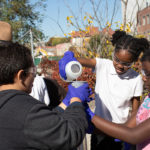
Green Hairstreak Butterfly project
Discovered by modern science in the late 1800s from “the hills of San Francisco” the Green Hairstreak (Callophrys dumetorum) is a small, nickel-sized butterfly isolated in three remaining remnant habitats within the city: Hawk Hill and Rocky Outcrop overlooking the Sunset District and the coastal bluffs of the Presidio. The primary goal of the Green Hairstreak Project is to connect two disjunctive butterfly populations in the Sunset District with street level plantings of host and nectar sources. If the two populations can interbreed, their genetic viability and diversity will be more secure.

natureinthecity.org

Neighborhood Parks Council

2007 - $5,000 General Operating Support
The Neighborhood Parks Council (NPC) advocates for a superior, equitable and sustainable park and recreation system.

Neighborhood Parks Council


Neighborhood Parks Council
2007 - $5,000 General Operating Support

The Neighborhood Parks Council (NPC) advocates for a superior, equitable and sustainable park and recreation system. Since 1996, NPC has grown to include over a hundred and twenty park groups and four thousand park volunteers, establishing itself as San Francisco’s premier park advocacy group.  It provides leadership and support to park users through community-driven stewardship, education, planning and research.  NPC strives to increase public and private support for, and commitment to, the restoration and improved maintenance of our neighborhood parks, playgrounds, and recreation facilities. In addition to technical assistance, NPC provides a forum for sharing information and experience at park planning meetings in each District, including educational presentations and workshops with guest speakers and topic experts.

In 2011 NPC merged with The San Francisco Parks Trust to form the San Francisco Parks Alliance.

sfparksalliance.org

New York Botanical Garden

2024 - $25,000 General Operating Support
2023 - $15,000 Visionmaker
The New York Botanical Garden (NYBG) has been a connective hub among people, plants, and the planet since 1891.

New York Botanical Garden

Visionmaker team member Mario Giampieri at a TEDYouth event.  (photo credit: TED)

Visionmaker homepage.  (photo credit: NYBG)

Visionmaker vision created for Jamaica, Queens (photo credit: NYBG)

Environmental performance compared between vision extent in 1609, 2014, and the Jamaica vision (photo credit: NYBG)

Five boroughs with historical ecology (photo credit: NYBG)

Five boroughs with contemporary ecology (photo credit: NYBG)

Dr. Eric Sanderson presenting Visionmaker at TedYouth at the Brooklyn Museum in 2014 (photo credits: Ryan Lash/TED)


New York Botanical Garden
2024 - $25,000 General Operating Support
2023 - $15,000 Visionmaker

The New York Botanical Garden (NYBG) has been a connective hub among people, plants, and the planet since 1891. We’re rooted in the cultural fabric of New York City, here in the heart of the Bronx-its greenest borough. For more than 130 years, we’ve invited millions of visitors to make the Garden part of their lives, exploring the joy, beauty, and respite of nature. NYBG’s 250 acres are home to renowned exhibitions, immersive botanical experiences, art and music, and events with some of the most influential figures in plant and fungal science, horticulture, and the humanities. We’re also stewards of globally significant research collections, from the LuEsther T Mertz Library collection to the plant and fungal specimens in the William and Lynda Steere Herbarium, the largest such collection in the Western Hemisphere.
Amplifying the role of plants in solving the climate and biodiversity crises is a primary focus in our latest strategic plan, Branching Out, which officially launched in January 2024. Paramount to the future of the Garden is our strategic approach to Urban Conservation led by Dr. Eric Sanderson, Vice President for Urban Conservation. In his role at NYBG, Dr. Sanderson is tasked with advancing nature-based solutions to environmental issues and working with New Yorkers to visualize a nature-full city, secure community input on future plans, raise public awareness, advocate on a citywide scale, green the landscape, and ultimately, make New York City more resilient to the effects of climate change.

Core to Dr. Sanderson’s strategy is Visionmaker, a digital tool that enables New Yorkers to better contend with the environmental challenges in our backyard and beyond. Visionmaker is a platform for ecological democracy for the citizens of New York City that strives to empower and embolden everyday citizens to utilize their voice (and technology) for climate change planning. Using the website, users can investigate the city’s ecology in three timeframes: the past, the present, based on the current distribution of ecosystems and lifestyles in the city, and the future, as generated by the user’s imagination and using scientific models to estimate different ecosystem and ecological scenarios. Once a user has created a vision that matches their expectations, it can be shared through the interface with others, who can then borrow and build their vision, thereby shaping an idea of what the future of NYC could look like in the face of climate change.

In this next phase of Visionmaker, Dr. Sanderson and his team seek to take the website to the next level by converting the carbon model in Visionmaker from JavaScript to Python code and testing the digital tool in a new cloud-based server. Following the update, anyone with an Internet connection can contribute their ideas for the future of their neighborhoods more effectively and visualize multiple ecological scenarios related to the carbon cycle, which includes predictions of carbon dioxide and methane and transportation and climate-dependent buildings submodels. Although currently focused on New York City, the online platform is designed for expansion and portability to other cities and for enthusiasts and experts alike. Visionmaker NYC is just one example of how NYBG meets the moment.

nybg.org

Outdoors Empowered Network

2018 - $10,000 Grant for Capacity Building
2016 - $5,000 General Operating Support
2015 - $7,500 General Operating Support
2014 & 2017 - $10,000 General Operating Support
Outdoors Empowered Network grew out of the Bay Area Wilderness Training (BAWT) program, and works with affiliate programs to provide the BAWT model in three additional urban metro areas - Los Angeles, Seattle and Chicago.

Outdoors Empowered Network

Youth taking a moment of rest and reflection on an overnight backpacking trip with an OEN member organization.

Youth enjoying an overnight backpacking trip with an OEN member organization.

OEN helps member organizations secure outdoor gear to ensure that youth are safe, warm, and dry on all their trips.

Youth at a river crossing on a day hike with an OEN member organization.

An example of an OEN member organization’s gear library. Each library is set up differently depending on the needs of their community.

An outdoor leadership training at one of OEN’s member’s campsite-based programs.

Keynote speaker, Autumn Saxon-Ross at OEN’s 5th annual National Summit in 2019. 


Outdoors Empowered Network
2018 - $10,000 Grant for Capacity Building
2016 - $5,000 General Operating Support
2015 - $7,500 General Operating Support
2014 & 2017 - $10,000 General Operating Support

Outdoors Empowered Network is a national network of community-led, youth-centered outdoor education groups that are dedicated to increasing access and diversity in the outdoors through gear libraries and outdoor leadership training.

OEN’s member organizations support access to outdoor adventures for tens of thousands of youth each year. Members partner with youth service agencies, schools, and other youth-centered groups to make transformative outdoor experiences through these core programs:  

  • Gear Libraries - Members reduce one of the biggest barriers to getting outside-cost of gear-by curating and providing access to outdoor equipment libraries that cater to schools, youth service organizations, and families. Gear libraries can look different in different communities, using a wide array of partnerships.
  • Outdoor Leadership Training - Members provide experiential, skills-based trainings for teachers and youth workers in their regions so they are empowered to take youth outdoors on their own. For every adult trained, 20+ youth get a chance to experience the power of nature and the outdoors. For many young people, this is the first time they’ll see the Milky Way, hear a rushing waterfall, or experience an environment free of the urban cacophony of horns, sirens, and cell phones. Nature-based experiences change lives.
  • Community Support - Members often provide mini-grants, transportation subsidies, and connections through social media and listservs. Some also provide campgrounds, simplifying the preparations required for teachers and youth mentors as they plan their trips.

Being part of OEN gives members the opportunity to build networks, share best practices, fundraise for gear, and see the national impact of collective work. The core “train and support” program model brings together a wide variety of members, all working together to bring equity and access to the outdoors. 

Outdoors Empowered Network supports members in the following ways:

  • Outdoor Gear Acquisition - Our members are responsible for twenty gear libraries throughout the United States, reducing one of the biggest barriers to access for hundreds of thousands of young people. Outdoors Empowered Network supports these gear libraries through fundraising for in-kind and monetary donations, bulk purchases, and programmatic design.
  • Member Support - From designing new programming to applying for grants, running an outdoor education organization can involve a lot of hard and lonely work. OEN staff works hard to create connections, problem-solve, and support new program design.
  • Professional Community - From monthly calls to ad hoc virtual meet-ups to our annual  Summit, OEN cultivates a professional community for outdoor educators and administrators. Our network model gives members a community to work with as they explore new ideas, develop programming and best practices, and face inevitable challenges.
  • Thought Leadership - We support conversations about issues like diversity, equity, and inclusion in the outdoors by bringing in external thought leaders and facilitating conversations among our members. Our annual Summit is a highlight of these ongoing opportunities for growth and leadership.

Member programs are at the heart of the work of Outdoors Empowered Network. Together, the network is working to increase our collective impact on the world, and create equitable access to nature. 
outdoorsempowered.org

Pelican Dreams

2014 - $5,000 Postproduction
Pelican Dreams is a feature documentary about wildness: How close can we get to a wild creature without taming or harming it? Why do we need wildness in our lives, and how can we protect it?

Pelican Dreams


Pelican Dreams
2014 - $5,000 Postproduction

Judy Irving, filmmaker of The Wild Parrots of Telegraph Hill,  focuses on large water birds in Pelican Dreams, a feature documentary starring “Gigi,” a starving young bird who stopped traffic on the Golden Gate Bridge, and “Morro,” an injured pelican who makes friends with a duck. The film is about wildness: How close can we get to a wild creature without taming or harming it? Why do we need wildness in our lives, and how can we protect it? Irving aims to connect urban dwellers with urban wildlife in our own backyard.

www.pelicanmedia.org

San Francisco Baykeeper

2022 - $15,000 Rewilding Coasts
2019 - $15,000 Coastal Resiliency
2018 - $15,000 for Sediment removal prevention
San Francisco Baykeeper is the only organization that regularly patrols the Bay for polluters, by both sea and air, and uses environmental laws and the latest science to hold them accountable.

San Francisco Baykeeper


San Francisco Baykeeper
2022 - $15.000 Rewilding Coasts
2019 - $15,000 Coastal Resiliency
2018 - $15,000 Sediment Removal Prevention

San Francisco Baykeeper is the only organization that regularly patrols the Bay for polluters, by both sea and air, and uses environmental laws and the latest science to hold them accountable.  

Baykeeper is a fierce champion for the Bay, monitoring the biggest threats to the Bay’s health. This can include municipal sewage outfalls, as well as government agencies and industrial operations that are out of compliance with the anti-pollution laws that keep the Bay and Bay Area communities healthy. In many cases, the polluters can be convinced to fix what isn’t working, but Baykeeper's team of scientists and attorneys is always ready to fight for the Bay in court. 

The organization was founded in 1989, and got off to a start worthy of Barbary Coast legend. A tipster called the Baykeeper hotline-which still takes calls to this day-and alerted Baykeeper about a renegade shipyard that was illegally scooping tons of toxic mud off the Bay floor and dumping it onshore. Patrolling by kayak in the dark of night, Baykeeper caught the culprits red-handed-and in the end the Bay won: The company paid stiff fines, and its officers went to jail.   
Baykeeper's recent wins for the Bay Area include securing a ban on the handling and storage of toxic coal in Richmond, which will keep more than 1 million tons of toxic coal out of the East Bay community every year. Also, Baykeeper took legal action against the US Coast Guard that secured changes in how the Coast Guard cleans its buoys, which will keep toxic heavy metals out of the Bay-and out of all the waters where the Coast Guard operates.   

Baykeeper defeated the Trump administration in 2020 when a federal judge ruled in the organization's favor in Baykeeper vs EPA to protect 1,400 acres of potential wetlands, which would also buffer South Bay communities from the destructive effects of sea level rise.
Baykeeper recognizes climate change as the greatest threat facing the San Francisco Bay today, along with consequent sea level rise. The Bay Area has a dense waterfront population, with people living next door to over 1,000 toxic industrial sites along its shore. This includes Superfund sites in Hunters Point, Alameda, Oakland, Richmond, and San Jose. These toxic sites pose eminent danger to Bay Area residents.
There is a very real possibility that during a storm, the already elevated waters of the Bay would flood toxic sites, flushing pollutants into the surrounding neighborhoods. Bay Area homes, schools, and businesses would be flooded with poison. Critical infrastructure would be under water too, including SFO and Oakland Airport, roads and freeways throughout the Bay Area, wastewater treatment facilities, and more. 

The Bay Area needs to institute a region-wide climate adaptation plan with teeth and a timeline-a plan that also identifies and prioritizes contaminated shoreline areas and industrial sites for cleanup. 

Baykeeper's scientists and attorneys are there to help bring that plan together, and to keep an active eye out for polluters. Bayeeper fills a singular role in protecting the San Francisco Bay, the geographic feature that makes the Bay Area unique in the world. The wave that breaks against the shoreline in Tiburon is made of the same water that nourishes the wetlands of Redwood City.

Fighting for Healthy Sediment in San Francisco Bay (2018)

In order to make the Bay more resilient to climate-driven sea level rise, which could devastate San Francisco Bay shorelines and communities, the layers of sand and mud on the Bay's floor need to stay healthy. When healthy, this sediment replenishes shorelines and wetlands, providing natural protection against rising tides. But private companies, as well as federal and state agencies, have mismanaged and exploited this resource. Baykeeper, with support from the Seed Fund, uses environmental law and science to advocate for safer, state-of-the-art dredging practices, and won a landmark legal victory when the California Court of Appeal ruled that state agencies may not consider sand mining and other mining in waterways to be in the public good.

Preparing San Francisco Bay for Sea Level Rise (2019)

San Francisco Bay is uniquely vulnerable to the ravages of climate change. There are well over 1,000 toxic sites along the Bay, active or no longer in use, that could flood the Bay and adjoining neighborhoods with industrial poisons if the sea level rises-as science predicts it will. With support from the Seed Fund, Baykeeper investigates potentially polluting sites along the Bay that should be prioritized for cleanup, protects wetlands and potential wetlands from development-including prevailing against the Trump administration in Baykeeper vs EPA, which saved South Bay salt ponds from being paved over-and educates decisionmakers about the critical need for regional planning to guard against the effects of climate-driven sea level rise. 

baykeeper.org

San Francisco Botanical Garden

2007 - $5,000 Center for Sustainable Gardening
Located in San Francisco’s Golden Gate Park, the Botanical Garden inspires visitors with an extraordinary diversity of plants from Mediterranean climates around the world.

San Francisco Botanical Garden


San Francisco Botanical Garden
2007 - $5,000 Center for Sustainable Gardening

Located in San Francisco’s Golden Gate Park the Botanical Garden inspires visitors with an extraordinary diversity of plants from Mediterranean climates around the world. Included in the Garden’s collection are over 7500 varieties of rare and unusual plants that can be successfully grown in the San Francisco Bay Area.

The Center for Sustainable Gardening (CSG) at San Francisco Botanical Garden replaced the old, rundown, temporary nursery facilities that were built in the 1960s in the coldest part of the Garden. A new highly-efficient building enabled both the Recreation and Park Department and Botanical Garden Society staff and volunteers to maintain and expand plant propagation and growing activities in a safe and improved work environment.

The CSG includes a Headhouse (4,230 square feet of working space, staff meeting area, and restrooms for staff and the public), a Greenhouse, a Shadehouse, and an outdoor publicly accessible Learning Court. Key elements of the project include the Living Roof on the Headhouse, showcasing California native plants; photovoltaic panels for on-site energy generation; and an on-site storm water management system that captures storm water as well as condensed fog from the Greenhouse and Shadehouse roofs.

sfbg.org

San Francisco Children in Nature Forum

2012 - $5,500 General Operating Support
The San Francisco Children in Nature Forum brings together educators, recreation and parks staff, health care and urban planning professionals to ensure that all of San Francisco's children have access to quality outdoor experiences.

San Francisco Children in Nature Forum

San Francisco Children in Nature Forum
2012 - $5,500 General Operating Support

The San Francisco Children in Nature (SFCiN) Forum brings together educators, program directors, recreation and parks staff, health care and urban planning professionals towards the end of ensuring that all San Franciscan childhoods flourish with access to quality outdoor experience. The mission is to inspire city agencies, schools and communities to nurture, empower, and engage children, youth and families in their relationships with urban nature in San Francisco.

Participating programs and agencies include: the YMCA of San Francisco, San Francisco Unified School District, San Francisco Recreation and Parks, the Presidio Trust, the Golden Gate National Parks Conservancy, National Park Service, Literacy for Environmental Justice, Kids in Parks, the Randall Museum, preschools and child development centers.

San Francisco Estuary Institute

2021 - $15,000 Urban Nature Lab Website
2019 - $10,000 Operational Landscape Units Project (with SPUR)
2018 - $10,000 General Operating Support
2018 - $10,000 Biodiversity Integration into the SPUR Regional Plan
2017 - $10,000 Catalyzing Urban Biodiversity Book Project by Robin Grossinger
2017 - $10,000 Operational Landscape Units Project (with SPUR)
2016 & 2017 - $10,000 Framework for Sea-Level Rise Adaptation
2014 - $10,000 Center for Resilient Landscapes
San Francisco Estuary Institute helps to define environmental problems, advance public debate about them through sound science, and support consensus-based solutions that improve environmental planning, management, and policy development.

San Francisco Estuary Institute


San Francisco Estuary Institute
2021 - $15,000 Urban Nature Lab Website
2019 - $10,000 Operational Landscape Units Project (with SPUR)
2018 - $10,000 General Operating Support
2018 - $10,000 Biodiversity Integration into the SPUR Regional Plan
2017 - $10,000 Catalyzing Urban Biodiversity Book Project by Robin Grossinger
2017 - $10,000 Operational Landscape Units Project (with SPUR)
2016 & 2017 - $10,000 Framework for Sea-Level Rise Adaptation
2014 - $10,000 Center for Resilient Landscapes

The San Francisco Estuary Institute (SFEI) delivers visionary science that empowers people to revitalize nature in their communities. Created by the region for the region, we are a unique local science think-tank supporting diverse organizations to improve the environmental health of the Bay Area and beyond. We provide independent science on water quality, urban sustainability, and ecological resilience to public agencies, NGOs, communities, and business leaders. These organizations collaborate with our team of 70 dedicated scientists and technologists for the innovative solutions needed to make our region, and the people who live here, healthy and resilient.

For more than a quarter century, SFEI has served as a trusted science advisor to local and state agencies charged with implementing natural resource mandates. Our pioneering historical ecology research has established an ecological foundation for large landscape restoration efforts in watersheds throughout California, prompting paradigm shifts in management. In the Bay, SFEI staff have provided science leadership to the California Coastal Conservancy’s 2015 Baylands Goals-a blueprint to accelerate the restoration of tidal marsh in San Francisco Bay toward a goal of 100,000 acres. In the Sacramento-San Joaquin Delta, our landmark studies have supported a partnership between state agencies and major water users by creating science-based options and a vision to restore up to 30,000 acres of Delta wetlands habitat. In cities, our Urban Nature Lab uses the quantitative science of nature in cities to help advance innovative, ecologically based urban planning and design.

SFEI develops nature-based solutions to improve conditions across the landscape -- along shorelines, in cities, and in rural areas. We use science-based planning to create multi-benefit approaches to improve ecosystem functions for people, like reducing flooding and sequestering carbon, and for nature, like creating habitat for native wildlife. These interventions are cost-effective, resilient, and can be implemented across the land-use spectrum from high in watersheds, through the valleys that hold our cities and agriculture, down to the edge of the Bay and Delta, with the intention of ensuring equitable outcomes for all communities. Our approach takes advantage of natural processes by restoring wetlands, floodplains, and riparian areas; creating high-performance networks of nature throughout; realigning creeks to reduce flooding and improve sediment delivery to protect the shoreline; and managing landscapes to sequester carbon rather than emitting greenhouse gases. 

Our vision of the Bay Area, as a model for other urbanized regions facing similar challenges, encompasses:

  • Healthy ecosystems supporting people and nature across the landscape: along the shoreline, in cities, in agricultural areas, and in open space,
  • Natural infrastructure helping urban areas and their surrounding landscapes manage sea-level rise, water supply challenges, higher temperatures, water pollution, more severe drought and flooding, and other climate-related threats, and
  • Green space in developed areas improving the health and quality of life for all residents and for native wildlife.

For more information about SFEI and the Resilient Landscapes Program, please see our Strategic Plan.

Seed Fund Specific Projects

  • The SF Bay Shoreline Adaptation Atlas is guiding local and regional strategies to adapt to sea level rise.
  • Hidden Nature SF reveals the San Francisco landscape before the city.
  • SFEI’s Urban Nature Lab uses the quantitative science of nature in cities to help advance innovative, ecologically based urban planning and design.

Our novel research on cities, published in The Biological Deserts Fallacy (BioScience 2021), identifies the different pathways by which cities can benefit regional ecosystems 

sfei.org

San Francisco Nature Education

2011 - $5,000 General Operating Support
San Francisco Nature Education is now in its eleventh year of providing meaningful environmental education to students from underserved schools.

San Francisco Nature Education


San Francisco Nature Education
2011 - $5,000 General Operating Support

San Francisco Nature Education (SFNE) is now in its eleventh year of providing meaningful environmental education to students from under served schools. SFNE’s school program is focused on k-3rd grade students throughout schools in San Francisco and  introduces students at a very young age to basic concepts: respect for nature, conservation and stewardship.

SFNE’s trained volunteer naturalists visit classrooms and conduct field trips to local parks and also provided much needed mentoring to students in small groups. SFNE prides itself on maintaining a ratio of one to six students in the classroom and field. SFNE received the Jefferson Award for Public Service in 2005 and its’ director was nominated for the 2011 Terwilliger Environmental Award.

sfnature.org

San Francisco Urban Film Festival

2019 - $5,000 General Operating Support
2018 - $5,000 General Operating Support
2017 - $5,000 Climate Change Programming
The SF Urban Film Fest (SFUFF) gathers a diverse, engaged audience and uses the power of storytelling to spark discussion and civic engagement around urban issues.

San Francisco Urban Film Festival


San Francisco Urban Film Festival
2018 & 2019 - $5,000 General Operating Support 
2017 - $5,000 Climate Change Programming

WHAT WE DO

The SF Urban Film Fest (SFUFF) gathers a diverse, engaged audience and uses the power of storytelling to spark discussion and civic engagement around urban issues. They ask what it means to live together and create just and equitable cities.

SFUFF is an interdisciplinary storytelling organization that produces an annual film festival, year-round film-based discussion events, and long-term community storytelling projects.

They collaborate with cultural, academic, grass-roots, and civic organizations including the Roxie Theater, SPUR, Imprint City, Bay Area Video Coalition (BAVC), and many others. Projects are often jointly initiated to combine film and community planning, most recently with Young Community Developers (YCD) in the Bayview Hunters Point and SOMA Pilipinas Cultural Heritage District in the SOMA district of San Francisco. In recognition of their impact on empowering communities using storytelling and film, the SFUFF are Artists in Residence at the Yerba Buena Center for the Arts (YBCA).

IMPACT

Film Festival
Since its founding in 2014, SFUFF has produced an annual film festival for 7 seasons and year round programming encompassing 115 events reaching over 8,000 people. They expect to reach many more through their virtual film festival in February 2021.

Based on their festival surveys, year after year, SFUFF attracts diverse audiences and reaches across demographic divides. Its 6th annual film festival audience was 53% people of color. Their audience was also remarkably intergenerational: 18% are aged under 25, 69% are between 26-55 years old, and 13% are aged 55+.

SFUFF engages with diverse filmmakers and panelists. 63% of our 2020 Festival filmmakers are people of color; most notably, 44% of our 2020 Festival filmmakers are women of color. Additionally, 74% of our 2020 Festival panelists are people of color.

Community Storytelling
SFUFF’s community storytelling projects create opportunities for unique cross disciplinary partnerships between community organizations, businesses, cultural institutions and public agencies.

In partnership with YCD, they organized storytelling workshops and produced a short video to kick off the Black Owner’s Campaign. The goal was to build a strong narrative aimed at galvanizing a coalition of Black property owners to support more affordable housing. The resulting video features prominently on the YCD homepage and has resulted in a local developer expressing interest in building housing for Black teachers.

The storytelling and community planning with YCD led to the production of a multi-media one-night socially distant event featuring a live streamed hip hop concert and interactive film projections depicting historic murals. The event, City is Alive, was centered on the theme of everyday heroes who fight for resources and bring joy to the Bayview Hunters Point and was produced in collaboration with Imprint City and YBCA.

SFUFF is working with the SOMA Pilipinas Cultural Heritage District on a short documentary film that chronicles the displacement of Pilipinx community by the force of redevelopment in the Yerba Buena district of SOMA during the 1970's, and the community’s resistance and struggle for self-determination that grew out of it and in face of ongoing gentrification and displacement. They are currently in community-driven pre-production with a team of Pilipinx filmmakers and archival researchers, and in late 2021, will organize work in progress screenings and community discussions centering the stories and people of the film. The process of making this film is designed to dovetail with the community planning around the creation of the cultural heritage district that already includes the famous UNDISCOVERED SF night market and Kapawa Gardens.

WHO WE ARE

The SFUFF Core Team brings rich backgrounds in civic innovation, urban planning, housing finance, media, filmmaking, and the humanities. They work year-round planning events and curating programming. During the festival season, a small army of volunteers help them with photography, marketing, ticket sales, audience surveys, and more.

Our Core Team plays artistic roles as Program Producers. They also guide organizational growth and fill administrative and technical roles. The following are brief detailed bios of SFUFF’s Core Team:

Fay Darmawi, Founder and Executive Director
Fay is an urban planner, cultural producer, and community development banker. She belongs to a persecuted Chinese minority group and immigrated to the U.S. from Jakarta, Indonesia as a child.

Kristal Celik, Festival Manager
Kristal has a background in energy and mechanical engineering and identifies with her Turkish immigrant roots.

Robin Abad Ocubillo, Program Producer
Robin is an urban designer and urban planner at the City of San Francisco Planning Department and identifies as an LGBTQ Filipino-American.

Omeed Manocheri, Program Producer
Omeed is a first generation Iranian-American multimedia producer and entrepreneur with a fine arts degree. His media projects include Daily Kabob, a new digital platform to unify the MENA and DESI communities.

Susannah Smith, Program Producer
Susannah is a documentary filmmaker interested in ways race and sexuality interact with the politics of urban development. Susannah is assistant editor on the documentary “Homeroom” premiering at the Sundance Film Festival in January 2021. She identifies as an LGBTQ Jewish-American.

Ronald Sundstrom, Humanities Advisor
Ronald is a Professor of Philosophy and a member of the African American Studies, Critical Diversity Studies programs at the University of San Francisco (USF). He identifies as mixed-race Filipino-American and Black, and LGBTQ.

sfurbanfilmfest.com

San Francisco Waldorf School

2018 - $34,000 Outdoor Classroom
2016 & 2017- $33,000 Outdoor Classroom
2015 - $5,000 Outdoor Classroom
2014 - $7,500 Outdoor Classroom
2013 - $10,000 Outdoor Classroom
2009 - $10,000 Biodynamic Garden Program
2008 - $6,000 Biodynamic Garden Program
2007 - $10,000 High School Capital Campaign
San Francisco Waldorf School was founded in 1979 as an independent school within the Waldorf tradition whose mission is to educate students using an approach that fosters independent thought and a sense of personal responsibility.

San Francisco Waldorf School


San Francisco Waldorf School
2018 - $34,000 Outdoor Classroom
2016 & 2017 - $33,000 Outdoor Classroom
2015 - $5,000 Outdoor Classroom
2014 - $7,500 Outdoor Classroom
2013 - $10,000 Outdoor Classroom
2009 - $10,000 Biodynamic Garden Program
2008 - $6,000 Biodynamic Garden Program
2007 - $10,000 High School Capital Campaign

San Francisco Waldorf School is an independent, co-educational, non-sectarian school providing education from Kindergarten through Grade 12. SFWS was founded in 1979 as an independent school within the rich Waldorf tradition whose mission is to educate students using an approach that fosters independent thought and a sense of personal responsibility. The Waldorf curriculum, designed by Austrian philosopher and scientist Rudolf Steiner in 1919, is based on a thorough study of child development, so that the subjects taught meet not only the cognitive developmental needs of the students, but also their physical, emotional, and spiritual needs. There are over a thousand Waldorf schools around the world, each operating independently, but held together by a common understanding of human development and a recognition of the value of artistic work and meaningful social interaction.High School capital campaign

San Francisco Waldorf High School’s campus opened in September 2007. As the first school in San Francisco to be awarded the coveted LEED Gold certification, the overall goal of the project was to create an environment that is in harmony with the philosophy of Waldorf Education. Perhaps the greatest reflection of this success is the fact that the building itself will be incorporated into the curriculum as an educational resource for environmental studies. The principals of the Waldorf philosophy and the actual building serve as a teaching tool for students, demonstrating how to become actively involved in today’s social issues.Biodynamic Garden

The Waldorf School Biodynamic Garden was created to grow children's love for the earth, for meaningful labor, and for themselves and their community through infinitely fascinating work as farmers.  Located at the Little Sisters of the Poor’s St. Anne’s home, the garden acts as a teaching tool, a healthy food source for the lunchroom and a social hub for the children as well as the residents of St. Anne’s. The participating students, kindergarten through third grade, are toured through the garden to taste what is in season and observe the garden’s changes before splitting up to participate in the upkeep of the garden.  With tasks like planting apple trees, building compost and harvesting crops, every child is engaged with the garden directly, discovering the benefits of farming for themselves.Nature Program\The Waldorf School Nature Program creates an overarching program that serves as a model for other urban schools who aspire to “bring nature alive” for students, faculty and the entire community. The program brings younger children out into nature and older students the opportunity to learn more about regional biodiversity. This program will offer an ongoing educational series to facilitate community understanding and support. This series brings a wide variety of speakers to address topics that enhance understanding of environmental education, brought via lectures, workshops and events. The program's goal is to create awareness of issues and initiatives that are relevant in the San Francisco Bay Area.

sfwaldorf.org

Save the Bay

2017 - $10,000 Community-Based Habitat Restoration Program

Save the Bay


Save the Bay
2017 - $10,000 Community-Based Habitat Restoration Program

savesfbay.org

Seed Journey

2017 - $10,000 General Operating Support
2016 - $10,000 General Operating Support
Seed Journey moves people, ideas and seeds upon an 1895, Colin Archer rescue sailboat from Oslo to Istanbul.

Seed Journey


Seed Journey
2016 & 2017 - $10,000 General Operating Support

“We can speak of this voyage as return or a re-tracing of a very ancient route combining human and non-human initiative by which wheat was domesticated from the wild and then slowly made its way through gifts, trade, winds, and sea currents, from the highly cultured Middle East to the barbarians of the north...” - Michael Taussig

Seed Journey (2017 - 2020) was a seafaring voyage from Oslo, Norway to Istanbul, Turkey upon an 1895 rescue sailboat. Carrying hand fulls of seeds and a rotating crew of artists, farmers, bakers and researchers, Seed Journey was a process of reverse migration, retracing the path of seed dissemination, and by extension human migration, back to their origins in ancient times.  At each port, Futurefarmers gathered local heritage seed custodians, enacted Seed Ceremonies (elaborated seed exchanges) and accepted gifts and grains to add to a growing archive. The project situates grains as emancipatory actors with respect to intellectual property rights pertaining to biological matter.

futurefarmers.com/seedjourney

Seep City

2016 - $5,000 General Operating Support
The Seep City Water Log is an effort by Joel Pomerantz to connect local explorers of all ages and qualifications with the waterscapes of San Francisco, past and present.

Seep City


Seep City
2016 - $5,000 General Operating Support

The Seep City Water Log, named for the groundwater in our soil, is an effort by Joel Pomerantz to connect local explorers of all ages and qualifications with the waterscapes of San Francisco, past and present. Focus is on how creek and climate history are part of the living landscape. The mapping project has tracked nearly two dozen major springs that still exist today, even in drought times. The project now exists as an education art piece and a published map that has inspired thousands to explore and research. This map was produced as a companion to the forthcoming book, Seep City Water Log.

seepcity.org

SF Environment

2013 & 2014 - $10,000 Biodiversity Program
Creates programs, plans and strategies for the management and stewardship of San Francisco wildlands, biodiversity and public biodiversity education.

SF Environment


SF Environment
2013 & 2014 - $10,000 Biodiversity Program

Under the San Francisco Department of the Environment, a Biodiversity Program, led by biodiversity coordinator Peter Brastow, creates programs, plans and strategies for the management and stewardship of San Francisco wildlands, biodiversity and public biodiversity education.

The Biodiversity Program will create a Strategic Biodiversity Action Plan, with a blueprint for the program and San Francisco. It will also create the infrastructure to act as the hub for biodiversity planning, policy-making, coordination and education city-wide.

sfenvironment.org

SF Nature Mapping Project

2014 - $5,000 General Operating Support
The Children in Nature Map is tailored to families who want to find places to play in San Francisco’s nature.

SF Nature Mapping Project

coronasummit

SF Nature Mapping Project
2014 - $5,000 General Operating Support

The Children in Nature Map will be the first interactive map of the SF Nature Mapping Project and the first map tailored to families who want to find places to play in San Francisco’s nature.  The map is being created in partnership with the San Francisco Children in Nature Forum and GreenInfo Network.

 The SF Nature Mapping Project seeks to connect people to nearby urban nature through online interactive maps. As people move into cities many assume that this means less time that they can spend in nature, but this project challenges that myth by showing clearly where we can access nature in San Francisco.

sfnaturemaps.com

Shaping San Francisco

2019 - $10,000 General Operating Support
2016 to 2018 - $5,000 General Operating Support
2012 & 2013 - $5,000 General Operating Support
2010 - $5,000 Ecology Emerges Project Documentation
Shaping San Francisco is a living archive of San Francisco providing people with access to its lost history.

Shaping San Francisco


Shaping San Francisco
2019 - $10,000 General Operating Support
2016 to 2018 - $5,000 General Operating Support
2012 & 2013 - $5,000 General Operating Support
2010 - $5,000 Ecology Emerges Project Documentation

Serving the City for 25 years, Shaping San Francisco is an ongoing multimedia project in bottom-up history, offering an online archive at FoundSF.org-a place to document, discover, and shape San Francisco history-and public programming sharing the stories of daily life in the City by the Bay. Shaping San Francisco provides access to the City's lost history, with a long-term goal of facilitating its discovery, presentation, and preservation. The project seeks to create a physical and virtual commons where together we make-and understand our place within-history every day

Shaping San Francisco believes that “History is a Creative Act in the Present,” or in other words, each person is an agent of history, and every moment is historical, even if relatively little makes it on to the “historical record.” Shaping San Francisco’s public engagement promotes the idea that history can-and should-be de-professionalized, made into a popular, participatory process. More than just a website, more than just a lecture series, more than a collection of ongoing walking and bike tours, Shaping San Francisco encourages collective investigation of and creation of new shared social histories about the world we cohabitate together.

Shaping San Francisco's work encourages ordinary citizens to see the urban environment around them having been created in by a combination of social and ecological processes over time, within historic economic and cultural contexts; just as important the urban environment is shaped, too, by a ceaseless effort to challenge the meaning and direction of those processes and contexts. Shaping San Francisco has focused from its origins on San Francisco's ecological history, the relentless leveling of its famous hills and the steady filling of the bay to “make land,” which permanently altered the surrounding bay. Shaping San Francisco’s historical investigations of the changing ecology of the City have led to unique and enduring analyses integrating its tradition of dissent with the dramatic (and often catastrophic) changes that dissenters often sought to prevent.

15 seasons of FREE Public Talks provide an informative, engaging cultural forum inviting presenters and audiences to dialogue about issues covering Art & Politics, Historical and Literary Perspectives, Social Movements, and Ecology, emphasizing the intersections of multiple themes across fluid boundaries of disciplines and paradigms. This in-person discussion space is meant as an antidote to historical amnesia, creating a place to change the climate of public intellectualism in San Francisco, and an unmediated place to meet and talk. Most all of the Public Talks are archived online. Historical walking and bicycle tours-and the recent addition of Urban Forums: Walk & Talks and Bay Cruises-bring people together to learn how the City is shaped through the efforts of engaged citizens and from a perspective rooted in its overlooked and forgotten histories, including those of marginalized populations (and species!) who don’t show up in the history books.

Shaping San Francisco fosters academic and community partnerships, incorporating a service learning element to its public programming, offering historic context for the issues currently faced in the urban setting through tours to students and community members. As seasoned tour guides, editors, and educators, the directors are frequently asked to share their expertise through custom tours and classes; they create customized tours each month as well as collaborative projects year-round including teaching, guest-curating, and co-producing projects. Shaping San Francisco is a fiscally-sponsored affiliate of Independent Arts & Media, with whom successful collaborations have been forged over the course of a decade.

shapingsf.org

Slide Ranch

2011 - $10,000 Slide Outside Project
2007 - $10,000 General Operating Support
Slide Ranch has provided experiential education with environmental and sustainable agriculture curricula since 1970.

Slide Ranch


Slide Ranch
2011 - $10,000 Slide Outside Project
2007 - $10,000 General Operating Support

Slide Ranch has provided experiential education with environmental and sustainable agriculture curricula since 1970.  Slide Ranch staff operate the farm using a turn of the century farmhouse, old creamery and several outbuildings situated along a scenic coastal bluff.  Annually over 8,000 Bay Area residents, many of them children, participate in three primary Slide Ranch programs: Family Programs, Group Programs and Summer Day Camp.  Slide Ranch Programs bring learning to life with hands-on education activities on a working farm.  More than 170,000 visitors have participated in programs and events at this spectacular coastal site perched above the Pacific Ocean in western Marin County.  Slide Ranch inspires visitors to discover the connections between the food we eat and the soil that nourishes the plants and animals. The outdoor classroom ignites ongoing learning and provides a place to reflect on the impact that individual and collective choices have on the environment, food and health.

The Slide Outside Project provides a package of on and off-site services to a targeted set of partners that help low-income students, families and educators access a broader spectrum of services and integrate lessons learned at Slide Ranch into their everyday lives. The program includes a combination of outreach and collaboration, day and overnight programs based at Slide Ranch, Slide Ranch staff visits to program sites, family engagement strategies, and teacher training.

slideranch.org

South Bay Salt Ponds

2019 - $10,000 Wetlands Restoration
The South Bay Salt Pond Restoration Project encompasses 15,100 acres of former salt ponds around the edge of South San Francisco Bay.

South Bay Salt Ponds

The gravel beach would help provide nature-based protection at Eden Landing. Photo by Dave Halsing

Scouting gravel beach and berm pilot location at Eden Landing. Photo by Dave Halsing

Gravel Beach and Berm Location. Photo credit: Cris Benton

Eden Landing Kayak Launch - under construction. Cris Benton.

Completed viewing platform at historical site of Alvarado Salt Works. Photo: Cris Benton.


South Bay Salt Ponds
2019 - $15,000 Wetlands Restoration

The South Bay Salt Pond Restoration Project encompasses 15,100 acres of former salt ponds around the edge of South San Francisco Bay. It is the largest wetlands restoration project on the West Coast of the United States. The Project began in 2003, when the properties were acquired from Cargill Inc. Funds for the acquisition were provided by federal and state agencies and several private foundations. Those ponds are now part of the California Department of Fish and Wildlife’s (CDFW) Eden Landing Ecological Reserve near Hayward, and the U.S. Fish and Wildlife Service’s (USFWS) Don Edwards San Francisco Bay National Wildlife Refuge at the Bay’s south end. A third agency, the State Coastal Conservancy, plans and administers the Project.

This acquisition was the initial step in a larger campaign to restore 40,000 acres of lost tidal wetlands to San Francisco Bay - important because about 85% of its historic wetland have been lost to fill or alteration. The 50-year Project will be conducted in multiple phases at the Eden Landing, Ravenswood, and Alviso pond complexes.

The Project has three main goals:

  • Restoration: Restore and enhance a mix of wetland habitats 
  • Recreation: Provide wildlife-oriented public access
  • Flood Risk Management: Provide flood risk management in the South Bay

Restoration

The Project is providing critical new habitat for fish, birds and other wildlife, transforming a landscape the size of Manhattan into a thriving wetland ecosystem. The two main types of habitat restoration are:
Tidal marsh - Salt marsh, mud flats and sloughs provide shelter for endangered wildlife such as the salt marsh harvest mouse and Ridgway’s rail; rich feeding grounds for shorebirds; and nursery areas for young.

Tidal marshes are important for human communities too, as they absorb waves and high tides from storms and rising sea levels, protection the infrastructure behind them.

Enhanced managed ponds - The Bay Area serves as a critical stop along the Pacific Flyway for migratory birds, and many bird species became dependent on ponds in SF Bay during the 150 years in which salt has been made here. Enhancing and managing former salt ponds carefully provides appropriate feeding, resting and nesting habitats for shorebirds and waterfowl, both resident and migratory, including the threatened western snowy plover.

Recreation

The Project adds recreational opportunities along the Bay’s shoreline for millions of people. Our wildlife-compatible public access features include these:

  • New trails, including Bay Trail segments and spurs, and connections to existing trail networks
  • Viewing platforms and interpretive stations;
  • Access to cultural resources such as historic salt-making sites;
  • A kayak launch into waterways and the San Francisco Bay Water Trail
  • Maintaining access to fishing and waterfowl hunting, where allowed

Flood Risk Management

The Restoration Project keeps a careful eye to the risks of flooding from tides, storms, and sea level rise.

  • Flood Risk Management: The Project adds, raises, or improves inboard levees to maintain or increase existing levels of flood protection so that flood hazards do not increase. 
  • Sea Level Rise: The Project includes features to adapt to sea-level rise over time. Modeling indicates that tidal wetlands restored soon could keep pace with sea-level rise and buffer sea-level rise. Marshes are biologically productive habitats that capture large amounts of carbon from the atmosphere. Carbon storage benefits of tidal salt marshes may exceed those of freshwater marshes.

Accomplishments and Next Steps

With the completion of Phase 1 in April 2016, the Project has

  • Restored 3,000 acres of tidal marsh and muted tidal habitat with endangered species returning
  • Enhanced 710 acres of ponds for a variety of birds
  • Created 7 miles of new public trails and added overlooks, historical exhibits, and a kayak launch

The Phase 2 actions are underway at two of the five planned locations, with others ramping up for construction in 2021. In all, the Phase 2 actions will address another 4,000 acres of habitat restoration, 5 miles of trails, and partnered with up to three external agencies to integrate their flood management needs into the work. 

Eden Landing Ecological Reserve

The Phase 2 actions being planned for the Eden Landing Ecological Reserve in Alameda County, include over 2,200 acres of 11 former salt ponds. A mix of fully tidal and muted tidal marsh restoration and managed pond enhancements will be linked to several improved levees and 3 miles of new Bay Trail. 

This planned work also includes an innovative pilot project for a Gravel Beach and Berm feature that would be built on the outer, bay-facing side of the Project’s edge. This feature would simultaneously provide roosting and foraging habitat for a mix of shorebirds and protect the existing levee from erosion. This is nature-based shoreline management in action. If the 300-foot pilot project is successful, a 2-mile long version of it would be installed there, returning a large stretch of shoreline to a habitat type that has been lost.

With funding from several sources, including the Seed Fund, this novel feature is midway through its design and environmental permitting phase and could enter into construction late in 2022.

southbayrestoration.org

Story of Stuff Project/Annie Leonard

2011 - $3,000 General Operating Support
The Story of Stuff is a 20 minute animation on the way we make, use and throw away consumer goods.

Story of Stuff Project/Annie Leonard


Story of Stuff Project/Annie Leonard
2011 - $3,000 General Operating Support

The Story of Stuff is a twenty minute animation on the way we make, use and throw away consumer goods.  With over 15 million views and counting, The Story of Stuff,  is one of the most watched environmental-themed online movies of all time.

The Story of Stuff Project was created by Annie Leonard to leverage and extend the film’s impact. It works to amplify public discourse on a series of environmental, social and economic concerns and facilitate the growing Story of Stuff community’s involvement in strategic efforts to build a more sustainable and just world. Their on-line community includes over 150,000 activists and they partner with hundreds of environmental and social justice organizations worldwide to create and distribute their films, curricula and other content.  Their latest movie, The Story of Change, has just been released.

storyofstuff.org

Sutro Stewards

2014 - $5,000 Living Seed-Bank Project
Restoring native habitat on Mt Sutro while proving environmental education.

Sutro Stewards

Sutro Stewards
2014 - $5,000 Living Seed-Bank Project

Sutro Stewards brings to life local open space areas, biodiversity, and the benefits that indigenous plant species provide to wildlife. They enable thousands of volunteers to help transform a sixty-one acre open space in the heart of San Francisco into a destination for exploration, recreation and stunning views.

The Sutro Stewards Nursery team is gathering locally genetic plants to place into a "living seed-bank" gardens. This "living seed-bank" provides seeds and cuttings in large quantities, allowing successful field planting projects. This project minimizes habitat loss by reintroducing species to new suitable sites.

sutrostewards.org

Tenderloin Neighborhood Development Corporation

2013 - $8,000 Tenderloin Vertical Garden
The Tenderloin Vertical Garden is a project of the TNDC (Tenderloin Neighborhood Development Corporation) People’s Garden.

Tenderloin Neighborhood Development Corporation


Tenderloin Neighborhood Development Corporation
2013 - $8,000 Tenderloin Vertical Garden

Tenderloin Vertical Garden
The Tenderloin Vertical Garden is a project of the TNDC (Tenderloin Neighborhood Development Corporation) People’s Garden. The garden was established after a 2009 TNDC residents’ summit yielded survey data demonstrating that access to fresh, healthy food was the top concern of Tenderloin residents. On just 2,500 sq ft, our gardeners produced and distributed over 3,000 pounds of produce for the community last year, all given away for free.  The Vertical Garden structure includes a wood structure supporting Woolly Pocket planters for edible plants, a long wood planter with plants to attract pollinators, and an automated drip irrigation system. Community members, horticulturalists, and designers gave input to the structure during two open community design meetings. Signage added will provide information and showcase the gardens.

tndc.org

The Center for Land Use Interpretation

2008 - $5,000 Petroscape Program
The Center for Land Use Interpretation is a research and education organization interested in understanding the nature and extent of human interaction with the earth’s surface.

The Center for Land Use Interpretation


The Center for Land Use Interpretation
2008 - $5,000 Petroscape Program

The Center for Land Use Interpretation (CLUI) is a research and education organization interested in understanding the nature and extent of human interaction with the earth’s surface, and in finding new meanings in the intentional and incidental forms that we individually and collectively create. They believe that the man made landscape is a cultural inscription that can be read to better understand who we are, and what we are doing.

The organization was founded in 1994, and since that time it has produced dozens of exhibits on land use themes and regions, for public institutions all over the United States, as well as overseas. CLUI publishes books, conducts public tours, and offers information and research resources through its library, archive, and website.

Petroscape
Petrochemical products coat the surfaces that surround us, stuff the products we buy, build our food, move ourselves and our goods, and run the American machine. We all know that, yet we know so little about it. Improving the understanding of the physical form of this landscape, and its relationship to us, is the subject of this ongoing program.

clui.org

The Tenderloin Community Benefit District (TLCBD)

2021 - $15,000 Climate Justice Project
2020 - $10,000 Safe Passage Program
The Tenderloin Vertical Garden is a project of the TNDC (Tenderloin Neighborhood Development Corporation) People’s Garden.

The Tenderloin Community Benefit District (TLCBD)

The Tenderloin Community Benefit District (TLCBD)
2021 - $15,000 Climate Justice Project
2020 - $10,000 Safe Passage Program

Leveraging existing programs and funding, the TLCBD is partnering with the SeedFund to invest in the future environmental health and equity of Tenderloin. With the support of the SeedFund the TLCBD is committed to incorporating climate education, organizing and policy advocacy - within our Resident Voice and Inviting Spaces programs - to elevate the climate change mitigation and environmental resource management priorities of the Tenderloin residents. Issues such as waste reduction and water conservation, walkability and reductions in automobile traffic, improvements in the built environment and energy conservation will be explored through community forums and amplified through community-led actions and policy input with city officials. Through our Park Resident Advisory Council and Block Groups, we will incentivize a community-led initiative for policy education and engagement. Climate impacts will be disproportionately felt by the most under-resourced. San Francisco boasts 6,925 acres of green space. Only 9.4 of those acres are in the Tenderloin. In a neighborhood where urban blight, open-air drug trafficking, and houselessness abound, the TLCBD - together with other anchor institutions and partners - is leading an initiative called TL Transforms. TL Transforms is the physical improvement strategy for the Tenderloin community; through "greening", planting and maintaining natural spaces, trees, and beautifying common spaces through art and cultural activation. With SeedFund's support we will expand and accelerate that change.

The Tenderloin Community Benefit District (TLCBD) is a leadership minded non profit working to ensure San Francisco’s Tenderloin is a vibrant community for ALL. With strong community partnerships and collaboration with city agencies, the TLCBD is focused on creating sustainable, positive change through a variety of projects and programs in fostering neighborhood pride, economic opportunity as well as clean and safe inviting public spaces. Find out more at www.tlcbd.org, and follow them on all social platforms at @TLCBD. For more information about our recent work, check out the TLCBD 2020 Year in Reflection.

About TLCBD Safe Passage

The roots of TLCBD Safe Passage program are planted firmly in the advocacy of neighborhood mothers and community leaders who identified a need for safer streets for their children navigating between home, school, and other youth serving programs.
The Tenderloin is home to an estimated 3,500 children.

In 2016, the Tenderloin Safe Passage merged into its sister organization. Through TLCBD, Safe Passage grew from an all-volunteer effort to a robust team of full-time and part-time staff positions, as well as other stipended volunteers, known as Corner Captains. At its core, TLCBD Safe Passage works to build a culture of safety, helping people feel safe and be safe through education, visibility, and engagement.

In addition to supporting the safety of neighborhood youth, the program has expanded to support the many seniors who call the Tenderloin home. In addition, the program plays a pivotal role in providing safe access to Turk-Hyde Mini Park, Sgt John Macaulay Park, and Boeddeker Park. Through TLCBD Pedestrian Safety program, Safe Passage has been able to advocate for transformative changes to support pedestrian safety and other neighborhood-serving efforts Block Safety Groups, a placed-based model for connection and agency for residents.

Investment in this program is not just about creating a culture of safety in the Tenderloin, but about changing lives. TLCBD Safe Passage has a daily impact on children, seniors, and other community members while empowering Corner Captains with a sense of agency, pride, and economic opportunity.

During the pandemic, TLCBD Safe Passage pivoted to respond to the needs of our community.

Among the biggest community-identified needs during the pandemic were inadequate food security and a sense of isolation for residents. In collaboration with partners from neighbor organizations suchas TNDC, La Voz Latina, Salvation Army Kroc Center, the SF-Marin Food Bank, area schools, and the Department of Children Youth and Families (DCYF), Safe Passage Corner Captains began supporting the Tenderloin’s food distribution efforts.

To foster connection, continuity, and well being, TLCBD Safe Passage developed weekly virtual trainings open to community members and Corner Captains, as well as a support network of regular phone calls to program participants. TLCBD Safe Passage ultimately returned to provide on-the-ground support for neighborhood parks and newly open pedestrian spaces and street activations through block closures.

TLCBD Safe Passage continues to be an inspiration to the organization, its program participants, and all who live, work, or visit the Tenderloin. It has also provided technical assistance to other agencies and organizations interested in modeling the program for its best practices.

tlcbd.org

Tigers on Market Street

2014 - $5,000 General Operating Support
2013 - $3,000 Habitat Research
Tigers on Market Street investigates and tells the story of the Western Tiger Swallowtail (Papilio rutulus), with ramifications for urban planners worldwide.

Tigers on Market Street

Tigers on Market Street
2014 - $5,000 General Operating Support
2013 - $3,000 Habitat Research

The Western Tiger Swallowtail butterfly (Papilio rutulus) has found a home on San Francisco’s Market Street; it lives a complete life cycle in the London Plane trees that line the busy thoroughfare. The canyon of tall buildings lined with trees resemble the butterfly’s natural habitat - river canyons. This project engages the public in this unique butterfly phenomenon, create methods for creative interactions, and connects people to wildlife in one of the densest urban areas.

The Western Tiger Swallowtail butterfly habitat will be incorporated into the new design for Market Street, aligning the San Francisco Department of Public Works, the San Francisco Planning Department and the San Francisco Public Utilities Commission to support this vital habitat.

Tigers on Market's will use data gathered in their 2013 fieldwork to produce a graphic poster and field guide as a takeaway for those interested in learning more about wildlife living in the downtown and an educational tool for schools in the greater downtown area.

natureinthecity.org/tigers

Together Bay Area

2015 - $10,000 General Operating Support
The Bay Area Open Space Council is made up of 65 member organizations that work collaboratively to connect people to land, and steward parks, trails, working lands and other open spaces.

Together Bay Area


TOGETHER Bay Area (formerly Bay Area Open Space Council)
2015 - $10,000 General Operating Support

TOGETHER Bay Area (formerly Bay Area Open Space Council) is a regional coalition of nonprofits, public agencies, and Indigenous Tribes working together for climate resilient lands - including lands that are natural, working, rural, and urban. The health of these lands is integral to a thriving Bay Area and the health of all of the people and communities in our 10 county region. TOGETHER connects, convenes, and catalyzes action for a just and equitable society where we live in relationship with the land that sustains us now and will sustain future generations.

This coalition stands on the shoulders of the Bay Area Open Space Council. The Council was formed in 1990, helped form the Bay Area Program of the California Coastal Conservancy in 1997, launched the Conservation Lands Network in 2011 and CLN 2.0 in 2019, convened the annual Open Space Conference and dozens of Gatherings, and helped form relationships across the region.

The Conservation Lands Network (CLN) is a regional conservation strategy for the San Francisco Bay Area, with a bold but achievable goal of conserving 50% of the Bay Area’s ecosystems by 2050 and a science-based pathway for achieving it. It features decision making tools that support strategic investments in land protection and stewardship.
The CLN focuses on conservation in areas that represent the region’s biodiversity and support ecological function across the nearly 5 million acres that comprise the 10 Bay Area counties. Updated in November 2019, CLN 2.0 equips the Bay Area to respond to climate change, connect landscapes, and connect upland and bayland conservation.

The CLN was launched in 2005 by the Bay Area Open Space Council and continues with TOGETHER Bay Area in order to leverage data, tell stories, and make the case for resilient lands. togetherbayarea.org

Trust for Public Land

2025 - $20,000 QueensWay
The Trust for Public Land is dedicated to helping local communities with their conservation needs by raising funds, conducting research, designing and renovating parks, playgrounds, trails and gardens, as well as acquiring and protecting land.

Trust for Public Land


Trust for Public Land
2025 - $20,000 QueensWay

The Trust for Public Land (TPL) is dedicated to helping local communities with their conservation needs by raising funds, conducting research, designing and renovating parks, playgrounds, trails and gardens, as well as acquiring and protecting land. With over 30 offices across the nation, TPL works to provide access to nature for everyone and has completed over 5,000 conservation projects nationwide.

Locally, TPL is developing a plan to transform the 900 Innes Avenue property from an industrial brownfield into a vibrant community park featuring climate-smart infrastructure. Redeveloping the property is an important step in creating a more resilient shoreline that is adapted for sea level rise. 900 Innes will create green space and alternative transportation options for the under-served residents of Bayview/Hunters Point.

tpl.org

Turtle Island Restoration Network

2019 - $10,000 Redwoods Project
Turtle Island Restoration Network (TIRN) has been a leading advocate for the world’s ocean and marine wildlife for more than 30 years.

Turtle Island Restoration Network

Turtle Island Restoration Network’s research expeditions in Cocos Island National Park have revealed highly migratory species, like this whale shark, use “swimways” to move between protected marine reserves in the Eastern Tropical Pacific.

Staff, interns, and volunteers of Turtle Island Restoration Network working together to grow, tend and care for native plants used to restore critical habitat for Coho salmon in Lagunitas Creek.

Turtle Island Restoration Network’s Gulf Program Director Joanie Steinhaus evaluates a water sample that a group of elementary school students helped collect for microplastics, an increasingly urgent threat to both humans and marine environments.

Turtle Island Restoration Network’s nesting beach protection program in Santa Rosa National Park, Costa Rica protects a secondary nesting beaches for endangered Pacific leatherback sea turtles, to ensure leatherback hatchlings like this one have an increased rate at survival.  

An intern at Turtle Island Restoration Network plants native plants and trees at a restoration site in the Lagunitas Creek Watershed, the most important habitat for the recovery of endangered coho salmon.

Turtle Island Restoration Network’s salmon-saving program in Northern California, known as SPAWN, recently removed a 100-year-old dam that was blocking the migration of endangered coho salmon and creating poor habitat conditions for coho and other at-risk species.


Turtle Island Restoration Network
2019 - $10,000 10,000 Redwoods Project 

Turtle Island Restoration Network (TIRN) has been a leading advocate for the world’s ocean and marine wildlife for more than 30 years. Over decades, TIRN has worked tirelessly to create long-lasting positive change based on science to help protect numerous marine species including sea turtles, whale sharks, and coho salmon.

With humble beginnings as an all-volunteer grassroots effort, TIRN has continued to grow and help affect change throughout the world. Today, TIRN responds rapidly to environmental threats to the ocean, inland watersheds, and marine wildlife.

Programs span across the globe, including the coastal waters of the Galapagos Islands, the sandy beaches of Galveston, Texas and the redwood forests of California, to protect sharks, coho salmon, marine mammals, and seabirds from a myriad of threats including industrial overfishing, destruction of coastal and riverine habitat, and the threat of climate change from fossil fuel projects. With TIRN’s Salmon Protection And Watershed Network (SPAWN) initiative, the organization engages in on-the-ground protection and restoration of endangered coho salmon and threatened steelhead in the Bay Area and the environment on which we all depend. SPAWN uses a multi-faceted approach to accomplish its mission, including habitat restoration, conservation research and monitoring, science-based advocacy, grassroots empowerment, public and environmental education, media campaigns and collaboration with other organizations and agencies who share our vision.

Through its work, hundreds of thousands of sea turtles and other marine species have been saved through grassroots empowerment, consumer action, strategic litigation, hands-on restoration, environmental education, and by promoting sustainable local, national and international marine policies.

The critical work TIRN has influenced is witnessed across the globe and has contributed substantial and measurable change for the environment, wildlife and people.

To save 50,000 sea turtles annually, TIRN helped shut down a Mexican sea turtle slaughterhouse and convinced Mexico to stop all legal turtle slaughter and join the Endangered Species of Wild Fauna and Flora Convention on Foreign Trade (CITES). 

TIRN’s role in reforming regulations and policies helped close 250,000 square miles of the Pacific Ocean to protect sea turtles and marine mammals from harmful fishery practices. 

The organization’s work restored over 100,000 square feet of crucial creekside habitat for wild coho salmon, an issue close to the organization’s headquarters in the San Francisco Bay Area.

These are just a few examples of the significant changes TIRN has affected in its commitment to acting as wise, willing, and able stewards of life in the earth’s oceans and on its lands. 

A network of thousands of supporters, volunteers, and pro bono professionals help TIRN accomplish its mission of protecting marine wildlife and the ocean and inland watersheds that sustain them. 

With an extensive history of caring for the state and health of the planet, TIRN has had an influential effect for over three decades. Today, it remains true to its original vision and is able to respond rapidly to environmental threats to our ocean, streams and marine wildlife. 

TIRN will not be slowing down and will continue to work for the planet and look forward to a bright future for our blue-green planet.

10,000 Redwoods

The 10,000 Redwoods Project is a science-based, multi-faceted program to plant thousands of redwood trees and other native forest and riparian vegetation to address (1) climate change by sequestering carbon; (2) critically endangered salmon recovery through habitat restoration; and (3) improved water quality through creek bank stabilization and filtering run-off. The 10,000 Redwoods Project provides a textbook demonstration of how we simultaneously improve the ecosystem services that are vital to both wildlife and humans by protecting and enhancing critical habitat.

The 10,000 Redwoods Project addresses the global issue of climate change by creating a carbon sink to fight climate change through local, hands-on action and education by: 

  • Protecting and expanding creekside redwood forests in the Lagunitas Creek Watershed and elsewhere that shelter endangered species including wild endangered coho salmon, Northern spotted owls and California freshwater shrimp. 
  • Sequestering carbon, a cause of climate change, through planting native redwood trees, riparian plants, and other redwood forest trees and understory plants in crucial watersheds.
  • Planting trees, which provide creekside food and shelter to salmon and other wildlife. Eventually, branches and trunks fall in the creek to create “large woody debris,” an essential component of healthy streams and salmon habitat. 
  • Improving water quality by creating self-sustaining riparian and floodplain plant communities that keep water cool and clean through natural filtration. 
  • Engaging volunteers in the satisfying work of collecting native seeds, raising trees and other plants, and “out-planting” them at restoration sites. 
  • Reaching beyond the Lagunitas Creek Watershed to engage students and volunteers of all ages to raise and plant native redwood trees throughout the San Francisco Bay Area. TIRN provide seeds, supplies and support to classrooms and individuals to raise trees for planting in both the Lagunitas Creek Watershed and other areas where redwoods have historically grown. 
  • Building a climate change movement that motivates the public with a simple way to reduce their carbon footprint. 
  • Providing the public with a mechanism to help accelerate carbon sequestration from the atmosphere to mitigate for the release of greenhouse gasses.

seaturtles.org

Van Alen Institute

2018 - $10,000 Climate Council
2011 - $5,000 Life at the Speed of Rail Publication
2009 - $10,000 Manhattan 2409
2008 - $5,000 David Benjamin and Soo-in Yang, Living City
Van Alen Institute is an independent nonprofit architectural organization that promotes inquiry into the processes that shape the design of the public realm.

Van Alen Institute


Van Alen Institute
2018 - $10,000 Climate Council
2011 - $5,000 Life at the Speed of Rail Publication
2009 - $10,000 Manhattan 2409
2008 - $5,000 David Benjamin and Soo-in Yang, Living City

Van Alen Institute is an independent nonprofit architectural organization that promotes inquiry into the processes that shape the design of the public realm.

For over a century, the Van Alen Institute has cultivated a fellowship of design practitioners and scholars, awarded excellence in design, and fostered dialogue about the evolving role of architecture in the public realm. The Institute’s community of fellows, members, participants and public audiences is an integral part of that dialogue, shaping and expanding our definition of ‘public architecture’ and its impact on contemporary civic life.

Living City: A Public Interface to Air Quality in New York
Living City is a full-scale prototype building skin designed to breathe in response to air quality. During their fellowship term, David Benjamin and Soo-in Yang developed one of the first architecture prototypes to link local responses in a building to a distributed network of sensors throughout the city.  With Living City, Benjamin and Yang confront the air as the most public and politicized of spaces in the city-shared by all but invisible, often divisible, and intensely debated and controlled. Using New York City as a research lab, they propose an architecture that functions as a public interface to air quality, creating a platform for an ecology of building skins where individual buildings receive, share and respond to data as part of a collective network. For more information about Living City, visit www.thelivingcity.net.

Eric W. Sanderson, Manhattan 2409
Eric W. Sanderson’s Mannahatta project envisions the long-term future of Manhattan as an ecosystem in the context of its rich ecological and social history. Sanderson uses his extensive research and documentation of the diverse ecological landscapes of Mannahatta to reflect on where New York has come from and speculates on how sustainability can be built into the structure and practice of New York over the next 400 years. During his fellowship term at Van Alen Institute, Sanderson pursued the research and writing of a brief for a design competition on the future sustainability in New York City in stages approximately 50, 150 and 400 years from now, prompted by sustainable characteristics of Mannahatta. As part of this work, Sanderson shared the data resources and ecological concepts of the Mannahatta Project with the design community at large, and he organized  a public roundtable with leading thinkers in urban sustainability and ecology to discuss and debate the ecological themes that Mannahatta raises in contrast to the city today.

Life at the Speed of Rail
How will high-speed rail change American life in the coming decades? This multimedia competition seeks the visions of the architectural design community, planners, graphic designers, artists-anyone who wants to contribute to the discussion surrounding high-speed rail. In this Call for Design Ideas, entrants are asked to produce projects and narratives picturing the wide-ranging impacts that a new transportation network will have on the nation’s communities, whether urban or rural, rail-riding or car-centric, heartland or borderland. By collecting these ideas and images of a transformed America-be they specific, pragmatic, or speculative-we’ll better understand the hopes and fears of our current moment and be better equipped to decide whether and how we build this new infrastructure.

vanalen.org

What is Missing?

2016 - $10,000 What Is Missing? Project
2015 - $10,000 What Is Missing? Project
2014 - $10,000 What Is Missing? Project
Maya Lin established the What Is Missing? project to create an awareness about the present mass extinction of species due to habitat degradation, through science-based artworks.

What is Missing?


What is Missing?
2014 to 2016 - $10,000 What Is Missing? Project

Maya Lin is an artist and environmentalist. She established the What Is Missing? project to create, through science-based artworks, an awareness about the present mass extinction of species due to habitat degradation and loss, and to emphasize that by protecting and restoring habitats, carbon emissions can be reduced and species & habitats protected. Designed as Maya Lin’s last memorial, the What Is Missing? project takes place in multiple sites and forms dedicated to creating a connection between people and the species and places that have disappeared or are predicted to become extinct.

This project is a call to action and helps participants and viewers reimagine the human relationship to nature.  It creates hope by showing individuals what they can do to make a difference through their own consumer choices. The What Is Missing? project is made up of sound and media sculptures, traveling exhibitions, video installations, a physical and digital book and a website. Part of the website is devoted to introducing Greenprint for the Future, which when completed will help visitors examine their land use and resource consumption patterns and will demonstrate how changing these practices can effectively help the planet.

whatismissing.net

World Wildlife Foundation

2019 - $5,000 Amazon Rainforest
With a 60-year history of results, a foundation grounded in science, and a global network, WWF is dedicated to addressing conservation challenges on a grand scale.

World Wildlife Foundation

Australia and the Amazon recently experienced unprecedented fire seasons. In response, WWF raised money for on-the-ground response efforts and provided guidance to governments on necessary wildlife survival interventions. Going forward, WWF will work to ensure unburned habitat is protected while restoring species and habitats with a strong focus on climate resilience and connectivity. Credit: Marizilda Cruppe / WWF-UK

Sunda pangolin. Zoonotic diseases like COVID-19-ones that jump from animals to humans-occur when human activities encroach on wild places and species. WWF is working to reduce the harmful practices that lead to zoonotic diseases and mitigating the impacts of COVID-19 on communities and conservation programs. Credit: Suzi Eszterhas / Wild Wonders of China / WWF

Aerial photo of Orinoco River and tepui of Colombia. Through their Earth for Life initiative, WWF works with partners to create and expand proper management of conservation areas using a novel financial approach. WWF has helped create programs in Brazil, Bhutan, Peru, and Colombia. Credit: Day’s Edge Productions

Community members digging for Devil's Claw in Bwabwata National Park, Namibia. In countries around the world, WWF strives to balance the needs of people and wildlife through community-driven initiatives. Credit: Gareth Bently / WWF-US

Bison released into newly expanded range at Badlands National Park. WWF helped raise funds to make the expansion possible. This is the first time since 1877 that bison have set foot on this part of the prairie. WWF leads innovative work with public agencies, tribal nations, ranchers, and other partners to create a sustainable future for North America’s Northern Great Plains. Credit: Clay Bolt / WWF-US

Tiger mother and cub age four months, Ranthambhore, Rajhasthan, India. India is home to approximately two-thirds of the world’s wild tigers. In 2019, a WWF-supported tiger survey found an estimated 2,967 tigers-an indicator of growing or stable populations. WWF is dedicated to stabilize and increase populations of many of the world’s most iconic and threatened species. Credit: naturepl.com / Andy Rouse / WWF


World Wildlife Foundation
2019 - $5,000 Amazon Rainforest Relief

In 1961, a small group of ardent naturalists and conservationists created the World Wildlife Fund (WWF) to “conserve the world’s fauna, flora, forests, landscape, water, soils, and other natural resources.” Until that time, conservation had been largely the domain of scientists. The group launched a public appeal to save the black rhino, whose numbers had dwindled to less than 2,500 animals. Thanks to persistent conservation actions across Africa, black rhino numbers have doubled from their historic low 20 years ago.

With a 60-year history of results, a foundation grounded in science, and a global network, WWF is dedicated to addressing conservation challenges on a grand scale. WWF works in partnership with others across multiple sectors and industries to protect the world’s most important ecosystems and their species and habitats; strengthen local communities’ ability to conserve natural resources; transform markets and policies; and mobilize millions of people to support conservation. WWF is organized around six goals-Climate, Forests, Freshwater, Oceans, Sustainable Food, and Wildlife-that support its mission and foster innovation.

Headquartered in Washington, DC, WWF-US is an independent affiliate of the international WWF
Network and plays an important role in WWF’s conservation programs all over the world. WWF
works in 100 countries and has 1.2 million members in the United States and more than five million supporters globally.

WWF partners with a wide range of groups and individuals to protect iconic wildlife, conserve vast land and waterscapes, and promote community livelihoods and economies. Thanks to the commitment of donors, members, and partners, WWF tackles solutions that build a better tomorrow for both people and nature. Most recently, WWF:

  • Worked with public and private partners across 13 countries to double the global tiger population by 2022, the year of the Tiger. 
  • Restored bison to America’s Northern Great plains, including the newly established 27,680-acre Wolakota Buffalo Range on the Rosebud Reservation in South Dakota and slated to become North America’s largest Native American owned and managed bison herd. 
  • Created a Coalition to End Wildlife Trafficking Online with major e-commerce companies, including Tencent, Ebay, and Etsy, which to date have blocked or removed more than three million listings of endangered and threatened species and associated wildlife products from their online platforms.
  • Completed a survey of Fiji’s Great Sea Reef, which harbors approximately 40% of the known plant and animal species in Fiji and supplies as much as 80% of the fish caught for the domestic fisheries industry. 
  • Developed new climate action coalitions made up of businesses, local governments, community leaders and other stakeholders to champion a zero-carbon transition in key countries such as Vietnam, South Africa, Mexico, Argentina, Japan, and most recently Brazil.
  • Helped prevent the next pandemic by addressing pressures on nature-including wildlife consumption and deforestation--that lead to zoonotic diseases like COVID-19.  

Emergency Amazon Fire Fund

WWF is grateful to the Seed Fund for supporting the Emergency Amazon Fire Fund. In 2019, more than 27,000 square miles of the Brazilian Amazon and 19,300 square miles of Bolivia burned. Communities-as well as jaguars, tapirs, and other threatened wildlife-lost their homes, as volunteers worked arduously to extinguish fires with little to no training and only basic equipment. WWF raised more than $1.4 million that helped furnish firefighting equipment-including gloves, protective goggles, machetes, chainsaws, water pumps, hoses; and even food, water, and medical supplies-for impacted communities. The Fund also provided communication radios and GPS, car rentals, and fuel to deliver supplies in remote areas, as well as equipment and training to monitor ongoing fires and provide alerts to those at risk. To mitigate the threat of future fires, local organizations, communities, and key partners used WWF funding to launch fire awareness campaigns and convene fire management and prevention workshops.

worldwildlife.org