
Ayana Elizabeth Johnson
Ayana Elizabeth Johnson
2024 - $10,000 Seed Fund Fellow
Between 2007-2013, the Seed Fund awarded fellowships to thought leaders working in the civic realm. Seed Fund Fellows included authors, urbanists, designers, scholars, scientists, and artists. Although our fellowship program no longer operates, we aim to support the capacity of our grantees to honor leaders in the field.

 Kevin Conger
2013 Fellow
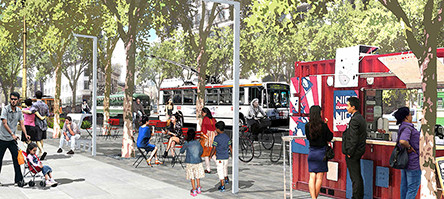
Kevin Conger is the President and CEO of CMG Landscape Architecture, as well as a founding partner of this San Francisco-based studio. He has developed many projects to benefit the Bay Area’s design community, including Better Market Street, the Yerba Buena Street Life Plan, redevelopment plans for Hunters Point and Treasure Island. These projects seek to create sustainable accessibility, natural vistas and green design elements to benefit the Bay Area community as a whole.
Kevin Conger
2013 Fellow
Kevin Conger is the President and CEO of CMG Landscape Architecture, as well as a founding partner of this San Francisco-based studio. He has developed many projects to benefit the Bay Area’s design community, including Better Market Street, the Yerba Buena Street Life Plan, redevelopment plans for Hunters Point and Treasure Island. These projects seek to create sustainable accessibility, natural vistas and green design elements to benefit the Bay Area community as a whole.

Dr. Timothy Beatley
2013 Fellow
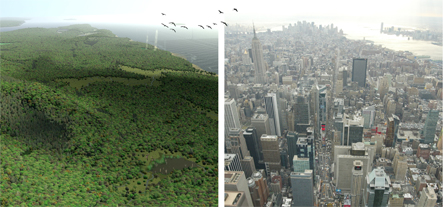
Dr. Timothy Beatley is an internationally recognized author, sustainable city researcher and Professor at the University of Virginia’s School of Architecture. The author of more than fifteen books including Biophilic Cities: Integrating Nature into Urban Design and Planning, Native to nowhere: sustaining home and community in a global age and Green urbanism: learning from European cities, Beatley's primary subject is that of sustainable communities.
Beatley believes that sustainable and resilient cities represent our best hope for addressing today’s environmental challenges, and he focuses on strategies for reducing the ecological footprints of towns and cities, while simultaneously becoming more livable and equitable places.
One of Beatley’s main concepts is that of Green Urbanism. Cities that exemplify green urbanism strive to live within its ecological limits. They are designed to function in ways analogous to nature and attempt to be locally and regionally self-sufficient. An additional benefit of Green Urbanism is the facilitation of more sustainable lifestyles and its emphasis on a high quality of neighborhood and community life.

 Jennifer Wolch
2012 Fellow
The challenges of building healthier and more sustainable cities motivate the research of Jennifer Wolch, UC Berkeley College of Environmental Design (CED). Before coming to UC Berkeley to serve as CED’s first woman dean, Wolch directed the Center for Sustainable Cities at the University of Southern California, where she conducted research on urban sprawl, metropolitan planning, and access to parks and open space. Her work done in collaboration with colleagues, students, and community-based organizations, included investigations into urban homelessness; formulating alternatives to sprawl; analyses of park and recreational resource access and environmental justice; development of web-based geospatial planning tools for watershed health, habitat conservation, and park space projects; assessments of urban alleys as potential green infrastructure; and studies of how urban design influences physical activity and public health.
In the Bay Area, Wolch continues to work on issues of how to utilize remnant urban land as green infrastructure and how park-adjacent traffic crashes and air pollution deepen environmental justice issues associated with parks and open space. She has also initiated investigations into issues of park access and urban ecology in Chinese cities.
ced.berkeley.edu/ced/people
Jennifer Wolch
2012 Fellow
The challenges of building healthier and more sustainable cities motivate the research of Jennifer Wolch, UC Berkeley College of Environmental Design (CED). Before coming to UC Berkeley to serve as CED’s first woman dean, Wolch directed the Center for Sustainable Cities at the University of Southern California, where she conducted research on urban sprawl, metropolitan planning, and access to parks and open space. Her work done in collaboration with colleagues, students, and community-based organizations, included investigations into urban homelessness; formulating alternatives to sprawl; analyses of park and recreational resource access and environmental justice; development of web-based geospatial planning tools for watershed health, habitat conservation, and park space projects; assessments of urban alleys as potential green infrastructure; and studies of how urban design influences physical activity and public health.
In the Bay Area, Wolch continues to work on issues of how to utilize remnant urban land as green infrastructure and how park-adjacent traffic crashes and air pollution deepen environmental justice issues associated with parks and open space. She has also initiated investigations into issues of park access and urban ecology in Chinese cities.
ced.berkeley.edu/ced/people

 Michael Swaine
2012 Fellow
Michael Swaine is an inventor and designer working in many media. His work is collaborative in nature and has been included in exhibitions at the Cooper-Hewitt, National Design Museum, New York; the Museum of Modern Art, New York; the San Francisco Museum of Craft and Folk Art; and the Exploratorium, San Francisco.
He is currently building the Free Mending Library in the Tenderloin area of San Francisco. It is a library for fixing the holes in our lives-a place to borrow thread and sewing machines and talk about life. He has been sewing, hemming and mending for free in the Tenderloin on the 15th of every month since 2001 - the year of his Generosity Project for the CCA Wattis Institute for Contemporary Arts.
Swaine teaches at California College of the Arts, Mills College and the San Francisco Art Institute.
Michael Swaine
2012 Fellow
Michael Swaine is an inventor and designer working in many media. His work is collaborative in nature and has been included in exhibitions at the Cooper-Hewitt, National Design Museum, New York; the Museum of Modern Art, New York; the San Francisco Museum of Craft and Folk Art; and the Exploratorium, San Francisco.
He is currently building the Free Mending Library in the Tenderloin area of San Francisco. It is a library for fixing the holes in our lives-a place to borrow thread and sewing machines and talk about life. He has been sewing, hemming and mending for free in the Tenderloin on the 15th of every month since 2001 - the year of his Generosity Project for the CCA Wattis Institute for Contemporary Arts.
Swaine teaches at California College of the Arts, Mills College and the San Francisco Art Institute.

 Megan & Rick Prelinger
2012 Fellows
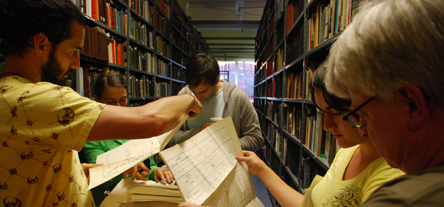
The Prelinger Library is a private research library open to the public co-founded by Megan and Rick Prelinger. It houses more than forty thousand books and other print artifacts on North American technology, regional & land use history, media & cultural studies, including a space history collection.
Megan Prelinger is an independent historian and a lifelong collector of space history ephemera and science fiction literature.
Rick Prelinger is an archivist, writer and filmmaker. He also founded Prelinger Archives, whose collection of 51,000 advertising, educational, industrial, and amateur films was acquired by the Library of Congress in 2002. Rick has partnered with the Internet Archive to make 2,000 films from Prelinger Archives available online for free viewing, downloading and reuse.
prelingerlibrary.org
Megan & Rick Prelinger
2012 Fellows
The Prelinger Library is a private research library open to the public co-founded by Megan and Rick Prelinger. It houses more than forty thousand books and other print artifacts on North American technology, regional & land use history, media & cultural studies, including a space history collection.
Megan Prelinger is an independent historian and a lifelong collector of space history ephemera and science fiction literature.
Rick Prelinger is an archivist, writer and filmmaker. He also founded Prelinger Archives, whose collection of 51,000 advertising, educational, industrial, and amateur films was acquired by the Library of Congress in 2002. Rick has partnered with the Internet Archive to make 2,000 films from Prelinger Archives available online for free viewing, downloading and reuse.
prelingerlibrary.org

 Jeff Mapes
2011 Fellow
Jeff Mapes is the author of Pedaling Revolution: How Cyclists are Changing American Cities (Oregon State University Press, 2009) which describes the growing urban bike culture that is changing the look and feel of U.S. cities.
Mapes, a seasoned political journalist and long-time bike commuter, explores the growth of bicycle advocacy while covering such issues as the environmental, safety, and health aspects of bicycling for short urban trips. Chapters set in Chicago and Portland show how bicycling has became a political act, with seemingly dozens of subcultures, and how cyclists - with the encouragement of local officials - are seizing streets back from motorists. Bike activists are creating the future of how we travel and live in twenty-first-century cities.
Jeff Mapes
2011 Fellow
Jeff Mapes is the author of Pedaling Revolution: How Cyclists are Changing American Cities (Oregon State University Press, 2009) which describes the growing urban bike culture that is changing the look and feel of U.S. cities.
Mapes, a seasoned political journalist and long-time bike commuter, explores the growth of bicycle advocacy while covering such issues as the environmental, safety, and health aspects of bicycling for short urban trips. Chapters set in Chicago and Portland show how bicycling has became a political act, with seemingly dozens of subcultures, and how cyclists - with the encouragement of local officials - are seizing streets back from motorists. Bike activists are creating the future of how we travel and live in twenty-first-century cities.

 David Gissen
2011 Fellow
David Gissen is an historian and theorist of architecture and urbanism. His recent work focuses on developing a novel concept of nature in architectural thought and developing experimental forms of architectural historical practice.
Gissen is the author of the book Subnature: Architecture's Other Environments (Princeton Architectural Press, 2009), editor of the “Territory” issue of AD Journal (2010), and editor of the book Big and Green (Princeton Architectural Press, 2003). He recently completed the manuscript "Manhattmospheres" an environmental and architectural history of New York City in the 1970s.
htcexperiments.org
David Gissen
2011 Fellow
David Gissen is an historian and theorist of architecture and urbanism. His recent work focuses on developing a novel concept of nature in architectural thought and developing experimental forms of architectural historical practice.
Gissen is the author of the book Subnature: Architecture's Other Environments (Princeton Architectural Press, 2009), editor of the “Territory” issue of AD Journal (2010), and editor of the book Big and Green (Princeton Architectural Press, 2003). He recently completed the manuscript "Manhattmospheres" an environmental and architectural history of New York City in the 1970s.
htcexperiments.org

 Rosten Woo
2011 Fellow
Rosten Woo is an artist, designer and writer living in Los Angeles. He makes work that helps people understand complex systems and participate in group decision-making. His work has been exhibited at the Cooper-Hewitt Design Triennial, the New Museum, the Venice Architecture Biennale, Netherlands Architectural Institute, the Lower East Side Tenement Museum; and in various public housing developments, tugboats, shopping malls and parks in New York City and Los Angeles. His first book, Street Valuewas published by Princeton Architectural Press in 2010.
He is co-founder and former executive director of the Center for Urban Pedagogy (CUP), a nonprofit organization that uses design and art to improve civic engagement. CUP projects demystify the urban policy and planning issues that impact communities so that more individuals can better participate in shaping them.
wehavenoart.net
Rosten Woo
2011 Fellow
Rosten Woo is an artist, designer and writer living in Los Angeles. He makes work that helps people understand complex systems and participate in group decision-making. His work has been exhibited at the Cooper-Hewitt Design Triennial, the New Museum, the Venice Architecture Biennale, Netherlands Architectural Institute, the Lower East Side Tenement Museum; and in various public housing developments, tugboats, shopping malls and parks in New York City and Los Angeles. His first book, Street Valuewas published by Princeton Architectural Press in 2010.
He is co-founder and former executive director of the Center for Urban Pedagogy (CUP), a nonprofit organization that uses design and art to improve civic engagement. CUP projects demystify the urban policy and planning issues that impact communities so that more individuals can better participate in shaping them.
wehavenoart.net

 Amber Hasselbring
2011 Fellow
Amber Hasselbring is a San Francisco artist focused on exploring ecological relationships. Since 2004, she has produced collaborative, project-based works that involve participation by invited and circumstantial audiences. Hasselbring’s Mission Greenbelt Project (2007-present) explores themes of gentrification, education and urban ecology through performances and garden building efforts in San Francisco. The project is an ongoing urban earthwork of sidewalk gardens, planted with California native and other drought-tolerant plants. The gardens attract wildlife, relieve the city’s overburdened water treatment system and encourage volunteerism and cooperation. The proposed route connects Mission District parks and open spaces.
Amber Hasselbring
2011 Fellow
Amber Hasselbring is a San Francisco artist focused on exploring ecological relationships. Since 2004, she has produced collaborative, project-based works that involve participation by invited and circumstantial audiences. Hasselbring’s Mission Greenbelt Project (2007-present) explores themes of gentrification, education and urban ecology through performances and garden building efforts in San Francisco. The project is an ongoing urban earthwork of sidewalk gardens, planted with California native and other drought-tolerant plants. The gardens attract wildlife, relieve the city’s overburdened water treatment system and encourage volunteerism and cooperation. The proposed route connects Mission District parks and open spaces.

 Sandor Katz
2011 Fellow
Sandor Katz is the author of The Revolution Will Not be Microwaved: Inside America's Underground Food Movements (Chelsea Green Publishing, 2006) This book is about food activism and people trying to make better choices - people wanting to create better food alternatives for themselves and the people in the communities around them.Katz urges people to challenge their roles as unquestioning consumers of the American food industry. His message is to use everyday ingredients to be a producer and not just consumer of food - and not just ordinary food - but some of the most vibrantly flavorful and health giving foods imaginable. His critique of mega production and celebration of the alternatives empowers people to feel like they can make and cultivate their own food - whatever their circumstances. His long held belief in community gardens, community supported agriculture and community kitchens has inspired many and been an integral part in the underground food movement.
Katz is also the author of The Art of Fermentation: An In-depth Exploration of Essential Concepts and Processes from Around the World (Chelsea Green Publishing, 2012) and Wild Fermentation: The Flavor, Nutrition, and Craft of Live-Culture Foods (Chelsea Green Publishing, 2003). He travels widely teaching people simple fermentation techniques and demystify home fermentation. He has taught hundreds of hands-on fermentation workshops around the US and Australia.
wildfermentation.com
Sandor Katz
2011 Fellow
Sandor Katz is the author of The Revolution Will Not be Microwaved: Inside America's Underground Food Movements (Chelsea Green Publishing, 2006) This book is about food activism and people trying to make better choices - people wanting to create better food alternatives for themselves and the people in the communities around them.Katz urges people to challenge their roles as unquestioning consumers of the American food industry. His message is to use everyday ingredients to be a producer and not just consumer of food - and not just ordinary food - but some of the most vibrantly flavorful and health giving foods imaginable. His critique of mega production and celebration of the alternatives empowers people to feel like they can make and cultivate their own food - whatever their circumstances. His long held belief in community gardens, community supported agriculture and community kitchens has inspired many and been an integral part in the underground food movement.
Katz is also the author of The Art of Fermentation: An In-depth Exploration of Essential Concepts and Processes from Around the World (Chelsea Green Publishing, 2012) and Wild Fermentation: The Flavor, Nutrition, and Craft of Live-Culture Foods (Chelsea Green Publishing, 2003). He travels widely teaching people simple fermentation techniques and demystify home fermentation. He has taught hundreds of hands-on fermentation workshops around the US and Australia.
wildfermentation.com

 Nicholas de Monchaux
2011 Fellow
Nicholas de Monchaux is an architect and urbanist, whose work examines the intersections between nature, technology and the city. Currently assistant professor of Architecture and Urban Design at UC Berkeley, he has recently authored Spacesuit: Fashioning Apollo (published by the MIT press).
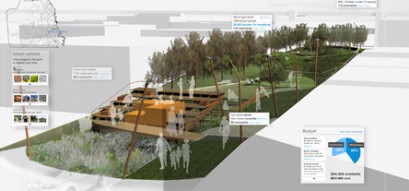
His project Local Code: Real Estates used geospatial analysis to identify thousands of publicly owned abandoned sites in major US cities - imagining this distributed, vacant landscape as a new urban system. Using parametric design, a landscape proposal for each site is tailored to local conditions, optimizing thermal and hydrological performance to enhance the whole city’s ecology-and relieving burdens on existing infrastructure. Local Code’s quantifiable effects on energy usage and stormwater remediation eradicate the need for more expensive, yet invisible, sewer and electrical upgrades. In addition, the project uses citizen participation to conceive a new, more public infrastructure as well -a robust network of urban greenways with tangible benefits to the health and safety of every citizen. Local Code was recently exhibited at SPUR and was a finalist in the WPA 2.0 competition sponsored by UCLA Citylab and appeared at the 2010 Biennial of the Americas.
nicholas.demonchaux.com
Nicholas de Monchaux
2011 Fellow
Nicholas de Monchaux is an architect and urbanist, whose work examines the intersections between nature, technology and the city. Currently assistant professor of Architecture and Urban Design at UC Berkeley, he has recently authored Spacesuit: Fashioning Apollo (published by the MIT press).
His project Local Code: Real Estates used geospatial analysis to identify thousands of publicly owned abandoned sites in major US cities - imagining this distributed, vacant landscape as a new urban system. Using parametric design, a landscape proposal for each site is tailored to local conditions, optimizing thermal and hydrological performance to enhance the whole city’s ecology-and relieving burdens on existing infrastructure. Local Code’s quantifiable effects on energy usage and stormwater remediation eradicate the need for more expensive, yet invisible, sewer and electrical upgrades. In addition, the project uses citizen participation to conceive a new, more public infrastructure as well -a robust network of urban greenways with tangible benefits to the health and safety of every citizen. Local Code was recently exhibited at SPUR and was a finalist in the WPA 2.0 competition sponsored by UCLA Citylab and appeared at the 2010 Biennial of the Americas.
nicholas.demonchaux.com

 Fritz Haeg
2010 Fellow
Artist Fritz Haeg's work has included edible gardens, public dances, educational environments, animal archtecture, domestic gatherings, urban parades, temporary encampments, documentary videos, publications, exhibitions, websites and buildings. His work includes the urban ecology initiatives of Edible Estates and Animal Estates; the domestic social activities of Sundown Salon and Sundown Schoolhouse; and the designs and scores of Fritz Haeg Studio.
Edible Estates is an ongoing initiative to create a series of regional prototype gardens that replace domestic front lawns and other unused spaces in front of homes with places for families to grow their own food. The eight gardens have been established in cities across the United States and England. Adventurous residents in each town have offered their front lawns as working prototypes for their regions. Each of these highly productive gardens is very different, designed to respond to the unique characteristics of the site, the needs and desires of the owner, the community and its history, and, especially, the local climate and geography.
With the modest gesture of reconsidering the use of our small, individual, private front yards, the Edible Estates project invites us to reconsider our relationships with our neighbors, the sources of our food, and our connections to the natural environment immediately outside our front doors.
fritzhaeg.com
Fritz Haeg
2010 Fellow
Artist Fritz Haeg's work has included edible gardens, public dances, educational environments, animal archtecture, domestic gatherings, urban parades, temporary encampments, documentary videos, publications, exhibitions, websites and buildings. His work includes the urban ecology initiatives of Edible Estates and Animal Estates; the domestic social activities of Sundown Salon and Sundown Schoolhouse; and the designs and scores of Fritz Haeg Studio.
Edible Estates is an ongoing initiative to create a series of regional prototype gardens that replace domestic front lawns and other unused spaces in front of homes with places for families to grow their own food. The eight gardens have been established in cities across the United States and England. Adventurous residents in each town have offered their front lawns as working prototypes for their regions. Each of these highly productive gardens is very different, designed to respond to the unique characteristics of the site, the needs and desires of the owner, the community and its history, and, especially, the local climate and geography.
With the modest gesture of reconsidering the use of our small, individual, private front yards, the Edible Estates project invites us to reconsider our relationships with our neighbors, the sources of our food, and our connections to the natural environment immediately outside our front doors.
fritzhaeg.com

 Amy Balkin
2010 Fellow
Amy Balkin is a cross-disciplinary artist working in San Francisco. Using a high level of research and social critique, Amy initiates critical conversations about the modern world in which we exist. Her recent projects include Public Smog, Invisible-5 and This is the Public Domain.
Public Smogis a park in the atmosphere that fluctuates in location and scale. The park is constructed through financial, legal, or political activities that open it for public use. Activities to create the park have included purchasing and retiring emission offsets in regulated emissions markets and making them inaccessible to polluting industries.When Public Smog is built through this process, it exists in the unfixed public airspace above the region where offsets are purchased and withheld from use. The park’s size varies, reflecting the amount of emissions allowances purchased and the length of contract, compounded by seasonal fluctuations in air quality. Public Smog opened over California's South Coast Air Quality Management District in 2004, and over the European Union in 2007.
Other activities to create Public Smog impact the size, location, and duration of the park. These activities include an attempt to submit Earth’s atmosphere for inscription on UNESCO's World Heritage List.
tomorrowmorning.net
publicsmog.org
Amy Balkin
2010 Fellow
Amy Balkin is a cross-disciplinary artist working in San Francisco. Using a high level of research and social critique, Amy initiates critical conversations about the modern world in which we exist. Her recent projects include Public Smog, Invisible-5 and This is the Public Domain.
Public Smogis a park in the atmosphere that fluctuates in location and scale. The park is constructed through financial, legal, or political activities that open it for public use. Activities to create the park have included purchasing and retiring emission offsets in regulated emissions markets and making them inaccessible to polluting industries.When Public Smog is built through this process, it exists in the unfixed public airspace above the region where offsets are purchased and withheld from use. The park’s size varies, reflecting the amount of emissions allowances purchased and the length of contract, compounded by seasonal fluctuations in air quality. Public Smog opened over California's South Coast Air Quality Management District in 2004, and over the European Union in 2007.
Other activities to create Public Smog impact the size, location, and duration of the park. These activities include an attempt to submit Earth’s atmosphere for inscription on UNESCO's World Heritage List.
tomorrowmorning.net
publicsmog.org

 Darrin Nordahl
2010 Fellow
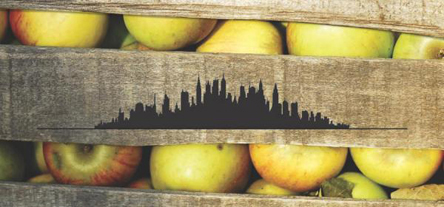
Darrin Nordahl is speaker and writer on issues of food and city design. He has taught in the City and Regional Planning Department at UC Berkeley and in the Landscape Architecture program at UC Berkeley Extension.Nordhal currently resides in Davenport, Iowa, a once Agricultural Rust Belt city now poised to redefine urbanism in the Midwest. His book Public Produce (Island Press, 2009) showcases how innovative urban food concepts can add vitality to city spaces. He believes that good city design can change behavior for the betterment of the individual and society.Other books by Nordahl include: My Kind of Transit: Rethinking Public Transportation (Island Press, 2009) and Making Transit Fun!: How to Entice Motorists from their Cars (Island Press, 2012).
darrinnordahl.com
Darrin Nordahl
2010 Fellow
Darrin Nordahl is speaker and writer on issues of food and city design. He has taught in the City and Regional Planning Department at UC Berkeley and in the Landscape Architecture program at UC Berkeley Extension.Nordhal currently resides in Davenport, Iowa, a once Agricultural Rust Belt city now poised to redefine urbanism in the Midwest. His book Public Produce (Island Press, 2009) showcases how innovative urban food concepts can add vitality to city spaces. He believes that good city design can change behavior for the betterment of the individual and society.Other books by Nordahl include: My Kind of Transit: Rethinking Public Transportation (Island Press, 2009) and Making Transit Fun!: How to Entice Motorists from their Cars (Island Press, 2012).
darrinnordahl.com

 Novella Carpenter
2009 Fellow
Novella Carpenter is an urban farmer, author, and biofuel champion. Her work has appeared on Salon.com, Sfgate.com, and Food and Wine magazine. She is the author of Farm City: The Education of an Urban Farmer (Penguin, 2010). Farm City tells the story of her urban farm in Oakland, California where for more than ten years, Carpenter has been raising and living off of her own rabbits, chickens, bees, fruits, and vegetables. She also co-authored The Essential Urban Farmer (Penquin, 2010) with City Slicker Farms founder, Willow Rosenthal.
ghosttownfarm.wordpress.com
Novella Carpenter
2009 Fellow
Novella Carpenter is an urban farmer, author, and biofuel champion. Her work has appeared on Salon.com, Sfgate.com, and Food and Wine magazine. She is the author of Farm City: The Education of an Urban Farmer (Penguin, 2010). Farm City tells the story of her urban farm in Oakland, California where for more than ten years, Carpenter has been raising and living off of her own rabbits, chickens, bees, fruits, and vegetables. She also co-authored The Essential Urban Farmer (Penquin, 2010) with City Slicker Farms founder, Willow Rosenthal.
ghosttownfarm.wordpress.com

 Kelly Coyne and Erik Knutzen
2009 Fellows
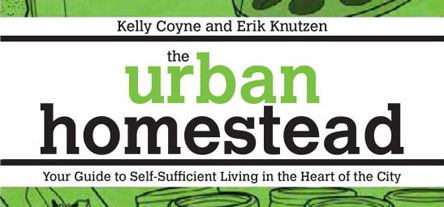
Kelly Coyne and Erik Knutzen are the authors of The Urban Homestead: Your Guide to Self-Sufficient Living in the Heart of the City and Making It: Radical Home Ec for a Post-Consumer World. They founded the blog rootsimple.com in 2006.
They live in the heart of Los Angeles, in a bungalow set on a 1/2 acre lot where almost all of their land is devoted to growing edible or otherwise useful plants and trees. Their obsessions include bees, bikes, beer, chickens, dogs, healthy cities, healing herbs, simple living and good food.
rootsimple.com
Kelly Coyne and Erik Knutzen
2009 Fellows
Kelly Coyne and Erik Knutzen are the authors of The Urban Homestead: Your Guide to Self-Sufficient Living in the Heart of the City and Making It: Radical Home Ec for a Post-Consumer World. They founded the blog rootsimple.com in 2006.
They live in the heart of Los Angeles, in a bungalow set on a 1/2 acre lot where almost all of their land is devoted to growing edible or otherwise useful plants and trees. Their obsessions include bees, bikes, beer, chickens, dogs, healthy cities, healing herbs, simple living and good food.
rootsimple.com

 Laura Lawson
2009 Fellow
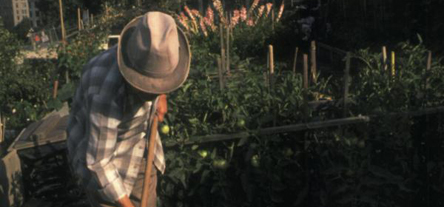
Laura Lawson is an acclaimed author, landscape architect and avid gardener. Currently she is the Chair for the Landscape Architecture Department at Rutgers University. She has been documenting and writing about community gardens for over fifteen years and has produced several articles and two books - City Bountiful: A History of Community Gardening in America (University of California Press, 2005) and Greening Cities, Growing Communities: Learning from Seattle’s Urban Community Gardens (co-authored with Jeff Hou and Julie Johnson, University of Washington Press, 2009).Lawson continues her documentation of urban gardens, focusing on the cities of Chicago, Detroit, New York, and San Francisco. Her intense background research on the historic evolution of each city developed into a comparative framework to identify key themes/issues to compare across the different cities.
Laura Lawson
2009 Fellow
Laura Lawson is an acclaimed author, landscape architect and avid gardener. Currently she is the Chair for the Landscape Architecture Department at Rutgers University. She has been documenting and writing about community gardens for over fifteen years and has produced several articles and two books - City Bountiful: A History of Community Gardening in America (University of California Press, 2005) and Greening Cities, Growing Communities: Learning from Seattle’s Urban Community Gardens (co-authored with Jeff Hou and Julie Johnson, University of Washington Press, 2009).Lawson continues her documentation of urban gardens, focusing on the cities of Chicago, Detroit, New York, and San Francisco. Her intense background research on the historic evolution of each city developed into a comparative framework to identify key themes/issues to compare across the different cities.
 Iain Boal
2009 Fellow
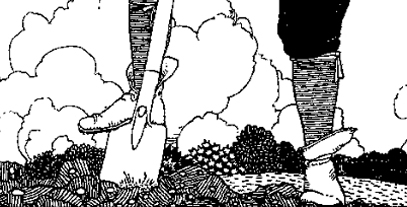
Iain Boal is a social historian of science and technics, affiliated with the University of California and Birkbeck College, London. Boal is one of the founders of the Retort collective, an association of radical writers, teachers, artists, and activists, which has existed in the San Francisco Bay Area for the past two decades, with whom he co-authored Afflicted Powers: Capital and Spectacle in a New Age of War along.He is co-editor of Resisting the Virtual Life: The Culture and Politics of Information and author of The Green Machine, A history of the Bicycle. His forthcoming book The Long Theft: Episodes in the History of Enclosure, traces key episodes in the history of ’enclosure’ - the fencing off, literally and figuratively, of the world’s commoners from their means of livelihood. In 2005/6 he was a Guggenheim Fellow in Science and Technology.
Iain Boal
2009 Fellow
Iain Boal is a social historian of science and technics, affiliated with the University of California and Birkbeck College, London. Boal is one of the founders of the Retort collective, an association of radical writers, teachers, artists, and activists, which has existed in the San Francisco Bay Area for the past two decades, with whom he co-authored Afflicted Powers: Capital and Spectacle in a New Age of War along.He is co-editor of Resisting the Virtual Life: The Culture and Politics of Information and author of The Green Machine, A history of the Bicycle. His forthcoming book The Long Theft: Episodes in the History of Enclosure, traces key episodes in the history of ’enclosure’ - the fencing off, literally and figuratively, of the world’s commoners from their means of livelihood. In 2005/6 he was a Guggenheim Fellow in Science and Technology.

 Gray Brechin
2009 Fellow
Dr. Gray Brechin is an historical geographer and author whose chief interests are the state of California, the environmental impact of cities upon their hinterlands, and the invisible landscape of New Deal public works.
He is currently a visiting scholar in the U.C. Berkeley Department of Geography and founder and project scholar of California’s Living New Deal Project. California’s Living New Deal Project is an unprecedented collective effort to inventory and interpret the impact of New Deal public works projects on the Golden State. They invite informants to contribute information and photographs to map the vast matrix of public buildings, parks, and infrastructure Californians have come to take for granted. Through this archaeological dig into California’s lost history, they reveal an indispensable but invisible landscape while laying the groundwork for a national inventory.
graybrechin.net
Gray Brechin
2009 Fellow
Dr. Gray Brechin is an historical geographer and author whose chief interests are the state of California, the environmental impact of cities upon their hinterlands, and the invisible landscape of New Deal public works.
He is currently a visiting scholar in the U.C. Berkeley Department of Geography and founder and project scholar of California’s Living New Deal Project. California’s Living New Deal Project is an unprecedented collective effort to inventory and interpret the impact of New Deal public works projects on the Golden State. They invite informants to contribute information and photographs to map the vast matrix of public buildings, parks, and infrastructure Californians have come to take for granted. Through this archaeological dig into California’s lost history, they reveal an indispensable but invisible landscape while laying the groundwork for a national inventory.
graybrechin.net


 Sam Green
2008 Fellow
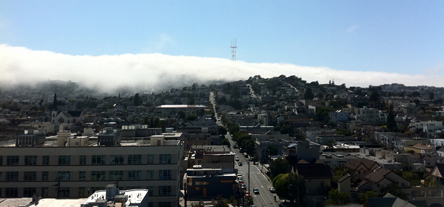
A renowned documentary film maker, Sam Green points his camera at a broad range of subjects-from a legendary rainbow-wig sign holder, to a intensive overview of the radical protest group “Weather Underground”. The Seed Fund supported his film project, Fog City, which used a hotline and local call-ins to find and record breathtaking moments of fog in the bay area. Co-directed by Andy Black, Fog Cityhas been shown at SFMoMA and other local venues. Sam Green currently teaches film and video at San Francisco Art Institute.
samgreen.to
Sam Green
2008 Fellow
A renowned documentary film maker, Sam Green points his camera at a broad range of subjects-from a legendary rainbow-wig sign holder, to a intensive overview of the radical protest group “Weather Underground”. The Seed Fund supported his film project, Fog City, which used a hotline and local call-ins to find and record breathtaking moments of fog in the bay area. Co-directed by Andy Black, Fog Cityhas been shown at SFMoMA and other local venues. Sam Green currently teaches film and video at San Francisco Art Institute.
samgreen.to

 Richard A. Walker 2008 FellowRichard A. Walker is professor of geography and chair of the California Studies Center at the University of California, Berkeley. His research is focused on economic geography, regional development; capitalism and politics; cities and urbanism; resources and environment; California; class and race.
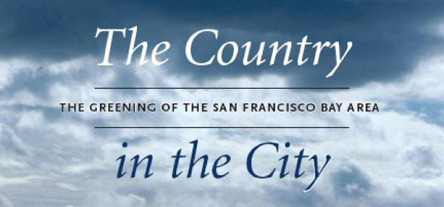
He recently published a book on the history of California’s agricultural system, The Conquest of Bread: 150 Years of Agribusiness in California, which tells the story of how capitalism developed the California countryside into the leading agrarian production complex in the United States. Professor Walker's most recent book concerns the creation of the San Francisco Bay Area greenbelt and the local environmental movement - The Country in the City: The Greening of the San Francisco Bay Area (University of Washington Press, 2007) narrates the many stories of land preservation, saving the bay, and fighting toxics that have made him a global bastion of environmentalism. His next book, tentatively titled City at Bay: The Making of the San Francisco-Oakland Metropolis, will recount the making of urban landscape of the Bay Area.
geography.berkeley.edu/richard-walker
Richard A. Walker 2008 FellowRichard A. Walker is professor of geography and chair of the California Studies Center at the University of California, Berkeley. His research is focused on economic geography, regional development; capitalism and politics; cities and urbanism; resources and environment; California; class and race.
He recently published a book on the history of California’s agricultural system, The Conquest of Bread: 150 Years of Agribusiness in California, which tells the story of how capitalism developed the California countryside into the leading agrarian production complex in the United States. Professor Walker's most recent book concerns the creation of the San Francisco Bay Area greenbelt and the local environmental movement - The Country in the City: The Greening of the San Francisco Bay Area (University of Washington Press, 2007) narrates the many stories of land preservation, saving the bay, and fighting toxics that have made him a global bastion of environmentalism. His next book, tentatively titled City at Bay: The Making of the San Francisco-Oakland Metropolis, will recount the making of urban landscape of the Bay Area.
geography.berkeley.edu/richard-walker

 Rebecca Solnit
2008 Fellow
Rebecca Solnit is a writer and activist living in San Francisco. She has written on a variety of subjects including the environment, politics, place, and art. Solnit has worked on environmental and human rights campaigns since the 1980s, notably with the Western Shoshone Defense Project in the early 1990s, as described in her book Savage Dreams,and with antiwar activists throughout the Bush era.Solnit has also followed and participated in various revolutions worldwide, including Tiananmen Square, the Zapatista Army of National Liberation, and the Velvet Revolution.Solnit is the author of thirteen books as well as essays in numerous museum catalogues and anthologies. Her books include Infinite City: A San Francisco Atlas, a book of 22 maps and nearly 30 collaborators; A Paradise Built in Hell: The Extraordinary Communities that Arise in Disaster; Storming the Gates of Paradise; A Field Guide to Getting Lost; Hope in the Dark: Untold Histories, Wild Possibilities; Wanderlust: A History of Walking; As Eve Said to the Serpent: On Landscape, Gender and Art; and River of Shadows, Eadweard Muybridge and the Technological Wild West, for which she received a Guggenheim fellowship, the National Book Critics Circle Award in criticism, and the Lannan Literary Award.She has worked with climate change, Native American land rights, antinuclear, human rights, antiwar and other issues as an activist and journalist.
rebeccasolnit.net
Rebecca Solnit
2008 Fellow
Rebecca Solnit is a writer and activist living in San Francisco. She has written on a variety of subjects including the environment, politics, place, and art. Solnit has worked on environmental and human rights campaigns since the 1980s, notably with the Western Shoshone Defense Project in the early 1990s, as described in her book Savage Dreams,and with antiwar activists throughout the Bush era.Solnit has also followed and participated in various revolutions worldwide, including Tiananmen Square, the Zapatista Army of National Liberation, and the Velvet Revolution.Solnit is the author of thirteen books as well as essays in numerous museum catalogues and anthologies. Her books include Infinite City: A San Francisco Atlas, a book of 22 maps and nearly 30 collaborators; A Paradise Built in Hell: The Extraordinary Communities that Arise in Disaster; Storming the Gates of Paradise; A Field Guide to Getting Lost; Hope in the Dark: Untold Histories, Wild Possibilities; Wanderlust: A History of Walking; As Eve Said to the Serpent: On Landscape, Gender and Art; and River of Shadows, Eadweard Muybridge and the Technological Wild West, for which she received a Guggenheim fellowship, the National Book Critics Circle Award in criticism, and the Lannan Literary Award.She has worked with climate change, Native American land rights, antinuclear, human rights, antiwar and other issues as an activist and journalist.
rebeccasolnit.net