Alliance for Biking and Walking 2013 - $8,000 Open Streets 2011 - $5,000 General Operating Support
The Alliance for Biking & Walking creates, strengthens, and unites state and local bicycle and pedestrian advocacy organizations in every state, province, and major city in North America. These sustainable organizations are highly respected by the public, media, and policy makers. Their efforts in communities and their united strength at the national level have transformed cities into places where it is easy, safe, desirable and common for citizens to bike and walk.
Open Streets Open Streets develops a curriculum for a comprehensive three-day open streets training for cities interested in starting or growing initiatives. Open streets (commonly called Ciclovías, Saturday Parkways, Sunday Streets, etc.) differentiate themselves from block parties and street fairs by promoting active living, healthy lifestyle choices and connecting neighborhoods. They are typically part of a broader effort to encourage sustained physical activity, redefine public spaces and increase healthy transportation options. By opening the streets to people, residents view and connect with the community in a whole new way. An exercise in community building and social engagement, open streets also provide free recreational opportunities and public space where people can meet, socialize and make new friends. peoplepoweredmovement.org
By piloting a new “Tree Equity Score” tool in the Bay Area, Seed Fund has laid the foundation for what has potential to become a revolution in greening cities nationwide.
In Phoenix, a neighborhood with a Tree Equity Score of 92 (left) experienced surface temperatures nearly 5 degrees Fahrenheit cooler than a south Phoenix neighborhood with a score of 63 (right), according to American Forests’ heat disparity dataset, which uses Landsat surface temperatures to measure heat severity differences. Credit: Rick D'Elia / American Forests.
In Phoenix, a neighborhood with a Tree Equity Score of 92 (left) experienced surface temperatures nearly 5 degrees Fahrenheit cooler than a south Phoenix neighborhood with a score of 63 (right), according to American Forests’ heat disparity dataset, which uses Landsat surface temperatures to measure heat severity differences. Credit: Rick D'Elia / American Forests.
In April 2022, American Forests, City of Phoenix staff and community volunteers planted more than 250 trees in Phoenix's Cesar Chavez Park to create the city's first "cool corridor" in efforts to generate shaded, and safer, commuting paths. Credit: Michael Jennings / American Forests.
The Tree Equity Score tool provides data and insights on the impact of tree cover alongside demographic data, land use, poverty and other socioeconomic indicators to guide planning and investments to grow tree cover in the neighborhoods that need it most. Credit: Tom Koenig / American Forests
Tree Equity Score was created to help address damaging environmental inequities by prioritizing human-centered investment in areas with the greatest need.
Planting 500 million new trees would bring every neighborhood in every city to a Tree Equity Score of 100. Credit: Liz Putnam / American Forests
American Forests 2024 & 2025 - $25,000 Tree Equity Score Toolkit 2022 - $25,000 Cool Corridors 2021 - $20,000 Tree Equity 2019 - $20,000 Tree Equity Toolkit
Founded in 1875, American Forests is the oldest national nonprofit conservation organization in the United States and a leader in the movement to protect and restore forest ecosystems. For more than 150 years, the organization has advanced science-driven approaches to forestry, shaping many of the practices used in conservation today. Its mission is to create healthy and resilient forests, from cities to large natural landscapes, that deliver essential benefits for climate, people, water, and wildlife.
American Forests’ work centers on ensuring that forests remain powerful natural climate solutions, and it provides scientific tools, resources, and long-term planning needed to keep forests thriving. These resources enable partners nationwide to implement restoration and management practices that remain effective as climate conditions evolve.
A core pillar of American Forests’ work is climate-smart reforestation. Through its Resilient Forests program, the organization partners with federal and state agencies, Tribal Nations, local communities, and private landowners to restore forests in some of the country’s most ecologically vulnerable regions. American Forests develops and applies climate-informed reforestation strategies using tools such as its Reforestation Hub, which identifies low-cost, high-feasibility opportunities for restoring forest cover across the U.S. This work includes expanding native seed and nursery capacity, supporting climate-ready forestry jobs, and helping communities plan large-scale restoration across millions of acres.
Equally central to the organization’s mission is its Tree Equity program. Tree cover in the U.S. is distributed unequally: in many cities, low-income neighborhoods and communities of color have significantly fewer trees than wealthier areas. These disparities contribute to hotter temperatures, higher energy bills, poorer air quality, and increased health risks. To close these gaps, American Forests works with city leaders, community-based organizations, and residents to build urban forests that support health, resilience, and opportunity.
At the foundation of this work is the Tree Equity Score, a nationally recognized tool developed by American Forests to quantify and map the need for trees at the neighborhood level. The free, publicly available tool analyzes factors such as current tree canopy, surface temperature, income, race, age demographics, and health vulnerabilities to identify where trees will have the greatest benefit. Cities across the country use the Tree Equity Score to guide investment, set canopy goals, prioritize neighborhoods for greening, and engage residents in decision-making.
Policy leadership is another essential pillar of American Forests work. The organization collaborates with lawmakers, federal agencies, and national coalitions to expand funding for reforestation and urban forestry, modernize forest management, and integrate climate resilience and environmental justice into public policy. These efforts have helped secure historic federal investments, like the REPLANT Act, and have strengthened the systems needed to scale climate-smart forestry nationwide.
As climate challenges accelerate, American Forests continues to scale its work to meet national need: restoring forest landscapes across millions of acres, advancing Tree Equity in cities nationwide, and preparing the workforce needed to steward forests for generations to come. With its long history, scientific expertise, and commitment to community-centered solutions, American Forests is driving lasting change and ensuring that forests and the people who depend on them can thrive far into the future.
The Carbon Neutral Cities Alliance (CNCA) is a global network of cities working strategically and urgently toward a carbon neutral future within the next 10 to 20 years-the most ambitious and comprehensive GHG emission reduction targets undertaken by any cities across the globe.
Carbon Neutral Cities Alliance 2022 - $25,000 Embodied Energy
The Carbon Neutral Cities Alliance (CNCA) is a global network of cities working strategically and urgently toward a carbon neutral future within the next 10 to 20 years-the most ambitious and comprehensive GHG emission reduction targets undertaken by any cities across the globe. Created in 2015, CNCA supports leading cities worldwide that are working aggressively toward a zero-carbon future to advance their own transformational efforts, collaborate with each other and key partners to overcome barriers, foster innovative approaches, and share lessons with other cities ready to pursue similar goals.
CNCA’s mission is to mobilize transformative climate action in cities in order to achieve prosperity, social equity, resilience and better quality of life for all on a thriving planet.
CNCA’s Approach
CNCA mobilizes transformative, game-changing climate action through the following seven strategic focus areas:
CNCA is committed to advancing a just carbon neutral future through approaches that recognize and redress the disproportionate burdens and the disproportionate benefits of the fossil fuel economy by prioritizing climate action that advances the well-being of low-income people, Indigenous Peoples, communities of color, immigrants and refugees and other historically marginalized communities. CNCA’s approach to climate justice is outlined in the Climate Justice Statement and related work includes learning and grant opportunities to support local climate justice through collaborative projects with these priority communities.
Dramatically Reducing Embodied Carbon in Europe
Reducing embodied carbon in the built environment is one of CNCA’s strategic program areas. Published in 2020, one key outcome of this work to date is the City Policy Framework for Dramatically Reducing Embodied Carbon, which documents in detail a set of 52 policies that cities can enact to reduce embodied carbon. Policy interventions are identified across five areas of city influence: Zoning & Land Use, Building Regulations, Procurement, Waste & Circularity, and Financial Policies. Each policy has been evaluated by experts for potential carbon reduction impact, cost efficiency, ease of implementation and enforceability. The framework was developed in partnership with One Click LCA, and Architecture 2030.
In 2021, CNCA launched an exciting new project Dramatically Reducing Embodied Carbon in Europe, a three-year project in partnership with Built by Nature and the Laudes Foundation which aims to foster widespread adoption of ambitious local, national and regional policies that will reduce embodied carbon and increase the uptake of bio-based materials in the built environment in Europe.
By delivering technical support, engaging communities and industry stakeholders and facilitating peer learning, CNCA is creating the conditions for eleven European cities to lead in the development and implementation of innovative policies that will transform the built environment. As we close out year two of the project important results are clearly visible.
Technical assessments conducted with partner One-Click LCA in the first half of the project allowed city teams to identify the most promising policy levers at their disposal to reduce embodied carbon and promote the use of bio-based materials. All eleven cities are now at work developing and implementing tailored policy interventions that will lead to implementation in the final year of the project.
Some of the most ambitious policies range from carbon scoring land sales and setting carbon benchmarks for buildings to density bonuses and innovative methods to track the carbon savings from the reuse of construction materials in new builds and renovations.
Building the narrative around the many co-benefits of low-carbon buildings and bio-based materials is essential for cities to both advocate internally and engage stakeholders. Capacity building sessions are helping cities break down silos by working across departments in policy development and implementation. CNCA is also helping cities elevate success stories through communication materials and policy guidelines, demonstrating the potential and making embodied carbon and bio-based materials more accessible to communities.
Success at the city level is helping drive change at the national levels and in the European Union. The project has seeded the growth of national coalitions in Finland, the UK, France and Spain. These coalitions are actively advocating for national policy that better enables cities to reach their embodied carbon targets and to eliminate regulatory red tape that hampers the uptake of bio-based materials.
Year two has also seen CNCA, together with partner Eurocities, extensively advocate for change at the European level, where a unified approach to accounting for whole-life emissions has yet to be introduced in EU legislation.
In 2022 the focus has been on helping shape the revision of the Energy Performance and Buildings Directive (EPBD) and the Construction Products Regulation (CPR). Recommendations integrating the concepts of whole life carbon, embodied carbon, and bio-based materials were transmitted through bilateral exchanges with MEPs, rapporteurs and shadow rapporteurs of the EPBD and CPR policy files. In 2023 focus will shift to the upcoming Revision of the Waste Framework Directive.
Interest in the project is steadily increasing as CNCA continues to share learnings from the project widely. In 2022 CNCA presented progress at the Klosters Forum (TKF22), the Berlin Sustainable Built Environment Forum, the Barcelona Smart City Expo and at events with Energy Cities and the World Green Building Council.
2023 is set to be an exciting year with cities ramping up implementation, success stories proliferating and awareness of the role of bio-based materials increasing across Europe. A new phase of work, supported by the Seed Fund, will explore opportunities to reduce greenhouse gas emissions from the design, construction and operation of buildings, public space and infrastructure while also reducing the adverse impacts of such processes on frontline communities. CNCA will engage built-environment experts across the field to explore how North American cities can best advance this vision through the infrastructure they build and the codes and regulations that influence private construction, developing.
Shared Use Mobility Center 2024 - 2026 - $20,000 General Operating Support
SUMC’s vision is that ALL people have access to equitable, safe, reliable, and affordable transportation options, even if they don’t own a car. (This is regardless of age, gender, race, ethnicity, religion, disability, sexual orientation, sexual identity, education, national origin, or any other distinguishing characteristic or trait.)
SUMC’s mission is to connect and equip change leaders advancing people-centered shared mobility systems to fight climate change, advance equity, and strengthen communities.
Current transportation systems prioritize cars over people, creating systems that are unjust, unsafe, and unsustainable. Car-centric infrastructure contributes to 20% of global greenhouse gas emissions and causes nearly 1.2 million deaths worldwide each year — disproportionately affecting people of color, older adults, and youth.
Across the country, mobility change leaders are working to build safer, more inclusive, and climate-resilient communities. But to scale their work and shift entire systems, these leaders often lack the capacity, resources, and connections they need.
This is where the Shared-Use Mobility Center (SUMC) comes in.
Founded in 2014, SUMC is a 501(c)(3) public-interest nonprofit and international thought leader in equitable transportation. The organization connects and empowers changemakers building people-centered mobility systems that reduce emissions, advance equity, and strengthen communities.
Through applied research, SUMC deepens the field’s collective understanding of how shared mobility can advance equity and sustainability and maintains several high-impact dissemination platforms to ensure these insights reach the sector.
As a capacity builder, SUMC delivers tools, training, technical assistance, and consulting services to help practitioners implement people-first transportation solutions. Pilots and projects supported by SUMC include innovative approaches to paratransit challenges; first/last-mile solutions; jobs access pilots; mobility hubs in affordable housing; EV carsharing in disadvantaged communities; and more.
As a trusted convener, SUMC brings together leaders from the public, private, nonprofit, philanthropic, and academic sectors to drive innovation and systems change.
Since its founding, SUMC has helped secure over $90 million for mobility innovation and served as a technical advisor on nearly 150 pilot projects nationwide. The organization has supported both public agencies and community-based organizations in transforming transportation from the ground up. Its body of work includes over 1,500 publicly available resources and tools aimed at empowering the sector.
SUMC is a long-term partner of the Federal Transit Administration (FTA) and has worked with the Federal Highway Administration (FHWA), the Transportation Research Board (TRB), and many public, private, and nonprofit clients.
SUMC’s vision is a future where everyone has access to safe, sustainable, reliable, and affordable transportation — even without owning a car.
Smart Growth America (SGA) envisions a country where no matter where you live, or who you are, you can enjoy living in a place that is healthy, prosperous, and resilient.
Transportation for America 2023 - $15,000 Reduce VMT/zero emissions vehicles report
Smart Growth America (SGA) envisions a country where no matter where you live, or who you are, you can enjoy living in a place that is healthy, prosperous, and resilient. SGA works across the nation with elected officials at all levels, real estate developers, chambers of commerce, transportation and urban planning professionals, and community members to improve everyday life for people across the country through better development. SGA’s team includes experts in land use, real estate development, transportation, and economic development.
SGA currently focuses on three specific priorities: Climate change and resilience, advancing racial equity, and creating healthy communities. Solving huge challenges like climate change, affordable housing, the need for vibrant local economies, or how to affordably connect people to jobs and services requires an interdisciplinary approach across a span of interrelated areas: housing, zoning, planning, land use, economic development, transportation, and others.
At the core of SGA’s overall approach is empowering communities through direct technical assistance, powerful advocacy, and thought leadership to realize our vision of livable places, healthy people, and shared prosperity.
We are known for path breaking reports like:
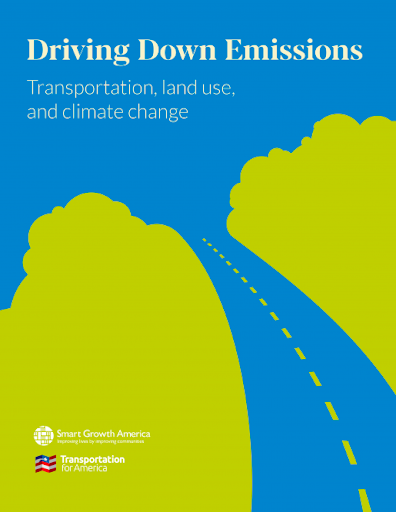
Driving Down Emissions, a report on the climate impacts of the transportation system that can and will undermine the benefits of electrifying the vehicle fleet if left untouched.
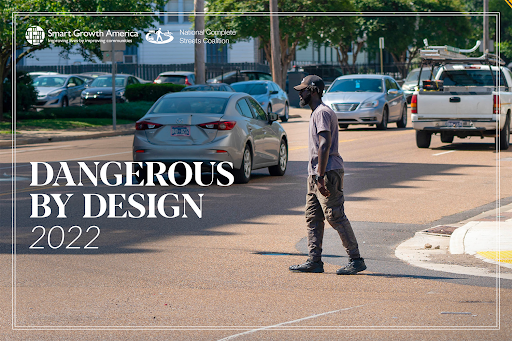
Dangerous by Design, which shows how the standard design of American roads lead to increased deadly mistakes and proposes ways to fix it in the nation with the highest level of roadway fatalities in the developed world.
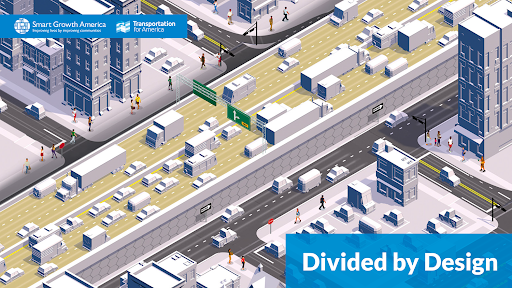
Divided by Design, a report on the damaging effects of highways built through Black and Brown communities and how the approaches that led to this damage are still core to America’s transportation program today.
Electric Vehicles and Smart Growth, which looks at how we push transportation electrification in a way that supports essential smart growth goals since, the U.S. must remake our transportation and land use system to be less car-dominated at the same time that we electrify if we are going to meet our climate targets.
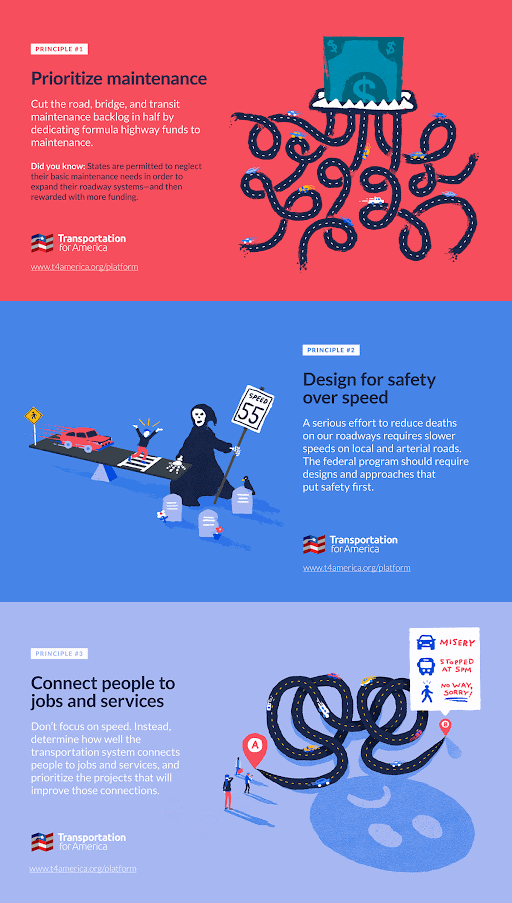
The organization also comprises a number of sub-brands, including Transportation for America, which focuses on creating a transportation system that connects people to jobs and essential services no matter how they travel, how much money they earn or their physical abilities. Our transportation priorities are to:
Transportation for America currently partners with the Clean Vehicles Coalition to manage the Coalition for Helping America for Rebuild and Go Electric (CHARGE) to decarbonize the transportation sector through both electrification and improving the efficiency of the transportation system to require less driving.
Transportation for America is currently examining the question: What balance of fleet conversion and reducing driving is needed to keep emissions low enough to stave off catastrophic global climate change? To answer this question, we will:
Identify the total carbon budget to keep global warming below 2 degrees Celsius and calculate transportation’s share of that carbon budget based on its current share.
Develop several scenarios that meet that carbon budget with different levels of driving-reduction and fleet transition.
Examine the costs and impacts of each of those scenarios to gain insight into the trade-offs of different approaches.