X

Food Security List | Summary | Detailed

Alemany Farm

2007 - $2,500 General Operating Support
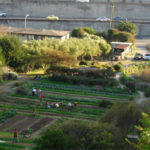
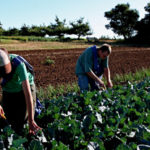
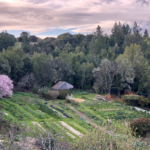
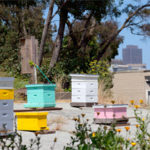
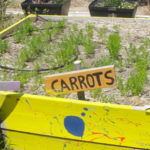
Alemany Farm is a volunteer run 4.5 acre organic farm ecosystem in southeast San Francisco.

Alemany Farm


Friends of Alemany Farm
2007 - $2,500 General Operating Support

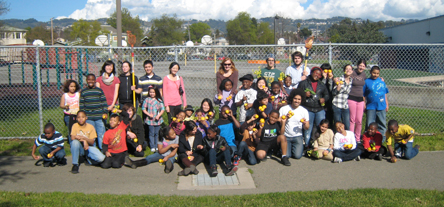
Friends of Alemany Farm is a volunteer group that manages the horticulture, volunteer, and educational programs at Alemany Farm, a 4.5 acre organic farm ecosystem in southeast San Francisco.

Alemany Farm grows food and educates local residents about how they can become their own food producers and strive to increase ecological knowledge and habitat value, and to sow the seeds for economic and environmental justice. Strategies to further their cause include fostering environmental education by introducing children and adults to the idea that local food production can be part of a healthy ecosystem, inspiring visitors to start their own gardens at home, and promoting ecological-economic development by using urban agriculture as a way to develop green job skills. alemanyfarm.org

Center For Agroecology, UC Santa Cruz

2009 - $10,000 Publication Feasibility Study
2007 - $10,000 General Operating Support
The mission of the Center for Agroecology & Sustainable Food Systems is to research, develop, and advance sustainable food and agricultural systems.

Center For Agroecology, UC Santa Cruz


Center For Agroecology, UC Santa Cruz
2009 - $10,000 Publication Feasibility Study
2007 - $10,000 General Operating Support

The mission of the Center for Agroecology & Sustainable Food Systems is to research, develop, and advance sustainable food and agricultural systems that are environmentally sound, economically viable, socially responsible, non-exploitative, and that serve as a foundation for future generations. The Center is within the Division of Social Sciences at UC Santa Cruz, and undertakes projects in many disciplines working with faculty, staff, and students from throughout the university. Beyond the campus, the center collaborates with non-governmental organizations, growers, community members, visiting students and researchers, as well as state and federal agencies. The Center's work includes both theoretical and applied research; academic education and practical training; and community outreach and public service for audiences ranging from local school children to international agencies.

casfs.ucsc.edu

Edible City/Andrew Hasse

2009 - $5,000 General Operating Support
The film, Edible City, follows the stories of individuals who are fighting for sustainability and social justice by doing something revolutionary: growing a local food system.

Edible City/Andrew Hasse

Edible City/Andrew Hasse
2009 - $5,000 General Operating Support

Edible City, a film directed by Andrew Hasse, follows the stories of individuals who are fighting for sustainability and social justice by doing something revolutionary: growing a local food system.

Edible City explores issues of food security, sovereignty, and justice through a comprehensive view of Bay Area urban farming movements. By looking at everything from backyard gardens to city farms, it visits a fascinating and diverse group of people who are taking control of their food and reaching out to their communities. Edible City ties their struggles to the systemic problems plaguing the food infrastructure, economy, and environment, suggesting solutions that are large-scale and local, institutional and individual.

ediblecitymovie.com

Free Farm Stand

2010 - $3,000 General Operating Support
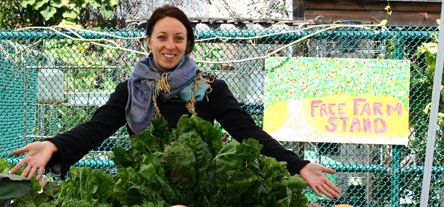
The Free Farm Stand, an all-volunteer run project facilitates sharing the wealth of San Francisco urban farms and gardens.

Free Farm Stand

Free Farm Stand
2010 - $3,000 General Operating Support

The Free Farm Stand, an all-volunteer run project facilitates sharing the wealth of urban farms and gardens. This includes helping make locally grown, fresh and nutritious organic produce accessible to all (especially those families and individuals on low-incomes and tight budgets), empowering people who have the space to grow their own food and become more self-reliant and promoting good nutrition and health.Located in the Mission district, the Free Farm Stand gathers surplus food from neighborhood gardens, various farmer’s markets, community gardens, public and private fruit trees and provides the space where this bounty can be shared.The stand also acts as a gathering place to encourage community growth and involvement. In 2010, the Free Farm Stand, along with a small constellation of non-profit organizations in San Francisco, founded The Free Farm. Located on a 1/3-acre parcel loaned by St. Paulus Lutheran Church, The Free Farm has grown and given away over 1,000 pounds of fresh organic produce, convened gardening and urban homesteading workshops, and hosted community, school, and religious groups.

freefarmstand.org

Graze the Roof

2009 - $5,000 General Operating Support
Graze the Roof is a community-produced vegetable garden on the rooftop of Glide Memorial Church, San Francisco's Tenderloin.

Graze the Roof


Graze The Roof
2009 - $5,000 General Operating Support

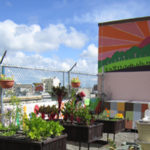
Graze the Roof (GTR) is an edible, community-produced vegetable garden on the rooftop of Glide Memorial Church, a progressive church and nonprofit located in the Tenderloin district of San Francisco. GTR features soil-less gardening vegetable growers; self-watering containers; lightweight garden beds made from milk crates; a worm composting system and an educational mural, which ties the whole project together. Glide youth and volunteers from throughout the Bay Area maintain the garden and host monthly tours and workshops.

grazetheroof.blogspot.com

Growing Power

2010 - $2,000 Educational Outreach
Growing Power, based in Milwaukee, Wisconsin, provides hands-on training, outreach and technical assistance to develop a community based food system.

Growing Power

Growing Power
2010 - $2,000 Educational Outreach

Growing Power is a national nonprofit organization and land trust based in Milwaukee, Wisconsin.  They support people from diverse backgrounds, and the environments in which they live, by helping to provide equal access to healthy, high-quality, safe and affordable food.  Growing Power implements this mission by providing hands-on training, demonstrations, outreach and technical assistance through the development of Community Food Systems that help people grow, process, market and distribute food in a sustainable manner.Since its inception, Growing Power has served as a ”living museum” or “idea factory” for the young, the elderly, farmers, producers, and other professionals ranging from USDA personnel to urban planners.  Training areas include the following: acid-digestion, anaerobic digestion for food waste, bio-phyto remediation and soil health, aquaculture closed-loop systems, vermiculture, small and large scale composting, urban agriculture, permaculture, food distribution, marketing, value-added product development, youth education, community engagement, participatory leadership development, and project planning.

Little City Gardens

2010 - $2,500 Zoning Code Advocacy Work
Little City Gardens is an experiment in the economic viability of small-scale urban market-gardening.

Little City Gardens


Little City Gardens
2010 - $2,500 Zoning Code Advocacy Work

Little City Gardens is an experiment in the economic viability of small-scale urban market-gardening. Located on a three quarter of an acre plot in San Francisco, they have been working steadily towards crafting a way for urban food production to sustain a farm economically and build community through innovative, collaborative local food systems.  This process will allow the establishment of the ‘urban farmer’ as a career.

Little City Gardens is currently a small salad greens business, an educational site, and a working model of food production in San Francisco. Advocacy work done by the founders of Little City Gardens, Brooke Budner and Caitlyn Galloway, was crucial for the 2011 changes in San Francisco zoning code that now allows for and encourages urban agriculture.

littlecitygardens.com

Nouvelle Vie, Haiti

2010 - $5,000 Permaculture Training Programs
The Nouvelle Vie Youth Corps is a network of young Haitian leaders who serve Haiti’s trauma relief and food security needs.

Nouvelle Vie, Haiti

Nouvelle Vie, Haiti
2010 - $5,000 Permaculture Training Programs

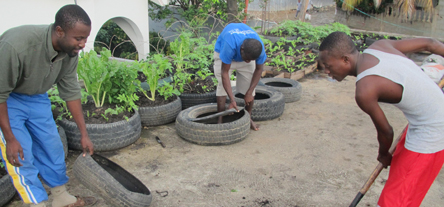
The Nouvelle Vie Youth Corps is a network of young Haitian leaders who serve Haiti’s trauma relief and food security needs, empowering Haitian communities toward greater self-reliance.

Since the earthquake in 2010 the Youth Corps has been providing trauma relief and food security services to thousands of people impacted by the disaster. Our food security program involves identifying and reaching out to vulnerable populations, particularly schools and orphanages, and conducting basic training in permaculture techniques aimed at enabling these populations to grow their own food and convert organic wastes into soil through composting. We focus on simple and effective techniques for growing substantial quantities of nutritious food on small footprints of land, such as vertical rice sack gardens. A grant of $5,000 supports the training costs for at least one student. After the training, each student will have the skills and support needed to train at least 1,000 people per year in practical sustainable agricultural techniques, a substantial return on investment in the development of a grassroots sustainable food system in Haiti.

Occidental Arts and Ecology Center

2016 - $10,000 General Operating Support
2009 - $10,000 General Operating Support
2007 - $5,000 General Operating Support
Occidental Arts & Ecology Center is an education center and organic farm on 80-acres in Sonoma County working to create ecologically, economically and culturally sustainable communities.

Occidental Arts and Ecology Center


Occidental Arts and Ecology Center
2016 - $10,000 General Operating Support
2009 - $10,000 Greenhouse Project
2007 - $5,000 General Operating Support

The Occidental Arts & Ecology Center (OAEC) is an 80-acre research, demonstration, advocacy, and organizing center in Sonoma County, California that develops strategies for regional-scale community resilience.

For over 30 years the OAEC site has been a sustainable agriculture training center, working with thousands of farmers, community and school gardeners, and food and farming activists. For more than a decade, the OAEC has become recognized as a national leader in research, demonstration and participatory education in a variety of ecological and agricultural issue areas.

oaec.org

People's Grocery

2007 - $2,500 General Operating Support
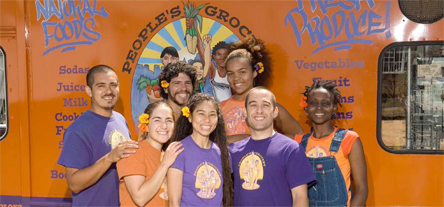
The People’s Grocery mission is to improve the health and economy of West Oakland through the local food system.

People's Grocery

People's Grocery
2007 - $2,500 General Operating Support

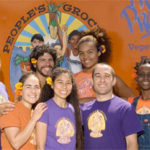
The People’s Grocery mission is to improve the health and economy of West Oakland through the local food system. Over the last nine years, People’s Grocery’s urban agriculture, nutrition, and enterprise programs have provided healthy food access while setting the stage for a systemic conversation about healthy food. Organizations across the country have replicated their work, and their leadership development models represent innovative strategies to catalyze resident power in the creation of health equity through food.

The People’s Grocery has gained regional and national recognition as a leader in the evolving food justice movement, providing workshops and trainings in best practices at forums including the California Department of Public Health, California Department of Forestry and Agriculture, the Environmental Grantmakers Association, the Kellogg Foundation’s Food & Society Conference and the Center for Healthy Communities at California Endowment.

Pie Ranch

2019 - $15,000 General Operating Support
2018 - $15,000 Climate Beneficial Farming at Año Nuevo
2016 - $10,000 General Operating Support
2015 - $10,000 General Operating Support
2010 - $10,000 Capital Campaign
2009 - $10,000 Capital Campaign
2008 - $10,000 Capital Campaign
2007 - $15,000 General Operating Support
Pie Ranch was established in 2005 with the vision to become a model center of sustainable farming and food system education.

Pie Ranch


Pie Ranch
2018 - $15,000 Climate Beneficial Farming at Año Nuevo
2015 & 2016 - $10,000 General Operating Support
2008 to 2010 - $10,000 Capital Campaign
2007 & 2019 - $15,000 General Operating Support

PIE RANCH'S MISSION IS TO CULTIVATE A HEALTHY AND JUST FOOD SYSTEM FROM SEED TO TABLE THROUGH FOOD EDUCATION, FARMER TRAINING, AND REGIONAL PARTNERSHIPS.

Pie Ranch works with Bay Area youth and the public via hands-on programming to foster awareness about where food originates, to gain insight into the issues farmworkers face and to understand the benefits of climate-smart farming. Apprentices train to prepare for their own careers in local agriculture by living on site and participating in every aspect of a working farm. Pie Ranch works with partners like the Amah Mutsun, the San Mateo Food Systems Alliance, Puente and others where interests intersect to advocate for a more equitable food system and a healthier planet.

In March of 2020, programming at the farm halted due to COVID-19. Seeking a way to be of use to the Greater Bay Area while regular programming was in abeyance, the Directors crafted a Farm Fresh Food Relief Program that utilized Pie Ranch’s program staff to aggregate, pack and distribute fresh produce to already marginalized communities suffering additional hardship from the virus’ economic impact. To date, this ongoing weekly program has served over 20,000 families with healthy, nutritious food.

August brought the CZU fire to Pie Ranch and to southern San Mateo county. Several Pie team members lost their homes while the farm’s historic house (the heart of Pie Ranch, home to its apprentices for over a decade and site of the Pie admin offices), its greenhouse, and countless trees fell to the blaze.

The extended Pie Family, including the Seed Fund rallied to support Pie Ranch’s ongoing efforts to recover from the twin catastrophes of the fire and assist with the organization’s effort to ameliorate the effects COVID-19. Seed Fund assistance ensures Pie’s program team has the resources to reach and teach youth and the public with online videos, creating socially-distanced curriculum at school gardens and implementing these same types of activities for small pods from partner schools and organizations at the farm.

The Emerging Farmers’ program lives on in a different iteration at neighboring Cascade Ranch , a climate - resilient regenerator farm that seeks to create wealth and equitable building opportunities for early stage farmers that have traditionally been excluded from land ownership. Land, mentorship, equipment access, and business planning are just some of the resources Pie Ranch funnels towards participants in this innovative program with the help of donors like the Seed Fund.

Pie’s Farmstand was able to stay open as an essential business providing this isolated community with farm fresh produce and in addition, a source of revenue for the farm during a time when other income streams have dried up.

Pie Ranch’s continued efforts in regional advocacy work took on a new significance this year with COVID exacerbating the fissures in the ailing food system and then climate change, drought and fires threatening the local Bay Area agri-system like never before. Pie’s advocacy efforts, partially supported by the Seed Fund, towards crafting a more sustainable Coastside is integral to the viability of our agriculture: Pie puts forth the vision of a more localized food infrastructure as described in the Local Food and Farm Bill, and this will help create a more just and planet-friendly food system.

pieranch.org

Plant SF

2010 - $5,000 Naples Green, Pavement to Parks Project
2007 - $5,000 General Operating Support
Plant SF exists to promote permeable landscaping as sustainable urban infrastructural practice and beautification.

Plant SF


Plant SF
2010 - $5,000 Naples Green, Pavement to Parks Project
2007 - $5,000 General Operating Support

Plant SF exists to promote permeable landscaping as sustainable urban infrastructural practice and as a beautification effort; by providing information to the public and by partnering with city and neighborhood organizations.  This mission is accomplished through encouraging and enabling individuals to use an existing permit process to convert areas of the public right-of-way (sidewalks) to exposed-earth gardens, advocating the use of native and drought tolerant plant species, and coordinating with local organizations to facilitate plantings.  Plant SF also works with city agencies to encourage permeable landscaping strategies as urban infrastructure and advocates for sustainable water practices, such as ground water recharge, roof drain diversion and water reclamation.

Naples Green was designed to provide neighborhood beautification, new green space, traffic calming improvements and a safe and enjoyable environment for residents to host and accommodate neighborhood events and activities. The work scope included the transformation of approximately 7,500 square feet of concrete and asphalt into new green public open space. At Naples green, landscaped areas with hundreds of new plants and 18 new trees, raised planter beds and pathways all come together to provide an inviting new open space. By removing concrete and asphalt, the Naples Green also provides storm water benefits by allowing rainwater to permeate into the ground instead of flowing into the sewer system.  It is located in the Crocker Amazon neighborhood of San Francisco, on Naples Street between Rolph Street and Geneva Avenue.

plantsf.org

Produce to the People

2011 - $3,000 General Operating Support
Produce to the People aims to localize the San Francisco food system by utilizing and celebrating the unused resources in San Francisco, including fruit trees, vacant lots, and people power.

Produce to the People

Produce to the People
2011 - $3,000 General Operating Support

Produce to the People (PttP) is a grassroots, community food organization in San Francisco, founded in June 2009.  PttP aims to localize the food system by utilizing and celebrating the unused resources in San Francisco, including fruit trees, vacant lots, and people power.

PttP’s work is rooted in outreach to under served communities, providing healthy, organic, local food for people who may not always have access to it, supporting garden projects in communities that may not have the funds to create or sustain them on their own, and providing educational jobs to youth with barriers to employment. They work to link these elements together; the growth, harvest, and dispersal of food, in conjunction with the collaboration of other organizations, neighbors, patrons of food programs, and young people, creates a full circle that links people coming from diverse life experiences and unites them over a common need for healthy food and community based care for one another. producetothepeople.org

Rebar

2013 - $5,000 Adaptive Metropolis Symposium
2009 - $10,000 Hayes Valley Farm
Rebar contributed to the foundation of Hayes Valley Farm, a temporary Urban Permaculture demonstration site in San Francisco.

Rebar

photo credit: Lucy Goodhart 

Rebar
2013 - $5,000 Adaptive Metropolis Symposium
2009 - $10,000 Hayes Valley Farm

REBAR's work encompasses visual and conceptual public art, landscape design, urban intervention, temporary performance installation, digital media and print design. Together with UC Berkeley Department of Landscape Architecture, The Adaptive Metropolis symposium convenes a global community of thinkers and doers to discuss the future of user-generated urbanism. The participation of leading scholars and critics allows authoritative and thorough analysis. The symposium also provides practitioners and theorists with a platform to discuss and share ideas, experiences, knowledge, and skills, creating an up-to-date battlefield map. Lastly, the symposium explores new ways to look at the subject matter, setting the stage for the next phase of its development. http://laep.ced.berkeley.edu/adaptivemetropolis/site/

Hayes Valley Farm (HVF) is a temporary urban permaculture demonstration site in San Francisco. It is a 2.2-acre non-profit community-run farm, urban agriculture education and research project located in the heart of the city of San Francisco.  After the Loma Prieta earthquake in 1989, San Francisco's Central Freeway was compromised and in the years to come the ramps bordered by Laguna, Oak, Fell, and Octavia Streets were closed, and the lot locked up. In January 2010, the City activated the site for temporary green space use, allowing for Hayes Valley Farm to create the space for education and reflection.

Rebar was part of the original team that conceived of, planned, and fundraised to create Hayes Valley Farm. They worked closely with the Mayor’s Office of San Francisco, The Hayes Valley Neighborhood Association, the Public Utilities Commission, and the Department of Public Works to open the gates to the formerly vacant lot and bring in essential infrastructure. Rebar partnered with S12 Architects in the design and construction of the farm’s greenhouse, and worked closely with the HVF team to develop the farm’s current logo.

Rebar is a cross-disciplinary practice for solving the design problems of the commons.

hayesvalleyfarm.com

Suzanne Cockrell, California College of the Arts Engage Class

2011 - $1,125 Garden at Emerson Elemenary School, Oakland
The orchard and pollinator garden at Emerson K-5 Public Elementary School in Oakland were created as part of an undergraduate Community Arts/Diversity Studies course at California College of the Arts.

Suzanne Cockrell, California College of the Arts Engage Class

Suzanne Cockrell, Engage Class at California College of the Arts
2011 - $1,125  Garden at Emerson Elemenary School, Oakland

This grant was used to fund the design and building of a small orchard and pollinator garden at Emerson K-5 Public Elementary School located in Oakland’s Temescal District. The orchard and garden are a community project which was part of an undergraduate Community Arts/Diversity Studies course at California College of the Arts (CCA).  The CCA students led by artist, Suzanne Cockrell, mentored thirty five 4th graders to plan and implement a garden for the school community.  Students germinated seeds for the pollinator garden, learned the botanical parts of a fruit tree and how fruit grows, foraged and tasted fruit from neighborhood trees, and helped sheet mulch and plant the orchard in their schoolyard.  The project developed a culture of stewardship for the orchard and through special assemblies, curriculum and harvest celebrations.  The students and school families will nurture and care for their orchard over time.

Urban Tilth

2009 - $5,000 General Operating Support
Urban Tilth cultivates agriculture in West Contra Costa County to help the community build a more sustainable, healthy, and just food system.

Urban Tilth


Urban Tilth
2009 - $5,000 General Operating Support

Urban Tilth cultivates agriculture in West Contra Costa County to help the community build a more sustainable, healthy and just food system. Working with schools, community-based organizations, government agencies, businesses, and individuals, Urban Tilth aims to develop the capacity to produce 5% of Contra Costa County’s own food supply.

Operating on the belief that environmental restoration is inextricably connected to economic and social restoration, they are committed to training and employing local people, working collaboratively within community, establishing cross sector coalitions, engaging in local policy decisions and growing food locally and organically using the principles of permaculture to take into consideration waste reduction as well as water and soil conservation, preservation and restoration.

urbantilth.org

Veggielution

2010 - $3,000 Support for Cold Storage Construction
Veggielution is a two acre non-profit community farm dedicated to creating a more sustainable food system in San Jose, California.

Veggielution


Veggielution
2010 - $3,000 Support for Cold Storage Construction

Veggielution is a two acre non-profit community farm dedicated to creating a more sustainable food system in San Jose, California. Veggielution works to empower people to change the way they think about food by getting their hands in the soil, connecting with the land, and tasting the fruits of their labor. In low-income communities, it isn’t just about the personal choice to eat healthier - as that choice often isn’t available.  By fostering positive social interactions between all those who participate in their community farm, participants feel as though they are a part of a larger farm community, which is centered on the land that they work, the food that they share, and the understanding that they are all dependent on each other and the natural environment that sustains us.

veggielution.org