X

2026 List | Summary | Detailed

Bronx River Alliance
2026 - $25,000 General Operating Support
2025 - $25,000 Cross Bronx Community Imagining
2024 - $25,000 Five Bridges Project
The Bronx River Alliance serves predominantly Hispanic and Black low-income communities along NYC’s only freshwater river.

Bronx River Alliance

Bronx River Alliance
2026 - $25,000 General Operating Support
2025 - $25,000 Cross Bronx Community Imagining
2024 - $25,000 Five Bridges Project

The Bronx River Alliance serves predominantly Hispanic and Black low-income communities along NYC’s only freshwater river. It engages, educates, and empowers local residents—especially those in under-resourced South Bronx neighborhoods— to restore the Bronx River corridor as a healthy ecological, recreational, educational, and community resource. In partnership with 100+ community organizations, 25+ schools, and public agencies, the Alliance delivers equitable, community-driven conservation and outdoor programs including paddling, habitat restoration, eznvironmental education, and cultural events. Each year, the Alliance connects 5,400 Bronx residents to nature, wellness, and stewardship, advancing environmental justice and equitable access to green space.

Widely regarded as a model for community-based waterfront development throughout the city and the nation, the Alliance pursues its goals through six interconnected program areas of Education, Ecology, Greenway, Recreation, Foodway, and Outreach.

The Greenway Program develops open spaces, restores existing parks, and integrates them into a series of continuous parks and trails along the river—the Bronx River Greenway. The Greenway program is also expanding its climate justice advocacy efforts, working with other local actors to promote climate resilience and improved infrastructure. For example, the Bronx River Alliance, working closely with a coalition of Bronx, city- and statewide allies is leading a campaign to halt a proposed highway expansion project along the Cross Bronx Expressway (CBE), and invest in the community’s vision instead.  The project, which goes by the moniker “5 Bridges”, is an unnecessary expansion that New York State has tied to a bridge repair project.  

The Education Program opens doors for youth from underrepresented communities who face disproportionate environmental health and safety hazards to authentically engage in science, environmental policy, education, and advocacy.

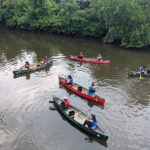
The Recreation Program helps the community discover an intimate experience with the river corridor. Operating hand-in-hand with other Bronx River Alliance programs, Recreation programs help visitors relax and connect with the river, and also integrate lessons, projects, and programs. Recreation staff take around 1,500 adults and children canoeing on the Bronx River each year, where they learn a fun, new skill while seeing the Bronx from a whole new perspective.

The Ecology Program protects, restores and manages the Bronx River through field work and policy leadership. Our Bronx River Conservation Crew has a full-time presence on the river, implementing and maintaining river and upland restoration projects.

The Foodway Program works to maintain and improve the Bronx River Foodway, an edible food forest located directly within Concrete Plant Park.

The Outreach Program works to connect the communities of the Bronx with the Bronx River through a wide range of public events designed to increase community knowledge and ownership of the river.

www.bronxriver.org

Regional Plan Association

2026 - $20,000 General Operating Support
2025 - $20,000 Cross Bronx Expansion Report
2025 - $10,000 General Operating Support
2024 - $15,000 General Operating Support
2024 - $20,000 Brooklyn Queens Expressway Report
2024 - $20,000 Congestion Pricing
2023 - $20,000 Congestion Pricing
Regional Plan Association is a non-profit organization that conducts research, advocacy and planning to improve quality of life for all residents in the New York City metropolitan area.

Regional Plan Association

Regional Plan Association
2026 - $20,000 General Operating Support
2025 - $20,000 Cross Bronx Expansion Report
2025 - $10,000 General Operating Support
2024 - $15,000 General Operating Support
2024 - $20,000 Brooklyn Queens Expressway Report
2023 & 2024 - $20,000 Congestion Pricing

Regional Plan Association is a non-profit organization that conducts research, advocacy and planning to improve quality of life for all residents in the New York City metropolitan area. RPA conducts groundbreaking research on issues such as land use, transportation, the environment, and economic development. It also leads advocacy campaigns to foster a thriving, diverse, and climate friendly region and partners with local government to help them grow in an inclusive and sustainable way.

For over 100 years, Regional Plan Association has been an indispensable source of ideas for policy makers and opinion shapers across the New York City metropolitan region. Some of the NYC region’s most significant public works, economic development initiatives, and open space projects have their roots in RPA ideas and initiatives. 

A cornerstone of RPA's work is the development of long-range plans and policies to guide the region’s growth. Since the 1920s, RPA has produced four landmark plans for the region. The most recent was released in November 2017.

One of the ideas RPA has been advocating is a tolling program for Manhattan's Central Business District, otherwise known as congestion pricing. For decades, RPA has been saying that the program is vital to managing traffic, raising revenue for public transit, and helping reduce pollution. RPA has coordinated a number of efforts over the years to build support for congestion pricing, and after a few failed attempts, was finally successfully in receiving New York State's authorization for the program in 2019. 

The program started in January 2025 and has been successful at reducing traffic, boosting transit ridership, improving traffic safety, and raising revenue for transit projects.  RPA has released a series of more technical documents to track the program's success and monitor its effectiveness and has also supported lawsuits against the USDOT to keep the program in place. 

RPA currently co-leads the Congestion Pricing Now coalition with a few partner organizations. Congestion pricing is officially called the Central Business District Tolling Program and is being managed by the MTA. 

In addition to congestion pricing, RPA has been supporting a number of local coalitions fighting highway projects that will increase traffic and harm local communities. In particular, RPA has supported the No Cross Bronx coalition, Coalition for BQE Transformation and the Rethink Route 17 coalition with design, traffic modeling, communications and external affairs support.

rpa.org

Shared Use Mobility Center

2026 - $20,000 General Operating Support
2025 - $20,000 General Operating Support
2024 - $20,000 General Operating Support
SUMC’s vision is that ALL people have access to equitable, safe, reliable, and affordable transportation options, even if they don’t own a car.

Shared Use Mobility Center

Shared Use Mobility Center
2024 - 2026 - $20,000 General Operating Support

SUMC’s vision is that ALL people have access to equitable, safe, reliable, and affordable transportation options, even if they don’t own a car. (This is regardless of age, gender, race, ethnicity, religion, disability, sexual orientation, sexual identity, education, national origin, or any other distinguishing characteristic or trait.)

SUMC’s mission is to connect and equip change leaders advancing people-centered shared mobility systems to fight climate change, advance equity, and strengthen communities.

Current transportation systems prioritize cars over people, creating systems that are unjust, unsafe, and unsustainable. Car-centric infrastructure contributes to 20% of global greenhouse gas emissions and causes nearly 1.2 million deaths worldwide each year — disproportionately affecting people of color, older adults, and youth.

Across the country, mobility change leaders are working to build safer, more inclusive, and climate-resilient communities. But to scale their work and shift entire systems, these leaders often lack the capacity, resources, and connections they need.

This is where the Shared-Use Mobility Center (SUMC) comes in.

Founded in 2014, SUMC is a 501(c)(3) public-interest nonprofit and international thought leader in equitable transportation. The organization connects and empowers changemakers building people-centered mobility systems that reduce emissions, advance equity, and strengthen communities.

Through applied research, SUMC deepens the field’s collective understanding of how shared mobility can advance equity and sustainability and maintains several high-impact dissemination platforms to ensure these insights reach the sector.

As a capacity builder, SUMC delivers tools, training, technical assistance, and consulting services to help practitioners implement people-first transportation solutions. Pilots and projects supported by SUMC include innovative approaches to paratransit challenges; first/last-mile solutions; jobs access pilots; mobility hubs in affordable housing; EV carsharing in disadvantaged communities; and more.

As a trusted convener, SUMC brings together leaders from the public, private, nonprofit, philanthropic, and academic sectors to drive innovation and systems change.

Since its founding, SUMC has helped secure over $90 million for mobility innovation and served as a technical advisor on nearly 150 pilot projects nationwide. The organization has supported both public agencies and community-based organizations in transforming transportation from the ground up. Its body of work includes over 1,500 publicly available resources and tools aimed at empowering the sector.

SUMC is a long-term partner of the Federal Transit Administration (FTA) and has worked with the Federal Highway Administration (FHWA), the Transportation Research Board (TRB), and many public, private, and nonprofit clients.

SUMC’s vision is a future where everyone has access to safe, sustainable, reliable, and affordable transportation — even without owning a car.

sharedusemobilitycenter.org

Transportation Alternatives

2026 - $20,000 General Operating Support
2025 - $20,000 Biking is Not a Crime
2025 - $10,000 General Operating Support
2024 - $20,000 Congestion Pricing
2024 - $10,000 General Operating Support
2023 - $20,000 20x20 Project
2022 - $10,000 General Operating Support
2011- $5,000 General Operating Support
Transportation Alternatives’ mission is to reclaim New York City's streets from the automobile, and to advocate for bicycling, walking and public transit as the best transportation alternatives.

Transportation Alternatives

Transportation Alternatives
2026 - $20,000 General Operating Support
2025 - $20,000 Biking is Not a Crime
2024 - $20,000 Congestion Pricing
2023 - $20,000 20x20 Project
2022, 2024 & 2025 - $10,000 General Operating Support
2011 - $5,000 General Operating Support

Transportation Alternatives (TA) works to reclaim New York City’s streets from the automobile and to advocate for better walking, biking, and public transit for all New Yorkers. Through grassroots organizing and strategic communication campaigns, TA advances infrastructure and policy improvements that prioritize people, create safer streets, and ultimately realize a more accessible, sustainable, and equitable city. TA engages thousands of stakeholders each year through its advocacy work, including community residents, peer nonprofit organizations, civic coalitions, business leaders, elected local and state officials, and government agencies. Their campaigns reshape streetscapes into safe places where people can walk, bike, meet, play, and participate in the variety of activities that make urban living healthy, vibrant, and dynamic.

In the past five decades, TA has made remarkable progress. Today, bike lanes ribbon up and down Manhattan avenues. Hundreds of thousands more ride a bike to work every day. The city is equipped with dedicated bus lanes, public bike share, and car-free park spaces that did not exist five decades ago. In just the last two decades, TA advocacy was responsible for the introduction of America’s first protected bike lanes and the world’s largest speed camera program.  TA lowered the citywide speed limit for the first time in 50 years, and introduced Vision Zero to New York City, an idea which then spread across the U.S. The same story is true of the federal Safe Routes to Schools and Safe Routes for Seniors programs.

The few who founded Transportation Alternatives recruited and multiplied, and now TA’s tent of supporters is packed with New Yorkers who regularly take action, make the case to public officials, and testify to the importance of TA’s mission. Each week, TA organizes local meetings, protests, rallies, petition drives, community gatherings and on-street actions to amplify voices. By the power of these people and a track record of transformative change, TA demands New York City’s most influential decision makers pay attention.

In that time, a remarkable subset of the organization was also born. Families for Safe Streets (FSS) is a coalition of people injured in traffic crashes, and the children, spouses, siblings, and parents whose loved ones have been killed. What began in 2014 as a small group of families in mourning has grown to a citywide force for change, and a national inspiration, with chapter organizations in 14 cities. Together, this powerful group of survivors tell their stories as an unignorable testament to the need for safe streets and refuse to give an inch in defense of the status quo.

From the creation of grand public spaces, like the pedestrianization of Times Square, to the construction of protected bike lanes and pedestrian plazas in all five boroughs, TA and FSS have paved the way for remarkable changes in New York City’s transportation infrastructure and transformed New Yorkers’ understanding of bicycling, walking and public transit.

transalt.org