X

National List | Summary | Detailed

Alliance for Biking and Walking

2013 - $8,000 Open Streets
2011 - $5,000 General Operating Support
The Alliance for Biking & Walking creates, strengthens, and unites state and local bicycle and pedestrian advocacy organizations.

Alliance for Biking and Walking


Alliance for Biking and Walking

2013 - $8,000 Open Streets
2011 - $5,000 General Operating Support

The Alliance for Biking & Walking creates, strengthens, and unites state and local bicycle and pedestrian advocacy organizations in every state, province, and major city in North America. These sustainable organizations are highly respected by the public, media, and policy makers. Their efforts in communities and their united strength at the national level have transformed cities into places where it is easy, safe, desirable and common for citizens to bike and walk.

Open Streets
Open Streets develops a curriculum for a comprehensive three-day open streets training for cities interested in starting or growing initiatives. Open streets (commonly called Ciclovías, Saturday Parkways, Sunday Streets, etc.) differentiate themselves from block parties and street fairs by promoting active living, healthy lifestyle choices and connecting neighborhoods. They are typically part of a broader effort to encourage sustained physical activity, redefine public spaces and increase healthy transportation options. By opening the streets to people, residents view and connect with the community in a whole new way. An exercise in community building and social engagement, open streets also provide free recreational opportunities and public space where people can meet, socialize and make new friends. peoplepoweredmovement.org

American Forests

2025 - $25,000 Tree Equity Score Toolkit
2024 - $25,000 Tree Equity Toolkit
2022 - $25,000 Cool Corridors
2021 - $20,000 Tree Equity

American Forests


American Forests
2024 & 2025 - $25,000 Tree Equity Score Toolkit
2022 - $25,000 Cool Corridors
2021 - $20,000 Tree Equity

By piloting a new “Tree Equity Score” tool in the Bay Area, Seed Fund has laid the foundation for what has potential to become a revolution in greening cities nationwide. In part, Tree Equity Score is a way to build broader awareness that urban tree canopy is too often a map of income and ethnicity; as climate change worsens trees are becoming a critical life-saving and quality of life infrastructure. It is also a state-of-the-art platform that grounds this awareness in a simple metric, providing governors, mayors, city agencies, frontline organizations and residents a new way to mobilize action, attract resources, and track progress toward achieving Tree Equity in every neighborhood.  

In 2019, the Doris Duke Charitable Foundation funded American Forests to develop some sort of a national GIS-based decision support tool to address this issue. Having pioneered such technology in the 1990s and 2000s, staff were all too aware that the field of urban conservation had become saturated with sophisticated mapping tools. Yet, that data was still not packaged in a way that told an effective story to generate and maintain momentum at the scale needed to substantively improve green infrastructure where it is most needed.

Seed Fund’s support to pilot a concept for a 0-100 scoring index down to the neighborhood level proved to be the perfect laboratory through which to develop and ground-truth an idea for a tool that could define a new, equity-focused narrative structure for urban forestry.

The first step was to develop the critical underlying methodology to measure how well a neighborhood or municipality is ensuring the benefits of urban tree canopy are reaching populations that are most vulnerable to climate change and public health impacts. The final factors, weighted equally against tree canopy and development density, were designed to be compared within a metro area but sought to avoid comparisons between different cities in vastly different ecoregions across the country. These datasets include:

  • Income: Percent of the population below 200 percent of poverty; 
  • Employment: Unemployment rate below regional average;
  • Race: Percent of the population that is not white non-Hispanic;
  • Age Dependency: Percent of the population under 18 and over 65 years old;
  • Climate: Urban Heat Island severity using surface temperature;
  • Health: A new layer that includes respiratory, heart disease, diabetes and hospitalizations.

If Tree Equity Score was to be a vehicle for a movement, it would need to provide more than a number. An online user experience that distills such complex information into a simple narrative for diverse audiences would be critical. The Bay Area pilot allowed for an iterative design process that included gathering feedback from local stakeholders like San Francisco’s Friends of the Urban Forest, Oakland’s urban forestry leaders and the California Urban Forestry Council. This process eventually led to what has become a very well-received mixture of design and function, as users have remarked at how much complex data is synthesized so clearly in the platform.

A mapping company called EarthDefine was so impressed with what they saw in the pilot phase they donated their own high-resolution national data layer to the project. Rather than spending a year developing such a layer, unique Tree Equity scores could be calculated and released in June, 2021 for more than 150,000 neighborhoods in 3,810 municipalities across all 486 urban areas of at least 50,000 people in the contiguous United States. These scores are accompanied by a suite of support tools. These include Vibrant Cities Lab’s Climate and Health Action Guide to help optimize urban forests to address climate change and public health issues, as well as the Community Assessment and Goal-Setting Tool that uses a separate gap score to guide stakeholders in structuring an inclusive, multi-organization urban forestry program.

Tree Equity Score and the critical issue it addresses has generated so much interest that American Forests was invited to co-author a New York Times data article to mark its nationwide release. With 522 million new trees needed to achieve Tree Equity nationwide, this level of visibility will be critical to contextualizing the large scale of investment needed from public, private and foundation sectors to grow this infrastructure that captures carbon, air pollution and storm water in the Bay Area and beyond. 

www.americanforests.org

Ayana Elizabeth Johnson

2024 - $10,000 Seed Fund Fellow

Ayana Elizabeth Johnson

Ayana Elizabeth Johnson
2024 - $10,000 Seed Fund Fellow

Billion Oyster Project

2022 - $10,000 General Support
2021 - $10,000 General Support

Billion Oyster Project

Billion Oyster Project
2022 - $10,000 General Support
2021 - $10,000 General Support

Carbon Neutral Cities Alliance

2022 - $25,000 Embodied Energy

Carbon Neutral Cities Alliance

Carbon Neutral Cities Alliance
2022 - $25,000 Embodied Energy

The Carbon Neutral Cities Alliance (CNCA) is a global network of cities working strategically and urgently toward a carbon neutral future within the next 10 to 20 years-the most ambitious and comprehensive GHG emission reduction targets undertaken by any cities across the globe. Created in 2015, CNCA supports leading cities worldwide that are working aggressively toward a zero-carbon future to advance their own transformational efforts, collaborate with each other and key partners to overcome barriers, foster innovative approaches, and share lessons with other cities ready to pursue similar goals.

CNCA’s mission is to mobilize transformative climate action in cities in order to achieve prosperity, social equity, resilience and better quality of life for all on a thriving planet.

CNCA’s Approach

CNCA mobilizes transformative, game-changing climate action through the following seven strategic focus areas:

  1. Funding transformative climate action to mobilize the development, adoption and implementation of game-changing climate policies in cities.
  2. Exerting collective influence on and advocate for policies from other decision-makers to reduce emissions not directly controlled by cities. 
  3. Advancing methodologies, standards and governance tools for carbon neutrality planning, implementation, impact measurement and continuous improvement. 
  4. Fostering peer learning among climate vanguard cities, so they can learn from each other and go further and faster together. 
  5. Cultivating transformational leadership so city sustainability directors can excel in their roles as change-makers. 
  6. Helping cities communicate more effectively to advance their carbon neutrality work.
  7. Prioritizing a just carbon neutral future by integrating climate justice into ambitious climate action.

Climate Justice

CNCA is committed to advancing a just carbon neutral future through approaches that recognize and redress the disproportionate burdens and the disproportionate benefits of the fossil fuel economy by prioritizing climate action that advances the well-being of low-income people, Indigenous Peoples, communities of color, immigrants and refugees and other historically marginalized communities. CNCA’s approach to climate justice is outlined in the Climate Justice Statement and related work includes learning and grant opportunities to support local climate justice through collaborative projects with these priority communities.

Dramatically Reducing Embodied Carbon in Europe

Reducing embodied carbon in the built environment is one of CNCA’s strategic program areas. Published in 2020, one key outcome of this work to date is the City Policy Framework for Dramatically Reducing Embodied Carbon, which documents in detail a set of 52 policies that cities can enact to reduce embodied carbon. Policy interventions are identified across five areas of city influence:  Zoning & Land Use, Building Regulations, Procurement, Waste & Circularity, and Financial Policies. Each policy has been evaluated by experts for potential carbon reduction impact, cost efficiency, ease of implementation and enforceability. The framework was developed in partnership with One Click LCA, and Architecture 2030.

In 2021, CNCA launched an exciting new project Dramatically Reducing Embodied Carbon in Europe, a three-year project in partnership with Built by Nature and the Laudes Foundation which aims to foster widespread adoption of ambitious local, national and regional policies that will reduce embodied carbon and increase the uptake of bio-based materials in the built environment in Europe.

By delivering technical support, engaging communities and industry stakeholders and facilitating peer learning, CNCA is creating the conditions for eleven European cities to lead in the development and implementation of innovative policies that will transform the built environment. As we close out year two of the project important results are clearly visible.

Technical assessments conducted with partner One-Click LCA in the first half of the project allowed city teams to identify the most promising policy levers at their disposal to reduce embodied carbon and promote the use of bio-based materials. All eleven cities are now at work developing and implementing tailored policy interventions that will lead to implementation in the final year of the project.

Some of the most ambitious policies range from carbon scoring land sales and setting carbon benchmarks for buildings to density bonuses and innovative methods to track the carbon savings from the reuse of construction materials in new builds and renovations.

Building the narrative around the many co-benefits of low-carbon buildings and bio-based materials is essential for cities to both advocate internally and engage stakeholders. Capacity building sessions are helping cities break down silos by working across departments in policy development and implementation. CNCA is also helping cities elevate success stories through communication materials and policy guidelines, demonstrating the potential and making embodied carbon and bio-based materials more accessible to communities.

Success at the city level is helping drive change at the national levels and in the European Union. The project has seeded the growth of national coalitions in Finland, the UK, France and Spain. These coalitions are actively advocating for national policy that better enables cities to reach their embodied carbon targets and to eliminate regulatory red tape that hampers the uptake of bio-based materials.

Year two has also seen CNCA, together with partner Eurocities, extensively advocate for change at the European level, where a unified approach to accounting for whole-life emissions has yet to be introduced in EU legislation.

In 2022 the focus has been on helping shape the revision of the Energy Performance and Buildings Directive (EPBD) and the Construction Products Regulation (CPR). Recommendations integrating the concepts of whole life carbon, embodied carbon, and bio-based materials were transmitted through bilateral exchanges with MEPs, rapporteurs and shadow rapporteurs of the EPBD and CPR policy files. In 2023 focus will shift to the upcoming Revision of the Waste Framework Directive.

Interest in the project is steadily increasing as CNCA continues to share learnings from the project widely. In 2022 CNCA presented progress at the Klosters Forum (TKF22), the Berlin Sustainable Built Environment Forum, the Barcelona Smart City Expo and at events with Energy Cities and the World Green Building Council.

2023 is set to be an exciting year with cities ramping up implementation, success stories proliferating and awareness of the role of bio-based materials increasing across Europe. A new phase of work, supported by the Seed Fund, will explore opportunities to reduce greenhouse gas emissions from the design, construction and operation of buildings, public space and infrastructure while also reducing the adverse impacts of such processes on frontline communities. CNCA will engage built-environment experts across the field to explore how North American cities can best advance this vision through the infrastructure they build and the codes and regulations that influence private construction, developing.

carbonneutralcities.org

Manzanita Works

2021 - $10,000 Bike loaner feasibility program

Manzanita Works

Manzanita Works
2021 - $10,000 Bike loaner feasibility program

Shared Use Mobility Center

2026 - $20,000 General Support
2025 - $20,000 General Support
2024 - $20,000 General Support

Shared Use Mobility Center

Shared Use Mobility Center
2026 - $20,000 General Support
2025 - $20,000 General Support
2024 - $20,000 General Support

Street Lab

2025 - $15,000

Street Lab

Street Lab
2025 - $15,000 Open Street, Brownsville, Brooklyn

Transportation for America

2023 - $15,000 - Reduce VMT/zero emissions vehicles report

Transportation for America


Transportation for America
2023 - $15,000 Reduce VMT/zero emissions vehicles report

Smart Growth America (SGA) envisions a country where no matter where you live, or who you are, you can enjoy living in a place that is healthy, prosperous, and resilient. SGA works across the nation with elected officials at all levels, real estate developers, chambers of commerce, transportation and urban planning professionals, and community members to improve everyday life for people across the country through better development. SGA’s team includes experts in land use, real estate development, transportation, and economic development.

SGA currently focuses on three specific priorities: Climate change and resilience, advancing racial equity, and creating healthy communities. Solving huge challenges like climate change, affordable housing, the need for vibrant local economies, or how to affordably connect people to jobs and services requires an interdisciplinary approach across a span of interrelated areas: housing, zoning, planning, land use, economic development, transportation, and others.

At the core of SGA’s overall approach is empowering communities through direct technical assistance, powerful advocacy, and thought leadership to realize our vision of livable places, healthy people, and shared prosperity.

We are known for path breaking reports like:

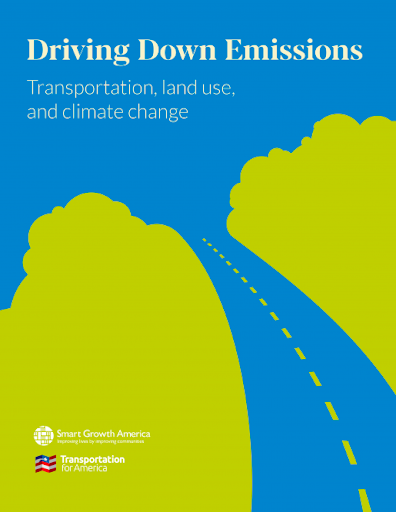
  • Driving Down Emissions, a report on the climate impacts of the transportation system that can and will undermine the benefits of electrifying the vehicle fleet if left untouched.
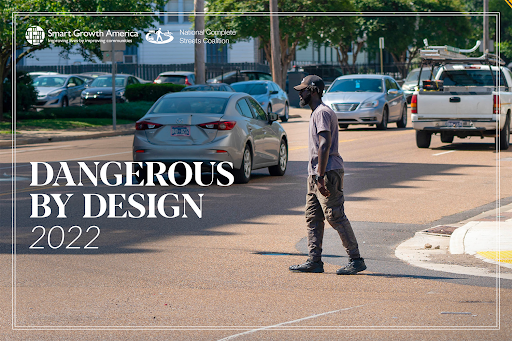
  • Dangerous by Design, which shows how the standard design of American roads lead to increased deadly mistakes and proposes ways to fix it in the nation with the highest level of roadway fatalities in the developed world.
  • Divided by Design, a report on the damaging effects of highways built through Black and Brown communities and how the approaches that led to this damage are still core to America’s transportation program today.
  • Electric Vehicles and Smart Growth, which looks at how we push transportation electrification in a way that supports essential smart growth goals since, the U.S. must remake our transportation and land use system to be less car-dominated at the same time that we electrify if we are going to meet our climate targets.

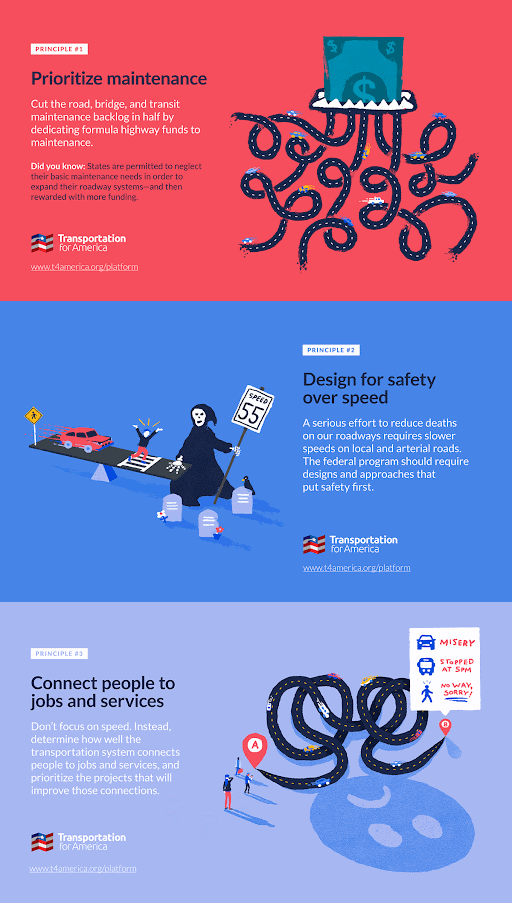
The organization also comprises a number of sub-brands, including Transportation for America, which focuses on creating a transportation system that connects people to jobs and essential services no matter how they travel, how much money they earn or their physical abilities. Our transportation priorities are to:

Transportation for America currently partners with the Clean Vehicles Coalition to manage the Coalition for Helping America for Rebuild and Go Electric (CHARGE) to decarbonize the transportation sector through both electrification and improving the efficiency of the transportation system to require less driving.

Transportation for America is currently examining the question: What balance of fleet conversion and reducing driving is needed to keep emissions low enough to stave off catastrophic global climate change? To answer this question, we will:

  1. Identify the total carbon budget to keep global warming below 2 degrees Celsius and calculate transportation’s share of that carbon budget based on its current share.
  2. Develop several scenarios that meet that carbon budget with different levels of driving-reduction and fleet transition.
  3. Examine the costs and impacts of each of those scenarios to gain insight into the trade-offs of different approaches.
  4. Explain the results graphically.

t4america.org